The Sunni–Shia division began with disagreements about leadership after the death of the Prophet Muhammad in 632 CE, but it developed over centuries into differences in religious authority, law, ritual, memory, and community identity. A careful account needs to distinguish shared historical events from the different interpretations that Sunni and Shia Muslims give those events.
The succession question after Muhammad
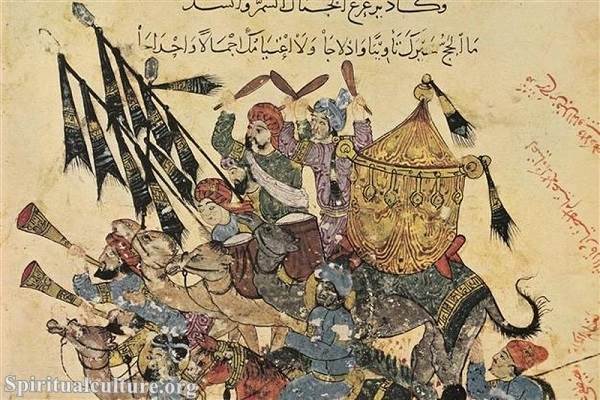
After Muhammad’s death, Abu Bakr was recognized by a group of leading Muslims as the first caliph. Sunni tradition came to regard Abu Bakr, Umar, Uthman, and Ali as the first four “Rightly Guided Caliphs.” Shia tradition holds that Ali ibn Abi Talib, Muhammad’s cousin and son-in-law, had a unique and divinely grounded claim to leadership and interprets events such as Ghadir Khumm as evidence of his designation.
Ali and the first civil conflicts
Ali eventually became caliph in 656 CE during a period of political crisis. His rule was challenged, and conflicts such as the Battle of Siffin deepened disputes about legitimate authority. Ali was assassinated in 661. These struggles were political and communal as well as religious; the later Sunni and Shia traditions had not yet taken their fully developed forms.
Why Karbala became central
In 680 CE, Husayn ibn Ali, a grandson of Muhammad, and members of his small group were killed at Karbala by forces associated with the Umayyad government. Karbala became a defining event in Shia sacred memory. Ashura commemorations remember Husayn’s death as a symbol of sacrifice, injustice, and resistance to illegitimate power.
The Imamate in Shia Islam
Shia communities developed the doctrine that legitimate spiritual authority continues through the family of the Prophet, especially through Ali and Fatimah. Different Shia branches recognize different lines of Imams. Twelver Shia Islam, the largest Shia tradition today, recognizes twelve Imams and teaches that the twelfth Imam entered occultation.
Sunni and Shia Muslims today
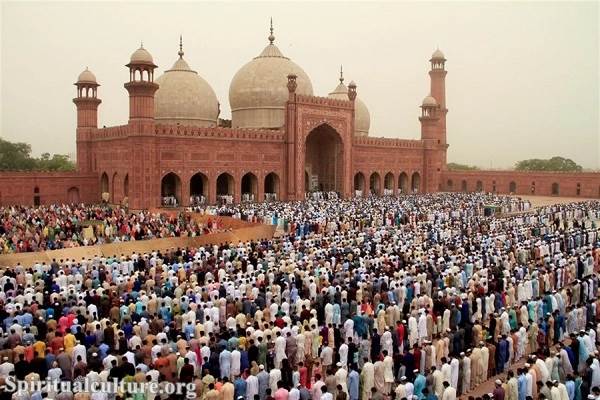
Sunni and Shia Muslims share the Qur’an, the Prophet Muhammad, belief in one God, prayer, fasting, charity, pilgrimage, and much of Islamic ethical life. They differ in important areas of religious authority, hadith collections, jurisprudence, ritual practice, and historical memory. Political conflicts in modern states can intensify sectarian identities, but they should not be treated as simple continuations of a single dispute from 632.
Why the split should not be reduced to politics alone
The first disputes concerned authority and succession, but later generations developed distinct bodies of law, theology, hadith, ritual, and communal memory. Modern Sunni and Shia identities are therefore religious traditions in their own right, not merely political parties inherited from the seventh century. At the same time, local politics can sharpen sectarian divisions, so historical explanation should avoid treating every modern conflict as an inevitable result of early Islamic history.