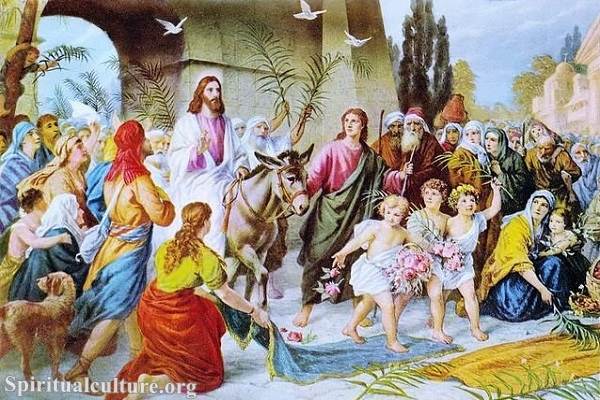
The crowds were shouting. The streets of Jerusalem rang with celebration. People laid palm branches and garments on the ground, creating a royal path for a man riding on a donkey. “Hosanna!” they cried. “Blessed is He who comes in the name of the Lord!”
It was a moment of joy, hope, and expectation. Yet behind this triumphal entry was a deeper reality — one of coming suffering, sacrifice, and redemption. What we call Palm Sunday marks the beginning of the final week of Jesus’ earthly life. It is the gateway into the most sacred time of the Christian calendar: Holy Week.
Palm Sunday is not just a historical memory. It is an invitation to recognize Jesus as the true King — not of politics or pride, but of hearts and eternal salvation. Let us walk the road into Jerusalem together and discover why this day still matters.
What Is Palm Sunday?
Palm Sunday is the first day of Holy Week — the final and most sacred week of the Christian calendar — and the Sunday immediately before Easter. It commemorates a specific and powerful event recorded in all four Gospels: the triumphal entry of Jesus Christ into the city of Jerusalem, just days before His crucifixion. This event marked the public acknowledgment of Jesus as the Messiah by the people, even as He was preparing to fulfill His mission of suffering and redemption.
The occasion is both joyful and deeply symbolic. Crowds gathered to welcome Jesus, spreading their cloaks on the road and waving palm branches as He entered the city riding on a young donkey. They shouted “Hosanna to the Son of David!” — a declaration of messianic hope and salvation. At first glance, it looks like a royal procession. But what makes Palm Sunday extraordinary is how it reverses expectations: the true King comes not on a warhorse, but in humility. The One who receives shouts of praise knows that within a few days, those same voices will cry, “Crucify Him.”
Palm Sunday is not just the beginning of Holy Week. It is a spiritual crossroads. It invites believers to ask: Who is this Jesus I follow? Am I among the crowd that praises Him in good times, or will I walk with Him through suffering? This day marks the beginning of Jesus’ journey to the cross — and the beginning of our own reflection on His love, His kingdom, and our response to Him.
Why It’s Called “Palm Sunday”
The name “Palm Sunday” comes from the key symbol of the day: palm branches. In the ancient Middle East, palms were more than plants — they were signs of victory, peace, and honor. When conquering kings or dignitaries entered a city, crowds would often wave palm branches to celebrate their arrival. So when Jesus rode into Jerusalem, the crowd welcomed Him with palms as if He were a victorious king returning from war.
The Gospel of John records:
“They took palm branches and went out to meet Him, shouting, ‘Hosanna! Blessed is He who comes in the name of the Lord! Blessed is the king of Israel!’” (John 12:13)
But this gesture had deeper meaning. These weren’t just political or national hopes — the people were referencing Messianic promises. “Hosanna” means “Save us now!” — a direct cry for deliverance, drawn from Psalm 118. The crowd was placing their hope in Jesus as the one who would rescue them — likely from Roman rule. What they didn’t understand was that Jesus came to offer a much greater salvation: not from political oppression, but from sin, death, and separation from God.
Today, the term “Palm Sunday” reminds Christians of this moment of recognition — and misrecognition. The people saw Jesus as King, but they misunderstood the kind of King He came to be. This tension makes Palm Sunday a rich day for spiritual reflection: Do we follow Jesus for what He gives us, or for who He truly is?
The Triumphal Entry of Jesus
The event at the heart of Palm Sunday is often called the “Triumphal Entry” — but it is a triumph of a different kind. According to Matthew 21:1–11, Jesus instructed His disciples to go into a village and bring Him a donkey and a colt. He rode the donkey into Jerusalem in fulfillment of a prophecy written centuries earlier in Zechariah 9:9:
“Rejoice greatly, Daughter Zion! Shout, Daughter Jerusalem! See, your king comes to you, righteous and victorious, lowly and riding on a donkey.”
This was no accident. Jesus was staging a prophetic moment — revealing Himself openly as the Messiah. Yet He did so not with grandeur or military might, but with gentleness. A donkey, unlike a warhorse, symbolized peace, humility, and servanthood. The King was coming — but not the kind of king the people had expected.
As Jesus entered the city, crowds gathered around Him, placing their cloaks on the road — an ancient symbol of submission and honor — and crying out:
“Hosanna to the Son of David! Blessed is He who comes in the name of the Lord! Hosanna in the highest heaven!” (Matthew 21:9)
The Biblical and Prophetic Meaning of Palm Sunday
Palm Sunday is not only a historical event or a symbolic ritual; it is the fulfillment of divine prophecy and a pivotal moment in the story of redemption. Everything that happened as Jesus entered Jerusalem was foretold long before it occurred. The deliberate choices He made — the timing, the animal He rode, the route He took — all aligned perfectly with the ancient Scriptures. Palm Sunday reveals that Jesus was not reacting to events around Him but sovereignly fulfilling the mission written about Him centuries in advance.
This moment powerfully confirms that Jesus is the promised Messiah. He did not stumble into His identity — He stepped into it. And by doing so, He validated the truth and authority of Scripture, calling every heart to respond to the King who had long been foretold.
Fulfillment of Old Testament Prophecies
Perhaps the most striking Old Testament prophecy fulfilled on Palm Sunday is found in Zechariah 9:9:
“Rejoice greatly, Daughter Zion! Shout, Daughter Jerusalem! See, your king comes to you, righteous and victorious, lowly and riding on a donkey, on a colt, the foal of a donkey.”
This verse had been written over 500 years before Jesus entered Jerusalem. For devout Jews, it was a clear Messianic promise. The coming King would not arrive with pride or aggression but in humility — righteous, bringing salvation, and riding not a chariot of war, but a beast of burden. By choosing a donkey, Jesus was intentionally fulfilling this prophetic image and offering a vision of kingship rooted in peace, justice, and servanthood.
Moreover, the people’s shouts of “Hosanna” and the reference to “the Son of David” drew from Psalm 118:25–26:
“Lord, save us! Lord, grant us success! Blessed is he who comes in the name of the Lord.”
Jesus Declaring His Kingship
Palm Sunday is the day Jesus openly declared His kingship — not by shouting it, but by enacting it. Everything about His entry into Jerusalem was a message: I am the King — but My kingdom is not of this world.
Throughout His ministry, Jesus often avoided public declarations of His messianic identity. He told people to stay silent after miracles. He withdrew from crowds. He resisted being made king by force (John 6:15). But Palm Sunday is different. It is the moment when He embraces His royal identity and presents Himself to Jerusalem as their long-awaited King.
The way He did this, however, upended every expectation. Instead of riding a stallion and leading an army, He chose a colt. Instead of claiming power with military might, He offered Himself in humility and obedience. His kingship would not be recognized by the powerful, but by the poor in spirit. His throne would not be made of gold, but would soon be a wooden cross.
This deliberate public act — the Triumphal Entry — was Jesus’ way of saying: You must now decide who I am. I am not hiding anymore. Will you receive Me as your King?
But there was something even deeper happening spiritually. By entering the city at the time of Passover, Jesus was aligning His sacrifice with the sacrificial lambs being prepared for the feast. In doing so, He revealed not only that He was King, but that He was also the Lamb of God — the only One who could take away the sins of the world.
Palm Sunday, then, is more than a political statement or a cultural celebration. It is the Messiah’s divine announcement: I am here. I am the fulfillment of your Scriptures. I am the King you’ve waited for — but I have come to die for you.
Palm Sunday and the Journey to the Cross
Palm Sunday is a day of celebration — but only when viewed through the eyes of eternity. For Jesus, the cheering crowds and waving palms were not a distraction or a reward. They were a solemn signal: the final stage of His mission had begun. As the people shouted “Hosanna!” He saw the cross rising ahead. As they laid down palm branches, He prepared to lay down His life.
This is what makes Palm Sunday so deeply significant. It is the gateway into Holy Week, the most sacred and sorrowful time in the Christian calendar. And it shows that true love always walks the path of sacrifice.
Jesus entered Jerusalem knowing full well what awaited Him. He knew the hearts of the people — how quickly their praise would turn to protest. He knew that within days, Judas would betray Him, Peter would deny Him, and the crowds would demand His death. And still, He came. He chose the path that led not to a throne, but to a cross. Why? Because He came not to be served, but to serve — and to give His life as a ransom for many (Mark 10:45).
The journey that began on Palm Sunday is a journey marked by obedience, sorrow, love, and ultimate victory. It is the narrow road that leads to salvation — and the road every follower of Christ must walk, in some way, with Him.
Human Hopes vs. God’s Salvation Plan
Christian Traditions and Observances of Palm Sunday
Across the centuries and around the globe, Christians have marked Palm Sunday with rich and meaningful traditions. These practices not only commemorate Jesus’ entry into Jerusalem, but also invite believers to enter the story with their hearts, minds, and bodies. From liturgical processions to Scripture readings, from waving palm branches to solemn prayer, Palm Sunday observances form a bridge between biblical history and living faith.
Though the customs may vary across denominations and cultures, the heart of the celebration remains the same: to honor the King who came in humility, and to prepare to follow Him through His suffering, death, and resurrection.
Palm Processions
One of the most iconic and visual traditions of Palm Sunday is the procession of palms. This practice, rooted in ancient Christian worship, reenacts Jesus’ entrance into Jerusalem by having congregants walk together — often outside the church — holding palm branches and singing hymns or chanting “Hosanna.”
In many churches, the procession begins at a separate location, such as a courtyard or the back of the sanctuary. Participants carry palm fronds (or local substitutes, such as olive or willow branches where palms are unavailable) and sing praises, just as the crowds did on the first Palm Sunday. Children often take a central role, reminding us of Jesus’ words: “Let the little children come to me.”
This ritual is not just pageantry; it’s a form of embodied worship. By physically joining the crowd that welcomed Jesus, worshippers are drawn into the narrative. The path of the procession becomes symbolic of the life of faith — a movement from joyful recognition to solemn reflection as Holy Week begins.
In some Orthodox and Catholic communities, the procession also includes icons or images of Christ, sometimes on a donkey or carried in great reverence, reminding participants that the King is not only coming — He is among them.
The Blessing of Palms
In Catholic, Anglican, and some Orthodox and Lutheran traditions, the palm branches used in the procession are blessed at the start of the Palm Sunday service. A special prayer is offered over the palms, asking God to sanctify them as symbols of Christ’s victory and peace.
Once blessed, the palms are distributed to the congregation. Some people bring them home and place them near a cross or hang them over doorways as a sign of devotion. Others fold them into small crosses or braid them into sacred shapes — a simple yet powerful act of reverence.
In many Catholic parishes, the palms from this year are kept and saved. They are then burned the following year to produce the ashes used for Ash Wednesday, which begins the season of Lent. This liturgical cycle reminds believers that our praise must lead to repentance, and that the King who was hailed must also be the Lamb who was slain.
Reflections and Readings
Palm Sunday liturgies are rich with Scripture. Most churches read from the Gospel accounts of the Triumphal Entry, often choosing the version from Matthew, Mark, Luke, or John depending on the year in the liturgical cycle.
But in addition to the joyful scenes of Jesus’ entry into Jerusalem, many churches also include the reading of the Passion narrative — the story of Jesus’ suffering and crucifixion. In Catholic Mass, for example, it is customary to read the entire Passion story on Palm Sunday, creating a dramatic contrast within the service itself: the celebration of palms gives way to the solemn retelling of betrayal, agony, and death.
This powerful juxtaposition invites deep personal reflection. It is a call to prepare not only to wave palms with joy, but to stand at the foot of the cross in sorrow and awe. Palm Sunday begins with “Hosanna” and ends with “Crucify Him!” — forcing each worshipper to wrestle with the complexity of the human heart and the depth of God’s grace.
Hymns and songs used on Palm Sunday often reflect this dual mood. Some proclaim Christ as King in majestic tones; others invite the heart into repentance and trust. Together, these elements help the faithful begin Holy Week not as spectators, but as participants in the story that changed the world.
Palm Sunday in Different Christian Denominations
Though Christians may worship in different traditions and cultural settings, Palm Sunday unites the global Church in honoring the beginning of Holy Week — the final days of Jesus’ earthly ministry. While the outward forms of worship may vary among denominations, the central message remains the same: Jesus Christ, the promised King, entered Jerusalem to fulfill the divine plan of salvation through His death and resurrection.
Each tradition brings its own richness to the celebration of Palm Sunday. These distinct liturgies and customs reflect theological emphases and spiritual rhythms that together deepen our understanding of Christ’s mission and His call to discipleship.
Catholic Church
In the Roman Catholic Church, Palm Sunday is formally called “Palm Sunday of the Passion of the Lord.” It marks a dramatic shift in the liturgical season — from the penitence of Lent to the intense contemplation of Holy Week.
The Mass on Palm Sunday typically begins outside the church, where the priest blesses the palm branches and leads a solemn procession into the sanctuary. This outdoor gathering often includes Gospel readings recounting Jesus’ entry into Jerusalem, with the congregation holding palm fronds and singing “Hosanna” — recreating the joy of the crowd that welcomed Christ.
What makes Catholic Palm Sunday services particularly moving is the reading of the entire Passion narrative, usually from the Gospel of Matthew, Mark, or Luke (depending on the liturgical year). This reading is often dramatic and participatory — with multiple readers, including one voice for the narrator, another for Jesus, and a third for the crowd. The congregation joins in shouting lines like “Crucify Him!” — drawing worshippers into the sorrow and tension of the coming crucifixion.
Catholics are also encouraged to bring their blessed palms home, displaying them as reminders of Christ’s kingship and sacrifice. These palms are later collected, burned, and used as ashes for the following year’s Ash Wednesday, beautifully tying the entire liturgical cycle together.
Eastern Orthodox Church
In the Eastern Orthodox Church, Palm Sunday is a deeply joyous and theologically rich celebration, known as the Feast of the Entrance of the Lord into Jerusalem. It is one of the Twelve Great Feasts of the Church and marks the conclusion of Great Lent.
In Orthodox tradition, the emphasis on Palm Sunday is victory and glory — not earthly, but spiritual. The liturgy is radiant and festive, filled with hymns proclaiming Christ as the King of Glory. A common refrain is:
“Blessed is He who comes in the name of the Lord!”
Worship begins on Saturday evening with Great Vespers, and continues into Sunday with Orthros (Matins) and the Divine Liturgy. During the service, palms and pussy willows (used in colder climates where palms are unavailable) are blessed and distributed to the faithful. Like in the West, the branches symbolize triumph and peace — but in the East, they are also seen as signs of Christ’s power over death, pointing forward to His resurrection.
The Orthodox liturgy beautifully captures the paradox of Palm Sunday: that the King enters Jerusalem in triumph, but the road ahead leads to the cross. As such, the services are filled with a sense of both celebration and solemn preparation for the intense days of Holy Week, especially Holy Friday and Pascha (Easter).
Protestant Churches
Protestant traditions — which include Anglican, Lutheran, Methodist, Reformed, Baptist, and many others — commemorate Palm Sunday in a variety of ways, often centered around Scripture, preaching, and congregational participation.
In liturgical Protestant churches (such as Anglican/Episcopal and Lutheran congregations), the service often resembles Catholic practice, including a palm procession, the blessing of branches, and readings from the Gospels. The Passion narrative may also be read aloud, and hymns like “All Glory, Laud, and Honor” or “Ride On, Ride On in Majesty” are traditionally sung.
In more evangelical or free church settings, Palm Sunday may take a simpler form but still holds deep meaning. Sermons typically focus on Jesus’ humility, kingship, and the call to true discipleship. Palm branches may be used symbolically, especially in children’s programs or visual displays, and many churches use the day to prepare hearts for Good Friday and Easter Sunday.
Regardless of the form, most Protestant churches emphasize that Palm Sunday is not just a celebration, but a turning point — a spiritual invitation to follow Christ not just into Jerusalem, but all the way to the cross and beyond.
Lessons from Palm Sunday
Palm Sunday is more than a celebration of Jesus’ entry into Jerusalem — it is a sacred window into the very heart of the Gospel. Behind the waving palms and cries of “Hosanna” lies a significant spiritual message, calling us not only to recognize who Jesus is, but to reflect deeply on how we respond to Him.
This day holds enduring lessons for every follower of Christ. It reveals the character of God, the nature of true discipleship, and the inner posture required to walk with Jesus — not only in moments of joy, but through suffering, sacrifice, and surrender.
True Kingship Looks Like Humility
Jesus’ choice to enter Jerusalem on a donkey was not a last-minute detail — it was a declaration. The King of kings came not in pomp or military power, but in gentleness and lowliness. He fulfilled Zechariah’s prophecy not by overwhelming the city, but by entering it in peace.
This lesson speaks directly to our pride-driven world. The way of Jesus is not about rising higher, but about lowering ourselves in love. Palm Sunday challenges us to examine our own hearts:
- Do we lead with humility?
- Do we seek greatness, or do we seek to serve?
To follow Jesus is to adopt His mindset — as Paul wrote in Philippians 2:
“He humbled himself by becoming obedient to death — even death on a cross.” (Philippians 2:8)
Praise Without Surrender Is Empty
The crowds in Jerusalem shouted words of praise, but their hearts were shallow. They loved the idea of a Savior, but rejected the reality of the cross. When Jesus didn’t fulfill their expectations, their loyalty faded.
This reveals a sobering truth: it’s possible to say all the right things about Jesus and still miss Him entirely. Worship that is not rooted in surrender becomes noise. Faith without obedience becomes fiction.
Palm Sunday encourages readers to ask:
- Is my worship based on truth or convenience?
- Am I praising Jesus only when He fits my plans — or will I follow Him even when He leads where I wouldn’t choose to go?
Following Jesus Means Walking Toward the Cross
Palm Sunday is the beginning of a journey. It leads not to celebration alone, but through betrayal, arrest, mockery, and death. Jesus didn’t avoid suffering — He embraced it, because love required it.
If we are to follow Christ, we must follow Him through the whole journey — not only to the gates of Jerusalem, but to Gethsemane, to Golgotha, and ultimately, to the empty tomb.
Jesus said,
“Whoever wants to be my disciple must deny themselves and take up their cross daily and follow me.” (Luke 9:23)