Shia Islam is one of Islam’s major branches. Its traditions give distinctive importance to Ali ibn Abi Talib and the Prophet Muhammad’s family, while different Shia communities—including Twelver, Ismaili, and Zaydi traditions—understand the Imamate and religious authority in different ways.
Who Are Shia Muslims?
Shia Muslims regard Ali ibn Abi Talib, the Prophet Muhammad’s cousin and son-in-law, as his rightful successor in religious leadership. The different Shia traditions do not, however, share a single doctrine of how later Imams are appointed or recognized.
The word “Shia” in Arabic means a group or supportive party of people. The commonly known term is shortened from the historical “Shia-t-Ali,” or “the Party of Ali.” They are also known as followers of “Ahl-al-Bayt” or “People of the Household” (of the Prophet).
Shia Islam, like Sunni Islam, is based on the Quran and the message of the Islamic prophet Muhammad. However, Shia Muslims also venerate certain religious authorities, known as Imams. Twelver and many Ismaili teachings assign the Imams a divinely guided religious role, while Zaydi teachings differ on how an Imam is recognized and do not treat their Imams as infallible.
Core Beliefs and Religious Authority in Shia Islam
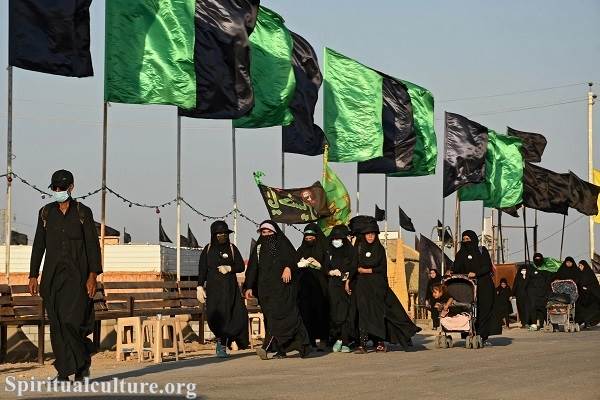
The commemoration of Ashura is especially significant in many Shia communities because it recalls the death of Husayn ibn Ali, the Prophet Muhammad’s grandson, at Karbala in 680 CE. In some regions, commemorations include ta’ziya passion plays, while other communities observe the occasion differently. Celebrations of revered religious figures also vary; they cannot be divided neatly into practices that all Shia observe and all Sunni Muslims reject.
Three major traditions within Shia Islam are Twelver, Ismaili, and Zaydi Islam. Twelvers recognize twelve Imams and hold that the twelfth Imam is in occultation. Ismaili traditions developed different lines of succession, and Nizari Ismailis continue to recognize a living Imam; their line did not end with Isma’il ibn Ja’far. Zaydis trace their tradition to Zayd ibn Ali but do not teach that the Imamate ended with him. Their approach allows a qualified descendant of Ali and Fatima to claim the Imamate under particular conditions, rather than following the Twelver model of twelve designated Imams.
Shia and Sunni Muslims share fundamental commitments to one God, the Qur’an, Muhammad as God’s messenger, prayer, charity, fasting, and pilgrimage. The familiar Five Pillars and Six Articles of Faith are common summaries in Sunni religious teaching, but Shia theological classifications vary. Twelver Shia scholarship commonly sets out five principles of faith (usul al-din): divine unity, divine justice, prophethood, the Imamate, and resurrection or the Last Judgment. It also distinguishes religious practices (furu al-din). Ismaili and Zaydi formulations have their own histories and emphases.
Shia Practices and Communities
Understanding the diversity within Islam is crucial in today’s global society. The beliefs and practices of Shia Muslims, although different from those of Sunni Muslims, are rooted in the same Islamic faith. Both sects have made significant contributions to Islamic and world civilization.
Shia Muslims and Shia Islam represent a complex mix of beliefs and practices that have shaped the course of Islamic history. Their unique interpretation of Islam and its teachings offers a fascinating insight into the diversity and complexity of one of the world’s major religions. As we strive for a world of mutual understanding and respect, it is essential to acknowledge and appreciate this diversity within our global community.