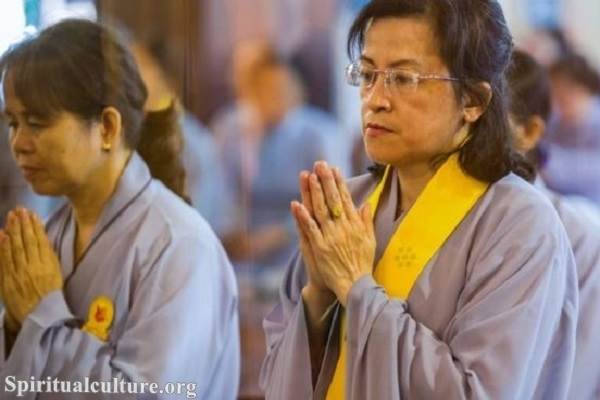
Mahayana Buddhism is a broad family of Buddhist traditions that developed in India and later became especially influential in China, Korea, Japan, Vietnam, and parts of the Himalayan world. The name Mahayana means “Great Vehicle.” It does not refer to one church, founder, or single system of doctrine.
The bodhisattva ideal
A central Mahayana model is the bodhisattva, a being committed to awakening for the benefit of sentient beings. Earlier Buddhist traditions also know bodhisattvas, but Mahayana texts give the bodhisattva path a particularly prominent place and describe practices such as generosity, ethics, patience, effort, meditation, and wisdom.
Wisdom and emptiness
Prajnaparamita scriptures and later Mahayana philosophy emphasize śūnyatā, or emptiness. Emptiness means that phenomena do not possess an independent, permanent essence; they arise dependently. This teaching is not intended to say that ordinary experience does not exist at all.
Mahayana sutras
Mahayana communities received additional bodies of scripture beyond the early Buddhist collections. Important texts include Prajnaparamita sutras such as the Heart Sutra and Diamond Sutra, the Lotus Sutra, Pure Land sutras, the Vimalakirti Sutra, and many others. Different schools emphasize different texts.
Major traditions
Chinese Buddhism developed influential schools including Tiantai, Huayan, Chan, and Pure Land. These traditions shaped Korean and Vietnamese Buddhism and were transmitted to Japan in forms such as Tendai, Zen, Pure Land, and Nichiren traditions. Mahayana teachings also form an important doctrinal foundation for Tibetan Buddhism, although Vajrayana adds distinctive tantric practices and institutions.
Buddhas and bodhisattvas
Mahayana devotional and contemplative life includes figures such as Amitabha, Avalokiteshvara/Guanyin, Manjushri, Ksitigarbha, and Maitreya. Their roles differ across texts and cultures.
Mahayana and other Buddhist traditions
Mahayana should not be described simply as “more compassionate” or “more advanced” than Theravada. Buddhist traditions developed different scriptures, institutions, philosophical systems, and ideals while sharing basic inheritances such as karma, ethical discipline, meditation, and liberation from suffering.
Historical development
Mahayana movements appeared gradually in India during the centuries around the beginning of the Common Era. They developed within the wider Buddhist world rather than emerging from one founding council or one historical leader. Monastics who accepted Mahayana sutras could still live under established Vinaya lineages.
Unity and diversity
Mahayana is a useful umbrella term, but it covers major differences in philosophy and practice. Madhyamaka, Yogacara, Pure Land, Chan/Zen, Tiantai, Huayan, Nichiren, and other traditions do not reduce to one doctrine. Some emphasize philosophical analysis, some meditation, some devotion or chanting, and many combine several approaches.