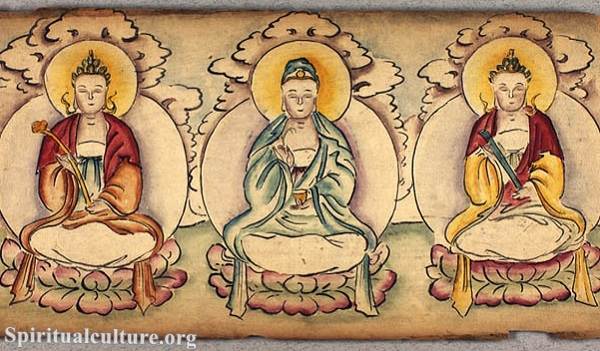
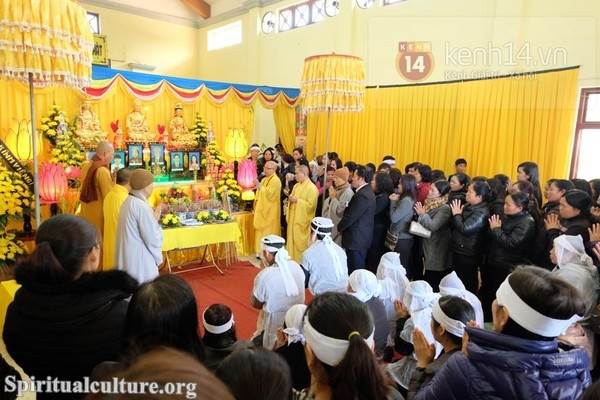
Many Buddhists affirm rebirth, but Buddhist teachings usually do not describe it as an eternal soul moving unchanged from one body to another. Rebirth is explained through karma, dependent arising, and continuity without a permanent self, although traditions differ in philosophical detail.
The belief in reincarnation is also linked to karma, which holds that one’s actions in this life determine the nature of one’s next rebirth.
Do Buddhists believe in reincarnation? This is a question that many people who are interested in Buddhism send us. Read the full article to know the answer.
What is reincarnation?
“Reincarnation” is often used broadly for beliefs about repeated lives, but Buddhist sources more commonly discuss rebirth. Because Buddhism teaches not-self, Buddhist rebirth should not automatically be explained as a permanent soul or spirit moving unchanged from one body to another.
The belief in reincarnation in Buddhism
The belief in reincarnation is central to many branches of Buddhism, including Theravada and Mahayana. Buddhist traditions explain continuity after death in different ways, but generally avoid positing an eternal, unchanging self that passes intact from one body to another. Repeated birth within cyclic existence is described as samsara. The ultimate goal in Buddhism is to achieve enlightenment and escape the cycle of reincarnation, which is seen as a cycle of suffering.
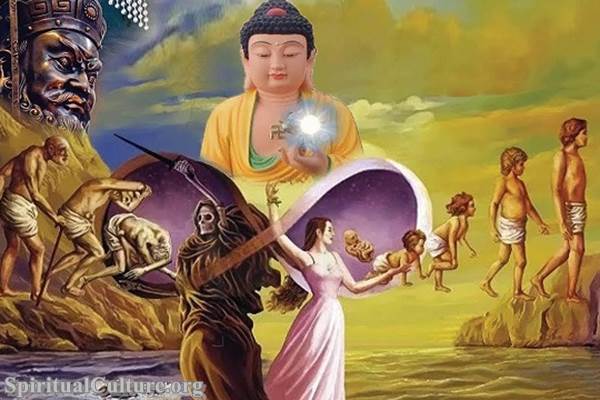
In the Theravada tradition, it is believed that the ultimate goal is to achieve nirvana, which is a state of complete freedom from suffering and the cycle of rebirth. In the Mahayana tradition, it is believed that one can also strive to become a bodhisattva. This being has achieved enlightenment but chooses to remain in the cycle of rebirth to help others achieve enlightenment.
Buddhism also teaches that the nature of one’s next rebirth is determined by one’s actions in this life, which is called Karma. Good actions lead to a better rebirth, and bad ones lead to a worse one.
In Buddhism, the belief in reincarnation is understood as a natural consequence of believing in the impermanence of all things. According to Buddhist teachings, everything in existence, including the self, is constantly changing and in a state of flux. Therefore, the self cannot be considered a permanent entity but rather a temporary collection of causes and conditions that come together to form a being. When these causes and conditions dissolve at death, the self is believed to be reborn in a new form with a new set of causes and conditions.
Additionally, the belief in reincarnation is linked to the concept of suffering, or dukkha, which is central to Buddhist teachings. It is believed that suffering arises from craving and attachment to impermanent things. One can achieve liberation from suffering by understanding the nature of impermanence and the cycle of rebirth.
Some branches of Buddhism, like Zen Buddhism, do not put much emphasis on the afterlife. While the belief in reincarnation is not rejected, it is not considered the most important aspect of the teachings.
In summary, the belief in reincarnation is central to many branches of Buddhism and is seen as a natural consequence of the belief in the impermanence of all things. It is understood as a process of rebirth in which a person’s consciousness or spirit continues to exist after death and is reborn in a new body. Therefore, it is correct for Buddhists to believe in reincarnation.