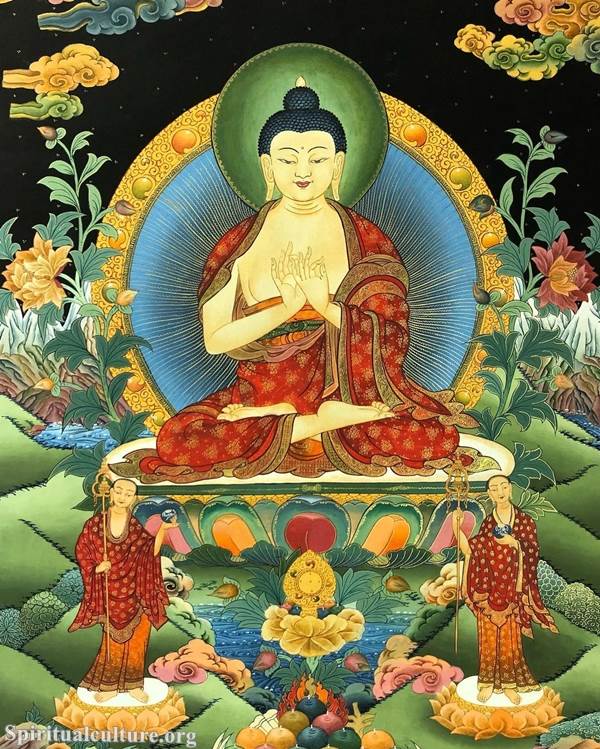
Buddhism has no single “main prayer” shared by every tradition. Common devotional forms include taking refuge in the Buddha, Dharma, and Sangha; chanting sutras; reciting mantras or Buddha names; making aspirations; transferring merit; and practicing meditation or mindful recollection.
However, some rituals and practices are considered spiritual or devotional, including chanting, reciting traditional texts or mantras, and offering statues or images of the Buddha or other enlightened beings.
One common form of devotion in Buddhism is the recitation of the “Three Refuges” or “Three Jewels,” which involves repeating the phrases “I take refuge in the Buddha, I take refuge in the Dharma, I take refuge in the Sangha.” These three refuges represent the Buddha as a teacher and source of enlightenment, the Dharma as the teachings and path to enlightenment, and the Sangha as the community of practitioners who support and inspire each other in pursuing enlightenment.
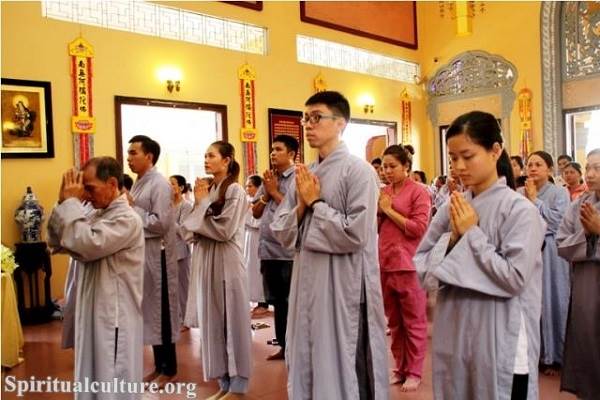
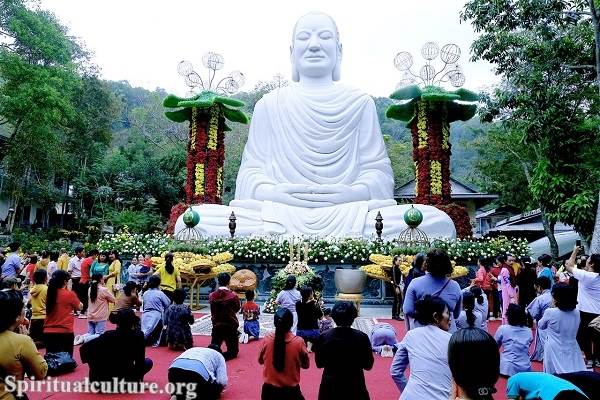
Other common practices include prostrations, where practitioners bow down before statues or images of the Buddha to show respect and humility and make offerings of incense, flowers, or other objects to express devotion and generate positive karma.
While these practices are widely observed in many Buddhist traditions, the specific forms and rituals may vary from one tradition to another, and not all Buddhists engage in devotional practices to the same extent.
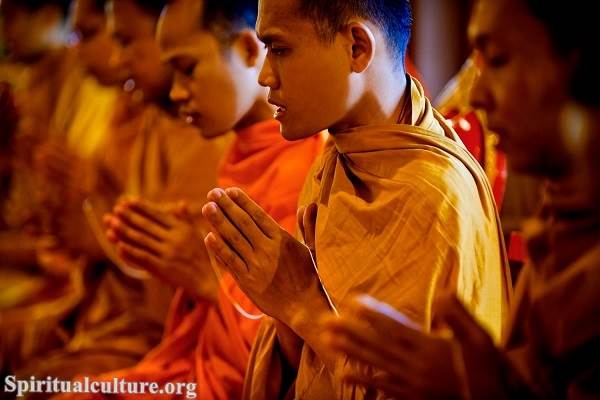
The most important aspect of Buddhist practice is cultivating wisdom and compassion in one’s heart rather than any specific form of prayer or devotion.
In addition, there are many other ways Buddhists may express their devotion and cultivate their spiritual practice. For example:
Meditation
Many Buddhists consider meditation to be a central aspect of their spiritual practice. This can take many forms, including mindfulness meditation, where practitioners focus on their breath or other sensations in the present moment; loving-kindness meditation, where practitioners cultivate feelings of loving-kindness and compassion towards themselves and others; and visualization practices, where practitioners use their imagination to create mental images of enlightened beings or other positive symbols.
Chanting
Chanting is another common form of devotion in Buddhism, and many Buddhists recite traditional texts or mantras as part of their spiritual practice. Some common texts and mantras include the Heart Sutra, a concise expression of the Buddha’s teachings on emptiness and interdependence; the Om Mani Padme Hum mantra, which is associated with the bodhisattva of compassion, Avalokiteshvara; and the Refuge Formula, which includes the Three Refuges I mentioned earlier.
Prostrations
Prostrations show respect and humility, and many Buddhists perform prostrations as part of their spiritual practice. This can involve bowing down to statues or images of the Buddha or other enlightened beings or simply bowing to one’s teacher or other spiritual mentors.
Offerings
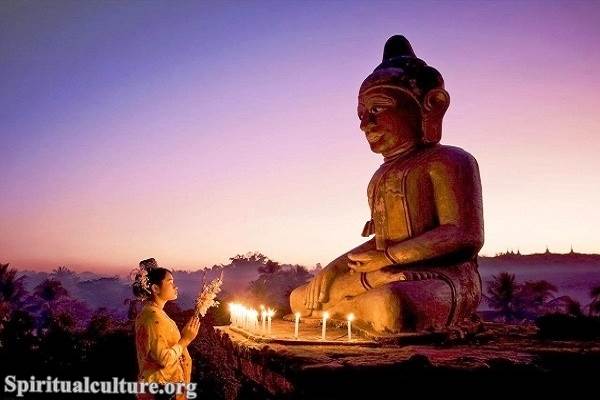
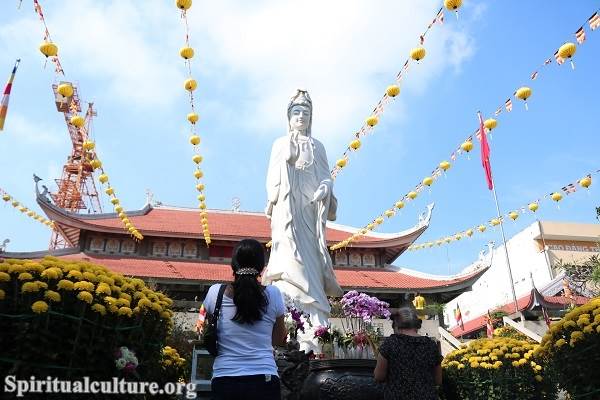
Making offerings is another way Buddhists may express devotion and generate positive karma. This can involve offering physical objects such as flowers, incense, or food to statues or images of the Buddha or other enlightened beings or making financial or other offerings to support the spiritual community or causes aligned with the values of Buddhism.
These are just a few examples of the many different ways in which Buddhists may express their devotion and cultivate their spiritual practice. Taken together, the most important aspect of Buddhism is the cultivation of wisdom and compassion, and the specific forms of devotion and practice may vary from one tradition to another and from one individual to another.
Related Questions
Where do Buddhists go to pray?
Instead of being directed towards a specific deity or divine being, prayer in Buddhism is often seen as cultivating mindfulness and focusing the mind on spiritual ideals.
There are many places where Buddhists may practice their spiritual disciplines and seek inspiration or guidance. Some common places where Buddhists may go to pray or meditate include:
Monasteries and temples
These are places of worship that are specifically dedicated to Buddhism, and they often have areas set aside for meditation and other spiritual practices.
Many Buddhists visit these places regularly to deepen their spiritual practice and connect with others who share their spiritual interests.
Home altar or shrine
Many Buddhists create a small altar or shrine in their home where they can meditate or perform other spiritual practices. These may include offerings of incense, candles, or other objects that are considered sacred within the tradition.
Natural settings
Some Buddhists find that being in nature helps cultivate a sense of peace and mindfulness, and may choose to go for walks or sit in a park or other natural setting as a form of spiritual practice.
Taken together, the most important thing is not the specific location where one practices but rather the intention and attitude with which one approaches these practices.
Do Buddhists pray to god?
Instead, Buddhism emphasizes the importance of individual effort and personal responsibility in pursuing enlightenment. In this way, prayer in Buddhism is not directed towards a specific deity or divine being but rather towards one’s own inner spiritual development.
However, the practices and beliefs of Buddhism can vary widely among different schools and traditions.
Some forms of Buddhism may incorporate the worship of deities and other spiritual beings. In these traditions, prayer and offerings may be made to these beings to express devotion and seek their assistance or guidance.
Overall, the spiritual path in Buddhism is seen as an individual journey, and different people may find different practices and approaches to be most helpful and meaningful to them.
Some Buddhists may choose to incorporate prayer or other devotional practices into their spiritual practice, while others may focus more on meditation and other techniques for cultivating mindfulness and inner peace.
What do Buddhists pray for?
Some specific things that Buddhists may pray for include:
Inner peace and happiness
Buddhists may pray for the ability to cultivate inner peace and happiness, which are seen as essential for spiritual development.
Wisdom and understanding
Buddhists may pray for wisdom and understanding of the true nature of reality and the ability to see things.
Compassion and loving-kindness
Buddhists may pray for the ability to cultivate compassion and loving-kindness towards all beings, including themselves and others.
Forgiveness
Buddhists may pray for the ability to let go of anger and resentment and to cultivate forgiveness towards those who have caused them harm.
Protection and safety
Buddhists may pray for protection and safety for themselves and others.
Overall, Buddhists may pray for a variety of things, but their prayers are typically focused on developing inner peace, wisdom, and understanding of the true nature of reality rather than on seeking specific material or worldly things.
Do Buddhists pray?
While Buddhists may recite traditional phrases or mantras as part of their spiritual practice, these are not typically seen as prayers in seeking favors or blessings from a higher power.
Instead, Buddhist practices such as chanting and recitation are often used to cultivate mindfulness and develop concentration. They may also be used to connect with the Buddha’s teachings and express devotion to the path of spiritual awakening.
The Buddhist path emphasizes personal responsibility and cultivating one’s spiritual growth rather than relying on external forces or deities for help or guidance. Buddhists may use various practices to help them cultivate positive states of mind and to develop qualities such as compassion, wisdom, and equanimity, but these practices are not typically understood as prayer in the traditional sense.
How often do Buddhists pray?
Buddhists do not typically pray to a personal deity or ask for specific favors or interventions. Instead, Buddhist practices often involve meditation and mindfulness intended to cultivate a sense of peace, clarity, and understanding. These practices may include repeating phrases or mantras, bowing, or other physical gestures, but they are not necessarily considered prayers in the traditional sense.
The frequency with which Buddhists engage in these practices can vary widely. Some Buddhists may engage in daily meditation and other spiritual practices, while others may only practice occasionally.
There is no one-size-fits-all answer to how often Buddhists pray, as it depends on the individual and their spiritual path and practice.