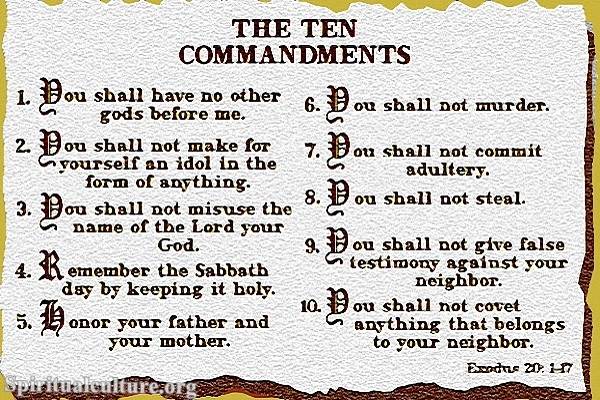
Muslims honor Moses, known in Arabic as Mūsā, as a major prophet and believe that God gave him revelation. Islam therefore affirms many moral teachings familiar from the biblical Ten Commandments. However, the Qur’an does not present one passage labeled “the Ten Commandments” in exactly the same form or order as Exodus and Deuteronomy.
Moses in Islam
Moses is one of the most frequently mentioned prophets in the Qur’an. Islamic teaching places him within a long line of prophets who called people to worship the one God and live in obedience to divine guidance.
Muslims also believe that the Torah was originally revealed by God to Moses. The Islamic understanding of earlier revelation, however, is shaped by the Qur’an, which Muslims regard as the final scripture and authoritative criterion for belief and practice.
Do Qur’anic teachings match the Ten Commandments?
There is substantial moral overlap. Qur’anic passages command worship of God alone, respect for parents, protection of life, sexual morality, honesty, justice, and care with the property of others. These themes resemble important parts of the Decalogue.
A frequently discussed group of moral instructions appears in Qur’an 6:151–153. It includes rejecting idolatry, honoring parents, not killing unlawfully, avoiding grave indecency, protecting orphan property, giving full measure and weight, speaking justly, keeping commitments, and following God’s path. Scholars sometimes compare this passage with the biblical commandments, but it should not be described as a word-for-word Islamic version of the Decalogue.
What about the Sabbath?
One important difference concerns Sabbath observance. The biblical Decalogue includes keeping the Sabbath holy. Islam has Friday congregational prayer, but Friday is not simply the Islamic equivalent of the Jewish Sabbath command. Islamic law and practice developed their own requirements around Friday prayer and ordinary work.
Do Muslims follow the biblical Ten Commandments as a legal code?
Muslims normally follow the Qur’an and the teachings and practice associated with the Prophet Muhammad as the primary sources of Islamic guidance. They do not generally treat the biblical wording of the Ten Commandments as an independent legal code binding Muslims in exactly the way it functions within Jewish or Christian traditions.
Still, many of the commandments express moral principles that Islam also teaches. The similarity reflects Islam’s understanding of continuity among the prophetic traditions associated with Abraham, Moses, Jesus, and Muhammad.
The simplest answer
Muslims believe that Moses received revelation from God and accept many of the moral principles found in the Ten Commandments. But Islam frames those teachings through the Qur’an and Islamic tradition rather than adopting the biblical Decalogue unchanged.
Related background can be found in Moses, the Ten Commandments, and Islam.




The legal profession in Britain has abandoned the 10 commandments in order to make money. Our moral code has disappeared so Moses needs to return to have it reinforced.