Buddhism has no universal doctrine requiring belief in Jesus. Jesus belongs to the Christian tradition, while Buddhism is centered on the Buddha, the Dharma, and the path to awakening. Individual Buddhists may nevertheless respect Jesus as a moral teacher, admire aspects of his life, or interpret him through Buddhist ideas.
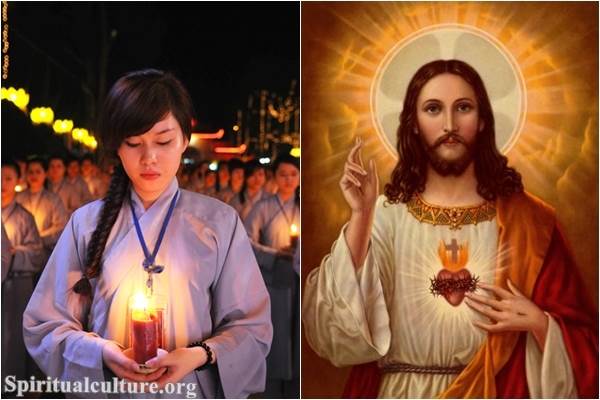
Jesus is not a central figure in Buddhist doctrine
The foundational Buddhist teachings developed centuries before Christianity. The Four Noble Truths, the Noble Eightfold Path, karma, rebirth, meditation, and liberation do not depend on beliefs about Jesus.
For that reason, a Buddhist can practice Buddhism without holding any particular view of Jesus. Many Buddhist scriptures do not mention him at all.
Why some Buddhists respect Jesus
Some modern Buddhist teachers and writers have expressed admiration for teachings associated with compassion, forgiveness, love of enemies, care for the poor, and self-sacrifice. In interfaith dialogue, Jesus may be discussed as an example of ethical or spiritual dedication.
This kind of respect does not necessarily mean accepting Christian claims that Jesus is the divine Son of God, the incarnate Word, or the savior whose death and resurrection reconcile humanity to God.
Do Buddhists think Jesus was a Buddha or bodhisattva?
A few modern interpreters have compared Jesus with a bodhisattva or enlightened teacher. Such comparisons can be useful in dialogue, but they are not a standard doctrine shared by Theravāda, Mahāyāna, and Vajrayāna Buddhism.
Calling Jesus a bodhisattva should therefore be presented as an interpretation held by some people, not as “what Buddhists believe.”
Major differences between Buddhism and Christianity
Christianity is centered on God, creation, sin, salvation, and the person of Jesus Christ. Most forms of Buddhism do not teach a creator God and instead analyze suffering in terms of ignorance, craving, karma, and conditioned existence.
Christian traditions proclaim Jesus’ death and resurrection as decisive for salvation. Buddhist traditions focus on awakening through ethical conduct, meditation, wisdom, devotion, and other practices according to the school. These are substantial theological differences even where moral teachings can sound similar.
Can a Buddhist believe in Jesus?
A Buddhist may believe that Jesus existed historically, value his teachings, or participate in an interfaith family without becoming Christian. The question becomes different if “believe in Jesus” means affirming specifically Christian doctrines about his divinity, resurrection, and saving role.
Some individuals combine religious practices, but traditional Christian and Buddhist frameworks make claims that cannot simply be treated as identical.
A balanced answer
Buddhists are not required either to reject Jesus or to confess Christian faith in him. Views range from little interest, to respectful appreciation, to creative Buddhist interpretations.
To understand the traditions on their own terms, compare Jesus Christ, the Buddha, and Buddhism.