Hindu dietary practice is diverse. Many Hindus are vegetarian, many are not, and no single menu represents all Hindu communities. Food choices are shaped by ahiṃsā, family tradition, regional history, devotional lineage, health, economics, and ritual practice.
Vegetarianism and ahiṃsā
The principle of ahiṃsā, or non-harm, has strongly influenced Hindu vegetarian traditions. Vaishnava, Jain-influenced, temple, monastic, and devotional communities may place particular emphasis on avoiding meat.
However, large numbers of Hindus eat fish, poultry, goat, or other meat depending on region and family custom.
Why many Hindus avoid beef
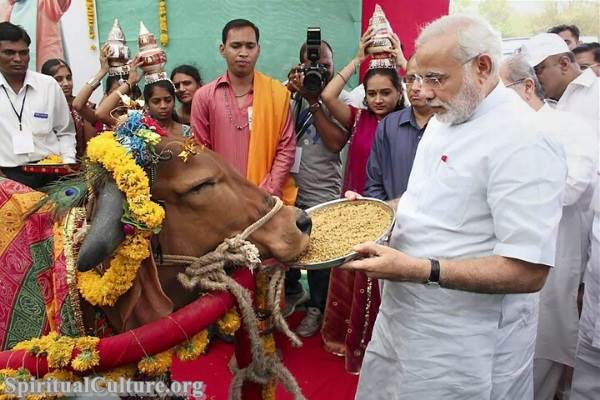
Cows hold strong sacred and cultural significance in Hindu traditions, and beef avoidance is widespread. The cow can symbolize generosity, nourishment, motherhood, and non-harm.
Practice is not identical everywhere, and food should not be used as a simplistic test of whether a person is really Hindu.
Fasting and festival foods
Hindus may fast on Ekādaśī, Śivarātri, Navarātri, particular weekdays, or family observances. A fast can mean complete abstention, eating only fruit and milk, avoiding grains, or following another restricted diet.
Rules depend on deity, festival, lineage, region, and individual health.
Prasāda and food offered in worship
Food offered during pūjā can become prasāda, blessed food shared by worshipers. Many temple kitchens follow vegetarian standards, especially in Vaishnava traditions.
Some communities also avoid onion, garlic, alcohol, eggs, or other foods for ritual reasons.
Purity, community, and regional practice
Food rules in Hindu communities can also be shaped by ideas of ritual purity, caste history, temple discipline, family custom, and the distinction between foods considered sattvic, rajasic, or tamasic in some traditions. These categories are interpreted differently and should not be presented as a universal diet followed by all Hindus.
Regional cuisine matters greatly. Coastal, Himalayan, southern, eastern, and other Indian communities have developed different food patterns, and Hindu communities outside India adapt practice to local ingredients and social settings.
Fasting is not one single rule
Hindu fasting may involve complete abstention from food, one meal, fruit and milk, avoidance of grains, or restrictions tied to a deity or festival. Ekadashi, Navaratri, Shivaratri, and other observances can involve different expectations depending on lineage and household.
Health, age, pregnancy, work, and personal circumstances may also affect practice. Describing a fast responsibly therefore means identifying who observes it, on which occasion, and according to which tradition rather than giving one universal menu.
Best way to describe Hindu diet
Hindu food practice is a family of religious and cultural disciplines, not one universal prohibition list. Ask which community or observance is being discussed.