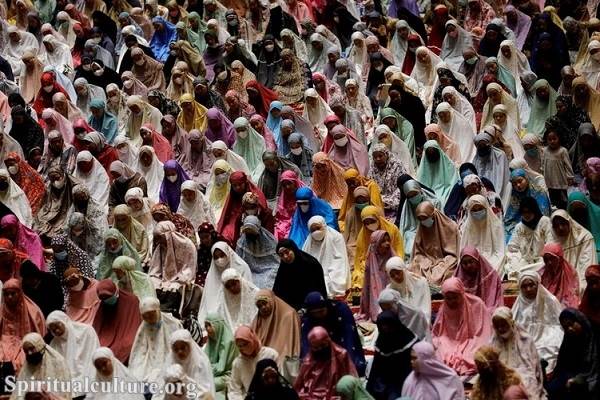
Islam does not have one universally agreed doctrinal classification of Buddhism comparable to its explicit discussions of Jews and Christians. Muslim thinkers have therefore interpreted Buddhism in different ways. The clearest contrast is that Islam centers on worship of the one God, while Buddhist traditions generally do not teach a creator God as the foundation of the path.
Islam’s basic theological framework
Islam teaches uncompromising monotheism, or tawhid: God is one, creator, sovereign, and worthy of worship. Prophets such as Abraham, Moses, Jesus, and Muhammad are understood as human messengers who call people to worship God.
Buddhism developed in a different religious framework. Its central teachings concern suffering, craving, karma, rebirth, ethical conduct, meditation, wisdom, and liberation. The historical Buddha is not normally understood by Buddhists as a creator God.
Are Buddhists “People of the Book”?
The Qur’an explicitly discusses Jews and Christians as People of the Book. Classical Muslim jurists disagreed about how to classify some other religious communities, and Buddhism was not treated uniformly across the Islamic world.
Because Buddhist traditions contain different cosmologies, devotional practices, and sacred figures, Muslim scholars have reached different conclusions when applying Islamic categories. It is therefore too simple to say that Islam has one official verdict on every Buddhist community.
Could the Buddha have been a prophet?
Some modern Muslim writers have speculated that the Buddha might have been a prophet whose original message later changed. The Qur’an teaches that God sent messengers to peoples beyond those named in scripture, which makes the idea possible in a general sense.
However, the Qur’an does not name the Buddha, and there is no consensus in mainstream Islam identifying him as a prophet. The claim should be presented as speculation rather than established Islamic doctrine.
Points of ethical similarity
Muslims and Buddhists can recognize shared ethical concerns such as generosity, self-discipline, compassion, avoidance of killing, care for family, and control of harmful desires.
Similar ethical practices do not erase theological differences. Islam grounds morality in obedience to God and revelation, while Buddhist ethics is connected with karma, intention, non-harming, mental cultivation, and the path to awakening.
Muslim-Buddhist relations in history
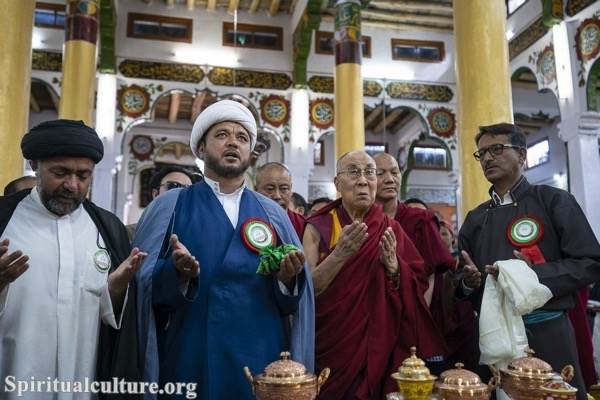
Muslim and Buddhist communities have lived alongside one another for centuries in South, Central, and Southeast Asia. Their relationships have included trade, scholarship, political competition, coexistence, cultural exchange, and at times serious conflict.
It would be misleading to reduce that long history to either constant harmony or permanent hostility.
How should Muslims treat Buddhists?
Islamic ethical teaching includes justice, keeping agreements, and proper conduct toward neighbors and other communities. Modern Muslim societies and scholars also address religious coexistence through local law and interfaith dialogue.
Individual Muslims may hold different personal views about Buddhism, but disagreement in theology does not require hostility toward Buddhists as people.
A balanced conclusion
Islam and Buddhism differ fundamentally in theology, especially on God, revelation, and the nature of ultimate liberation. Yet Muslims have interpreted Buddhism in several ways, and no single historical Muslim attitude describes every time and place.
For introductions to each tradition, see Islam and Buddhism.