The Islamic or Hijri calendar is a purely lunar calendar of twelve months. Because a lunar year is about eleven days shorter than a solar year, Ramadan, Hajj, Eid, and other observances move through the seasons over time. Spiritual Culture explains the calendar’s religious structure rather than treating it as a simple list of month names.
Twelve months
Qur’an 9:36 states that the number of months is twelve and identifies four as sacred. This Qur’anic framework is central to Islamic sacred time.
The twelve month names
The months are Muharram, Safar, Rabi al-Awwal, Rabi al-Thani, Jumada al-Awwal, Jumada al-Thani, Rajab, Sha‘ban, Ramadan, Shawwal, Dhu al-Qi‘dah, and Dhu al-Hijjah.
Four sacred months
Muharram, Rajab, Dhu al-Qi‘dah, and Dhu al-Hijjah are widely identified as the four sacred months.
The Hijri era
Dar al-Ifta explains that Caliph Umar ibn al-Khattab established a formal Islamic era using the Prophet Muhammad’s Hijra from Makkah to Madinah as the chronological starting point.
A lunar month is 29 or 30 days
Islamic months follow the lunar cycle. Communities use moon sighting, astronomical calculation, or institutional combinations of methods according to their legal and national practice.
Why dates shift in the Gregorian calendar
Because the Hijri year is shorter than the solar year, Ramadan and other months move earlier by roughly ten or eleven solar days each year.
Ramadan
Ramadan is the ninth month and contains the obligatory fast from dawn to sunset for eligible Muslims.
Shawwal and Eid al-Fitr
Eid al-Fitr begins on the first of Shawwal and marks the completion of Ramadan fasting.
Dhu al-Hijjah and Hajj
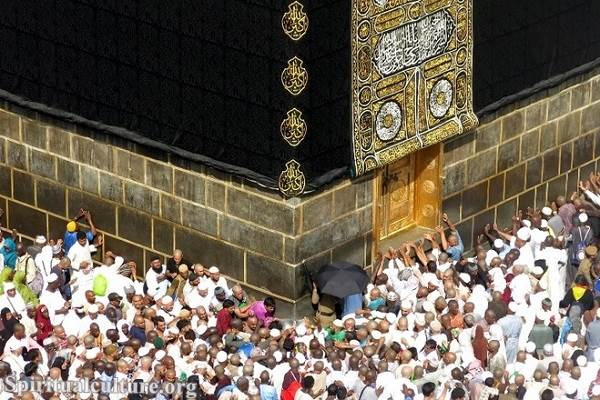
The twelfth month contains the major Hajj rites, the Day of Arafah, Eid al-Adha, and the Days of Tashriq.
Calendars can differ by one day
Different national or religious authorities may announce a new lunar month on different dates because of sighting methodology, geography, or calculation rules.
Practice and interpretation
The Islamic calendar is a religious calendar as well as a system of dates. Its months organize fasting, pilgrimage, sacred days, festivals, charity, remembrance, and communal worship.