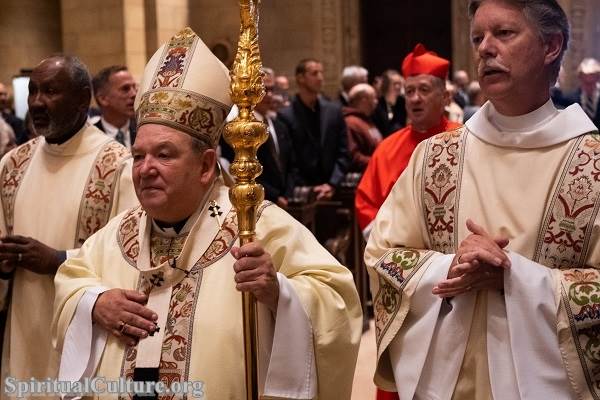
Pope Sixtus I (also known as St. Sixtus I or Saint Sixtus I) was an early Bishop of Rome and a pivotal figure in the foundational years of Christianity. Born around the latter part of the 1st century, he is traditionally believed to have served as Pope from approximately 115 AD to 125 AD, though some sources suggest a slightly later date. He is said to have passed away around 125 AD, possibly through martyrdom, although historical evidence on this point remains inconclusive. Sixtus I’s life unfolds during a period of great trial for Christians, as the fledgling Church navigated persecution, doctrinal consolidation, and expansion amidst the vast and often hostile Roman Empire.
The Historical Context of Pope Sixtus I
To understand the legacy of Pope Sixtus I, we must first grasp the perilous and dynamic world in which he lived and led the Church. St. Sixtus I’s papacy occurred during the reigns of Roman emperors Trajan and Hadrian—an era when Christians were viewed with suspicion and hostility. The Roman state regarded the refusal of Christians to worship the emperor and the pantheon of Roman gods as subversive and even treasonous. This made public worship, evangelism, and even private Christian gatherings dangerous.
The broader historical context for Pope Sixtus I was one of gradual but persistent Christian expansion throughout the Roman Empire. By the early second century, the Christian message had reached the heart of the empire itself—Rome. However, this growth came at a great cost. Christians faced periodic persecutions, especially when imperial authorities saw their refusal to participate in state-sanctioned religious rites as a threat to civic unity and political stability. Under Emperor Trajan (ruling from 98 to 117 AD), official policy toward Christians was relatively consistent: they were not to be sought out actively, but if accused and proven guilty of being Christian, they were to be punished, often by execution.
This policy remained in effect into the reign of Emperor Hadrian (117–138 AD), who is believed to have been emperor during much of St. Sixtus I’s tenure. Hadrian’s attitude toward Christians was slightly more tolerant in certain respects; he discouraged false accusations, but the overall stance of the empire did not change dramatically. Christians continued to be seen as a threat to Roman religious and social order. In this climate, Pope Sixtus I was tasked with shepherding a community that existed largely underground—meeting in homes, catacombs, and secret locations to worship and share the Gospel of Jesus Christ.
Moreover, Pope Sixtus I was not only contending with external opposition. Internally, the early Church was in a period of doctrinal clarification and consolidation. The apostolic era was ending, with the last of the original disciples likely having passed away. The Church was faced with the challenge of preserving apostolic teachings, countering heretical movements, and defining its communal practices. Sixtus I likely played a key role in this transition from the direct apostolic witness to the era of established Church leadership, where the bishop of Rome (the Pope) increasingly served as a point of unity and authority for the wider Christian community.
In this context, Saint Sixtus I would have been instrumental in solidifying the role of the bishop in liturgical functions, defining the reverent handling of sacred vessels and rites, and encouraging the faithful to endure persecution with steadfast faith. He led a flock that knew suffering intimately, yet clung to the hope of Christ’s resurrection and the promise of eternal life. His tenure symbolizes the fortitude and quiet heroism that characterized early Christian leadership—leaders who bore the weight of their communities’ fears and hopes while modeling faithfulness unto death.
Thus, when we speak of Pope Sixtus I, we are not only recounting a name from a dusty page of history. We are remembering a figure who stood at the intersection of faith and fear, conviction and cost. His leadership helped shape a Church that would not only survive the fires of persecution but would eventually transform the very empire that sought to crush it. The legacy of St. Sixtus I is therefore not just a relic of the past—it reflects the power of faith to endure and to flourish even in the darkest times.
The Role and Contributions of Pope Sixtus I
Pope Sixtus I’s role in the history of Christianity is a significant reminder that spiritual leadership often thrives not through public grandeur but through steadfastness, faithfulness, and hidden service. As the seventh bishop of Rome, Pope Sixtus I was entrusted with guiding the early Church during a season of vulnerability and persecution. His contributions—though often understated in historical records—reveal a man deeply committed to nurturing the faith of his flock and safeguarding the sacredness of Christian worship.
Strengthening Church Governance
Beyond liturgical reforms, Pope Sixtus I likely played a crucial role in reinforcing the governance structures of the early Church. As the Christian community grew, so did the complexities of maintaining doctrinal integrity and unity. Schisms, heresies, and disagreements about interpretations of apostolic teachings posed challenges that required firm and wise leadership. Though specific actions by Saint Sixtus I are not extensively documented, his position as Bishop of Rome naturally placed him in a role of arbitration and guidance for the broader Christian community.
It is believed that under his leadership, efforts were made to preserve apostolic teachings, particularly in the face of rising Gnostic heresies that threatened the purity of the Gospel. His work would have involved close collaboration with other bishops and Christian leaders, fostering a spirit of unity grounded in truth. This collaborative approach prefigured the future development of conciliar decision-making and the role of the papacy as a symbol of catholicity and orthodoxy.
Seeds of Martyrdom
Though historical records do not conclusively confirm the manner of his death, longstanding traditions claim that Pope Sixtus I died as a martyr for his faith. If this is true, his martyrdom was not an isolated act of heroism but the culmination of a life wholly given to Christ and His Church. Whether by blood or by lifelong sacrifice, Saint Sixtus I embodied the call of Jesus: “Whoever wants to be my disciple must deny themselves and take up their cross daily and follow me” (Luke 9:23).
His death, like that of many early Christian leaders, would have inspired his contemporaries to hold fast to their faith. It also contributed to the growing testimony that the Church was built not on human ambition but on the costly grace of God and the witness of those who, like Sixtus I, loved not their lives even unto death.
A Lasting Legacy
While Pope Sixtus I’s name might not appear prominently in secular histories, his contributions continue to shape the life of the Church. His emphasis on reverence, order, doctrinal fidelity, and courage amid persecution set a pattern for Christian leadership that endures. In the shadowed catacombs of Rome, where early believers gathered to worship in secret, the memory of Sixtus I would have been a source of strength and inspiration.
Today, the Church remembers him as both a pastor and a martyr—a man whose quiet yet significant influence echoes through centuries of Christian worship and witness. His life calls each believer to consider the depth of their own commitment to Christ and the ways in which their faith might quietly, persistently, and courageously shape the world around them.
The Theological and Spiritual Legacy of Pope Sixtus I
The legacy of Pope Sixtus I is not only a matter of ecclesiastical history—it reflects the enduring truths of the Gospel, the calling of Christian leadership, and the spiritual courage that marked the early Church. While historical documentation of his actions may be sparse, the theological and spiritual currents flowing from his papacy are significant and far-reaching, offering rich insight for believers today.
A Legacy of Sacred Reverence
At the heart of Pope Sixtus I’s legacy is his commitment to reverence for the sacred. By instituting the regulation that only ordained clergy were permitted to handle the holy vessels of the Eucharist, he underscored a theological truth central to Christian worship: the holiness of God’s presence in the sacrament. This was not a matter of ritualistic exclusion, but a reflection of the awe-inspiring mystery that the Eucharist embodies—the real presence of Jesus Christ in His Body and Blood.
This legacy continues to shape Christian liturgical practice, reminding believers that worship is not a casual gathering but a significant encounter with the living God. The principle of reverence, so central to Sixtus I’s contributions, encourages readers to approach the sacraments with hearts prepared, consciences examined, and spirits humbled before the majesty of Christ.
A Testament to Unity and Orthodoxy
The early Church faced constant threats—not only from external persecution but also from internal divisions and heretical teachings. Pope Sixtus I’s tenure, though not extensively detailed in surviving records, likely involved the defense of apostolic teaching against emerging distortions such as Gnosticism. These false teachings challenged the integrity of the Gospel by proposing secret knowledge, denying the full humanity of Christ, and undermining the authority of Scripture.
By standing firm for orthodoxy, St. Sixtus I contributed to the Church’s ability to remain anchored in truth amid turbulent waters. His leadership exemplifies the call for shepherds to guard the flock, not as lords over it, but as faithful stewards of the mysteries of God. His legacy calls the Church today to continue contending for sound doctrine, holding fast to the “faith that was once for all delivered to the saints” (Jude 1:3).
The Church as a Witness in a Hostile World
The era of Pope Sixtus I was one of significant tension between the Kingdom of God and the kingdoms of this world. Rome’s political and religious systems demanded allegiance and conformity, but the Gospel proclaimed a higher Lord and a greater kingdom. By leading the Church through such times, Sixtus I modeled the truth that the Church’s primary allegiance is to Christ, not to earthly powers.
This theological truth remains vital today. In every generation, believers are tempted to compromise faithfulness to Christ for the sake of acceptance, comfort, or security. The witness of Saint Sixtus I shows that true spiritual strength lies not in yielding to the pressures of the world but in standing firm in the truth of the Gospel.
Theological Significance
The life and legacy of Pope Sixtus I—his quiet courage, his steadfast faithfulness, his reverence for the sacred, and his probable martyrdom—are not distant echoes from an ancient past. They speak directly into the struggles and questions of our hearts today. Whether you are reading this as someone searching for meaning, feeling distant from God, or longing to understand what true faith is, the example of St. Sixtus I holds a powerful and personal message for you.
Faithfulness in a World of Compromise
We live in a time when truth is often bent to convenience, when faith is treated as optional, and when standing for what is right may come at a personal cost. In such a world, the witness of Pope Sixtus I shows that faithfulness to Christ is not negotiable. His life speaks to the quiet strength of choosing obedience over compromise, of honoring Christ even when the cost is high.
Have you ever felt the pull to fit in, to stay silent about your beliefs, or to avoid standing for truth because it feels too risky? The story of Saint Sixtus I challenges you to examine where your ultimate loyalty lies. Are you living for the approval of the world, or for the smile of your Savior?
Hope Amid Suffering and Fear
Life can be hard. Many face loneliness, anxiety, or the weight of unspoken pain. Perhaps you feel overwhelmed by struggles or haunted by your past. The legacy of Pope Sixtus I—who led a church facing real threats and persecution—shows that there is a hope deeper than fear, a peace stronger than the storms of life. His unwavering trust in Christ points us to the One who is always faithful.
Jesus said, “In this world you will have trouble. But take heart! I have overcome the world” (John 16:33). Sixtus I’s story is a living testimony of this truth. No matter how dark the circumstances, Christ is near. He is not distant or indifferent—He is a Savior who knows our fears and carries us through them.
Jesus is the Answer
At its core, the truth embodied in the life of Pope Sixtus I is not about a man—it’s about the Man, Jesus Christ. The faithfulness, courage, and holiness that marked Sixtus I’s life flowed not from his own strength but from the grace of God at work in him. His story points us to the cross, where Jesus bore the weight of our sin and shame, and to the empty tomb, where death was defeated forever.
In Catholic devotional writing, the memory of early popes such as Sixtus I is often used to reflect on perseverance, faithfulness, and commitment during periods of uncertainty.