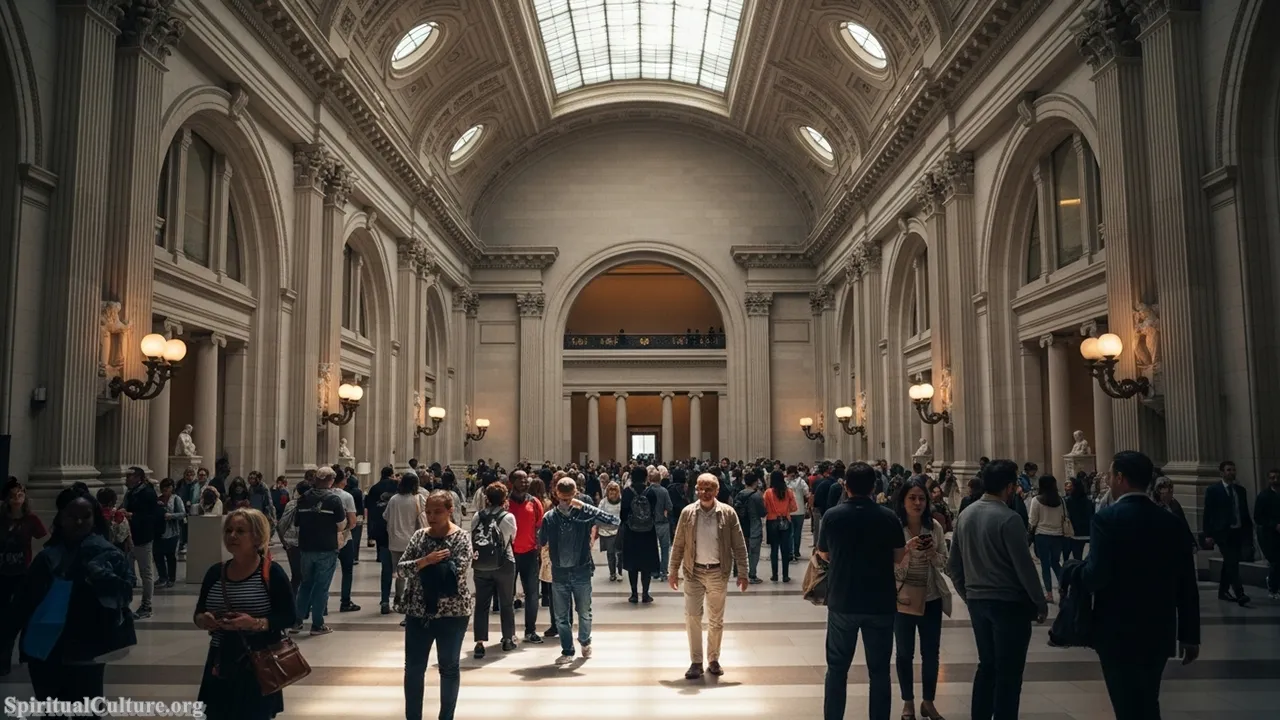
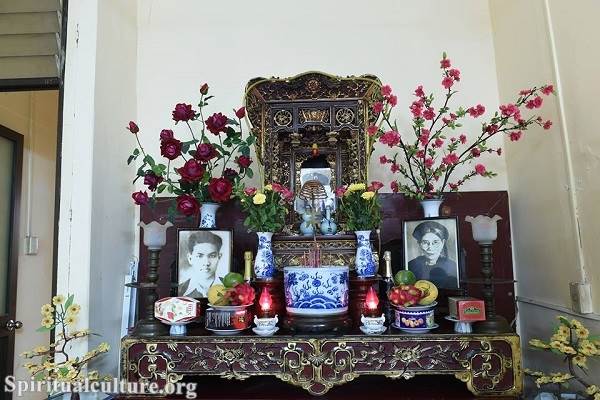
The United States has no single set of “most popular traditions.” Practices differ by region, religion, ethnicity, generation, and community. Spiritual Culture therefore separates everyday living traditions from the holiday calendar and focuses on recurring practices through which people build belonging and memory.
1. Congregational worship and community fellowship
Churches, synagogues, mosques, temples, gurdwaras, and other religious communities remain important settings for worship, education, mutual aid, music, meals, and family life. The forms vary widely, so no one pattern should be treated as representative of all Americans.
2. Family reunions
Large family reunions are especially important in many African American, Southern, Indigenous, immigrant, and extended-family networks. They can include worship, storytelling, genealogy, memorial visits, shared meals, music, and the transmission of family history.
3. Gospel, spiritual, and community singing
African American spirituals and gospel traditions connect worship, testimony, memory, and musical creativity. Sacred music has also influenced blues, jazz, soul, country, and many forms of popular music.
4. Quilting and textile traditions
Quilting can function as household craft, artistic practice, gift exchange, community work, memorial practice, and historical storytelling. Distinct traditions developed in many communities rather than one unified “American quilting style.”
5. Powwows and intertribal gatherings
Powwows are important community gatherings for many Native peoples, but practices differ among nations and regions. Dance, song, regalia, kinship, veterans’ honors, social exchange, and competition may all be present. Ceremonial knowledge should not be assumed to be public.
6. Community meals and potlucks
Shared meals remain important in congregations, schools, neighborhoods, clubs, civic groups, and family networks. Church suppers and potlucks are especially visible examples of food functioning as social infrastructure.
7. Barbecue and cookout traditions
Barbecue is not one national recipe. Regional traditions developed through Indigenous cooking knowledge, African American foodways, livestock economies, migration, local ingredients, and community gatherings.
8. Volunteerism and mutual aid
Food drives, disaster response, neighborhood associations, congregational service, mutual-aid networks, and charitable volunteering are recurring forms of civic practice. Their motivations can be religious, secular, or both.
9. County fairs, craft gatherings, and local exhibitions
Fairs bring together agriculture, foodways, craft, music, youth organizations, competition, and regional identity. They preserve local skills while also adapting to commercial entertainment.
10. Memorial and cemetery traditions
Visiting graves, decorating cemeteries, maintaining family plots, military remembrance, and community memorial services connect personal grief with public memory. Practices vary strongly by religion and region.
Practice and interpretation
These practices are not ranked by cultural value. The point is to distinguish everyday living heritage from festivals and holidays, reducing overlap with Spiritual Culture’s separate festival and observance coverage.