Hymns have long served as the heartbeat of Protestant spirituality — not only songs sung on Sundays, but soul-deep expressions of faith, theology, and communal identity.
When you step into a Protestant church — whether a grand cathedral or a humble countryside chapel — you often hear something more than music. You hear memory. You hear longing. You hear generations lifting their voices in praise, lament, joy, and trust.
Hymns are not just traditions handed down; they are living testimonies of faith in motion. Unlike liturgies that remain static or sermons that may vary with each preacher, hymns endure — carried by melody, rooted in scripture, and remembered even in silence. They bring the sacred into the ordinary and the eternal into the moment.
But what makes hymns so essential to Protestant spirituality? Why do they hold such enduring power? The article examines the mystery, meaning, and mission of hymns in Protestant life.
The Roots of Hymns in the Reformation
Martin Luther and the Birth of Congregational Singing
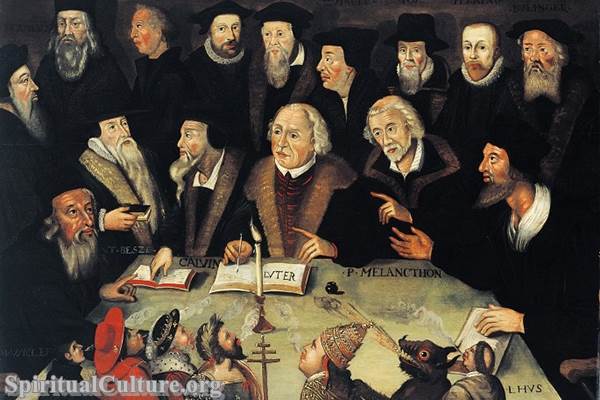
At the heart of Protestantism lies the Reformation, and at the heart of the Reformation stood Martin Luther — theologian, reformer, and hymnwriter. For Luther, music was no mere ornament to worship; it was a sacred means of proclaiming the Word.
Luther famously said, “Next to the Word of God, music deserves the highest praise.” He believed that every believer, not just the clergy, should have access to the truths of Scripture — not only through reading but through singing.
His hymn “A Mighty Fortress Is Our God” (“Ein feste Burg ist unser Gott”) is more than a song — it is a theological proclamation wrapped in melody, courage made audible. By translating worship music into the vernacular and encouraging congregational singing, Luther sparked a revolution where the people’s voice became a vehicle of divine truth.
The Bible and Music Intertwined
Protestants hold Scripture as the supreme authority. Hymns, therefore, often act as sung theology — paraphrasing, echoing, or expanding upon biblical texts.
For instance, the Psalms — the original hymnal of ancient Israel — have inspired countless Protestant hymns. “The Lord’s My Shepherd,” based on Psalm 23, is a classic example of scripture transposed into song, allowing worshippers to internalize divine truths through repetition and rhythm.
Hymns as Spiritual Formation
Theology That Sticks in the Soul
Protestant hymns serve as spiritual catechism. They teach doctrine, ethics, eschatology — often more accessibly than sermons or commentaries. Hymns take complex ideas and wrap them in melody, helping believers remember, reflect, and rehearse truths.
Take the hymn “Holy, Holy, Holy, Lord God Almighty” — a majestic Trinitarian hymn that subtly introduces key theological concepts:
“God in Three Persons, blessed Trinity.”
This line, sung week after week, forms theological awareness in even the youngest congregants, imprinting deep truths not just into the intellect but into the heart.
Hymns and the Emotional Landscape of Faith
Protestant spirituality recognizes that faith is not only rational but also emotional. Hymns give voice to joy, sorrow, hope, repentance, and assurance.
Consider “It Is Well with My Soul” by Horatio Spafford — written after he lost his daughters at sea. This hymn does not deny suffering but places it within a framework of hope:
“When peace like a river attendeth my way,
When sorrows like sea billows roll…”
Hymns like this embody the Psalms’ pattern of lament and trust — validating human grief while anchoring the soul in divine presence.
Community Through Song
Congregational Singing as a Spiritual Practice
In Protestant worship, hymns are not performances; they are participatory acts of devotion. When the congregation rises to sing, it becomes a unified voice — a spiritual body breathing together.
This communal singing serves multiple purposes:
- It fosters unity across generational and cultural lines.
- It reinforces shared beliefs.
- It models a foretaste of heavenly worship, where “every tribe and tongue” will sing together.
Whether accompanied by organ, guitar, or unaccompanied voices, congregational hymns turn the sanctuary into a sanctuary of harmony.
Intergenerational Bridges
Hymns often outlive generations, becoming threads that tie grandparents to grandchildren in worship. When a child hears their parent singing “Great Is Thy Faithfulness”, they inherit not just melody but memory, not just lyrics but legacy.
This continuity is particularly important in Protestant denominations that value personal faith decisions. Hymns serve as quiet mentors, passing down faith even before a child understands theology.
Hymns and Sacred Time
Marking the Liturgical Calendar
Though many Protestants do not follow the full liturgical calendar like Catholics or Orthodox believers, hymns still help mark sacred seasons.
- Advent: “O Come, O Come, Emmanuel” calls hearts to anticipation.
- Christmas: “Hark! The Herald Angels Sing” becomes a proclamation of incarnation.
- Easter: “Christ the Lord Is Risen Today” erupts with resurrection joy.
These hymns tie personal faith to the cosmic story of salvation — reminding believers that their worship echoes eternal rhythms.
Hymns in Life’s Milestones
From baptisms to funerals, weddings to ordinations, hymns frame the soul’s journey. A funeral may include “Abide with Me,” offering comfort; a wedding may feature “Be Thou My Vision,” inviting God’s presence into new beginnings.
These moments show that hymns are not confined to Sunday morning — they accompany believers through every chapter of life.
Hymns in the Modern Protestant World
Contemporary Versus Traditional Hymns
Modern Protestant churches are diverse: some uphold centuries-old hymns; others blend them with contemporary praise music. Yet both forms serve the same purpose — drawing hearts to God.
- Traditional hymns tend to emphasize theological depth and poetic beauty.
- Contemporary hymns (like those by Getty Music) often marry modern melodies with rich doctrine.
An example is “In Christ Alone” — a 21st-century hymn now embraced across denominations for its powerful proclamation:
“In Christ alone, my hope is found
He is my light, my strength, my song…”
Whether ancient or modern, the best hymns are those that help the soul lift its eyes to the Eternal.
Global Hymnody in Protestantism
Today, Protestant hymnody is not confined to Europe or America. In Africa, Asia, and Latin America, hymns are written in local languages, using indigenous melodies and rhythms — yet carrying the same gospel message.
This global expansion reflects the inclusive nature of Protestant faith: every culture can sing its way to the Throne.
The Sacred Power of Music in Scripture
Biblical Roots of Song in Worship
Scripture affirms the power of music:
“Sing to the Lord a new song; sing to the Lord, all the earth.” (Psalm 96:1)
“Let the word of Christ dwell in you richly… singing psalms and hymns and spiritual songs, with thankfulness in your hearts to God.” (Colossians 3:16)
These verses remind us that song is not optional — it is integral to worship, to memory, to community. It is how truth becomes incarnate in breath.
Hymns as Spiritual Warfare and Testimony
Paul and Silas, imprisoned in Acts 16, sang hymns in the night — and the prison shook. Hymns, then, are not just for comfort but for courage.
In times of crisis, Protestants have turned to hymns not as distractions but as declarations — “God is still sovereign,” “Christ still reigns,” “The Spirit still speaks.”
Conclusion
The role of hymns in Protestant spirituality is far more than musical tradition. It is spiritual formation, doctrinal transmission, communal identity, emotional expression, and worshipful encounter.
To sing a hymn is to do theology aloud, to pray with melody, to preach with harmony. It is to enter into a centuries-long conversation between God and His people — one that spans nations, tongues, and time.
Let it guide your soul toward truth, beauty, and divine presence.
Because in the world of Protestant faith, sometimes the most powerful sermon is the one you sing.