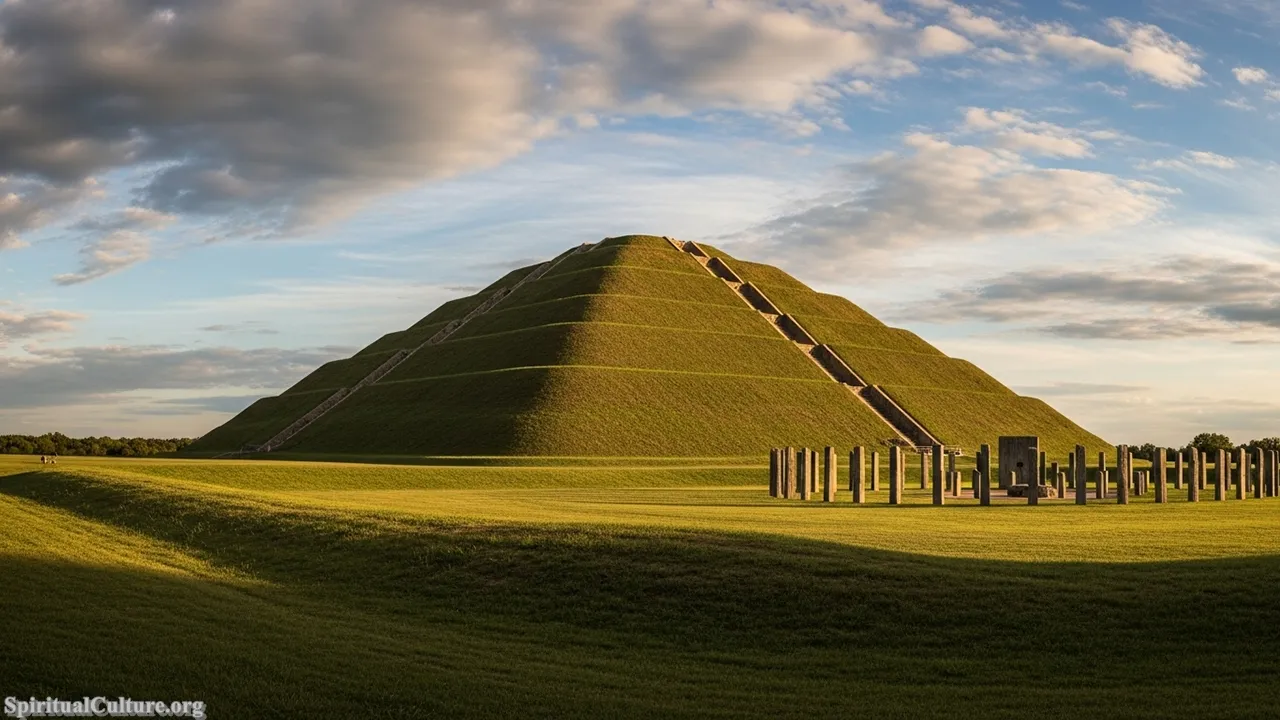
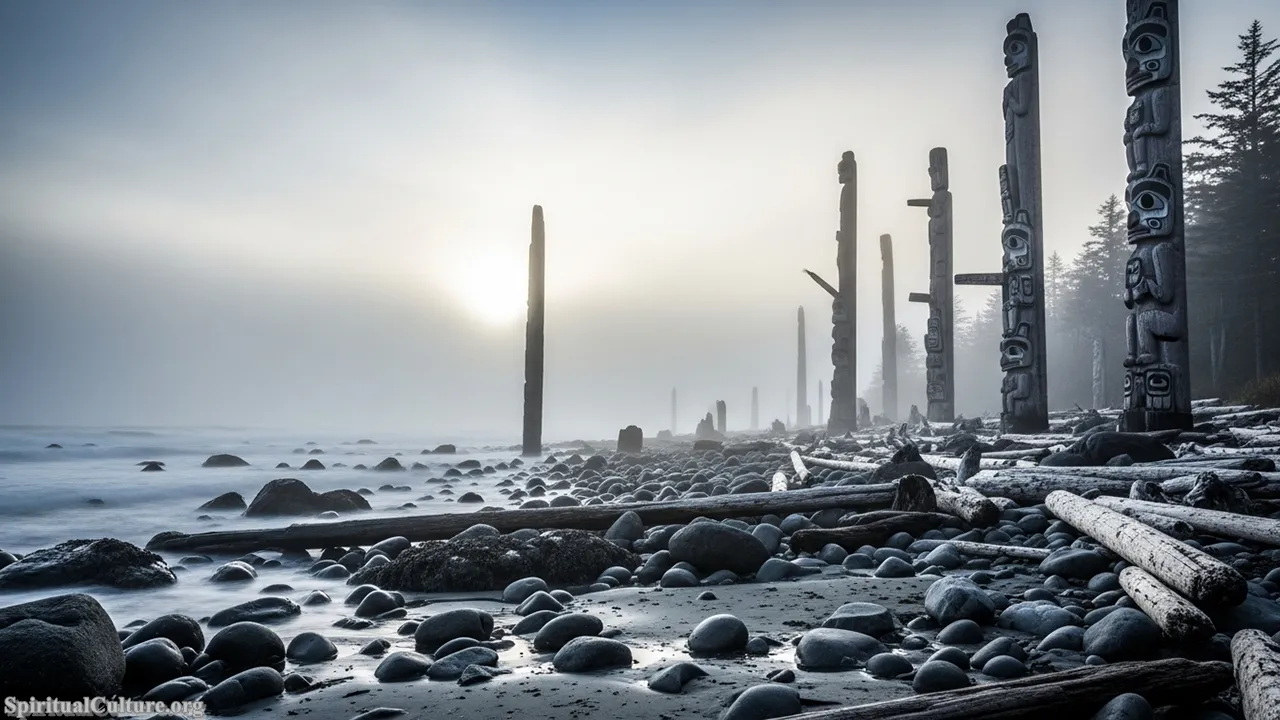
Colonialism is often remembered for its political dominance, economic exploitation, and cultural upheaval. Yet one of its most enduring and painful legacies is its profound impact on indigenous religions — the sacred traditions rooted in local lands, ancestors, and cosmologies long before foreign rule. These were not only sets of rituals; they were complete worldviews, living expressions of spiritual identity.
As Spiritual Culture, we invite you into a deeper reflection: What happens when the soul of a people is colonized? When their temples are torn down, their sacred stories erased, or their gods renamed?
This article explores how colonialism altered, suppressed, or transformed indigenous spiritual systems across continents. We’ll trace the methods of suppression, the subtle tools of assimilation, and the silent forms of resistance. And we’ll ask: What can be reclaimed — and reimagined — today?
Spirituality as Power: Why Indigenous Religions Were Targeted
The Sacred as Sovereign
Colonial powers understood something deeply true: to control a people, one must control their story. Indigenous religions were more than personal beliefs — they were communal identities, legal codes, healing systems, agricultural calendars, and moral compasses.
By undermining these religions, colonizers sought to fracture the social and spiritual cohesion of indigenous communities.
The Missionary Mandate
Christian missionaries — often in tandem with colonial administrators — saw conversion not only as a religious duty but as a civilizing mission. Sacred groves were labeled “pagan,” ancestral rites were condemned as “superstitions,” and entire belief systems were recast as “devil worship.”
“They came with a Bible and we had the land. Now we have the Bible and they have the land.”
– Desmond Tutu (attributed)
Suppression and Erasure: The Tools of Colonization
Language and Lore
Indigenous religions were often passed down orally. By banning native languages and promoting European tongues, colonizers disrupted the transmission of sacred myths, prayers, chants, and ceremonial instructions.
Example: Native American Boarding Schools
In the United States and Canada, Native children were forced into boarding schools where they were forbidden to speak their languages or practice their spiritual customs. Their hair was cut, their names changed, and their spirits often broken.
Legal Bans on Rituals
Colonial governments frequently outlawed indigenous ceremonies.
- In Africa, the British criminalized practices like drumming, possession rituals, or ancestor worship.
- In India, the British banned “sati” (a complex and controversial practice), often misunderstanding its religious context.
- In Latin America, Spanish colonists destroyed Mayan and Aztec codices, seeing them as heretical.
Desecration of Sacred Spaces
Forests were felled, rivers diverted, temples razed, and burial grounds built over. Colonizers often physically destroyed the very sites where the divine was believed to dwell.
Conversion and Syncretism: A Double-Edged Sword
Forced and Coerced Conversion
In many cases, conversion to Christianity or Islam was not entirely voluntary. Baptism might be tied to receiving food, schooling, or legal rights. Resistance often meant punishment.
But indigenous people were not passive victims. Many found subtle ways to blend the old and the new.
Syncretism as Survival
Indigenous religions often merged with the imposed faith to create new spiritual expressions:
- In Latin America, Catholic saints were identified with Yoruba or Aztec deities — leading to forms like Santería and Candomblé.
- In the Philippines, animist rites were hidden within Catholic feasts.
- In Andean regions, Pachamama (Mother Earth) continued to be honored under the guise of Marian devotion.
Sacred Texts Reimagined
In some contexts, indigenous myths were reinterpreted to align with Biblical or Quranic stories, allowing ancient symbols to survive under new names.
Cultural Resistance and Revival
Quiet Acts of Defiance
Despite repression, indigenous people found ways to keep their religions alive:
- Secret ceremonies held at night or in remote places
- Sacred objects hidden or disguised as household tools
- Oral traditions preserved by elders in coded language
The Role of Elders and Women
In many indigenous cultures, women and elders held key spiritual roles. Their quiet continuity — as keepers of songs, rituals, and healing — often preserved traditions when formal practice was forbidden.
The Modern Revival
From the 20th century onward, decolonization sparked a spiritual renaissance.
- Indigenous nations across the Americas, Australia, Africa, and Asia began reclaiming their rituals, languages, and sacred sites.
- Legal reforms now protect traditional religions as cultural heritage.
- Young people are learning the ways of their ancestors — not out of nostalgia, but as acts of healing and identity.
The Psychological Impact of Religious Colonization
Internalized Inferiority
Centuries of being told their beliefs were backward, childish, or evil left deep wounds in indigenous psyches. Many grew up ashamed of their spiritual roots.
This spiritual trauma is part of a broader pattern of colonization: the colonizing of the soul.
Fragmentation of Identity
When one’s spiritual story is lost or ridiculed, the entire sense of self can fracture. Communities may struggle with disconnection, substance abuse, or violence — symptoms of a deeper spiritual dislocation.
Healing Through Reconnection
Many indigenous thinkers now speak of “soul retrieval” — the process of reclaiming what was stolen. Through ritual, storytelling, dance, and land-based practices, communities are reweaving the threads of their ancestral wisdom.
Sacred Texts, Sacred Earth
Nature-Based Spirituality as Resistance
Indigenous religions are often inseparable from the land. Mountains are ancestors, rivers are spirits, animals are teachers.
By attacking these belief systems, colonialism also justified ecological destruction. Today, the revival of indigenous religions is deeply linked to environmental protection.
“The Earth is our mother. Whatever befalls the Earth befalls the sons of the Earth.”
– Chief Seattle
Reclaiming the Sacred Earth
From the Standing Rock protests in North America to the forest protection rituals of the Amazon, indigenous spirituality is re-emerging as a force for ecological justice.
What We Can Learn From Indigenous Religions Today
Spirituality as Communal, Not Just Individual
While modern religion often emphasizes personal salvation, indigenous traditions remind us of collective balance — between people, spirits, animals, and earth.
Ritual as Healing
The ceremonies once banned are now being rediscovered as tools for trauma healing, reconciliation, and intergenerational connection.
Language as Sacred
Each indigenous word for “God,” “spirit,” or “ancestor” carries unique insight. Preserving language is more than cultural work — it’s spiritual restoration.
Conclusion
Colonialism did not only occupy lands — it disrupted the sacred rhythms of peoples and places. It sought to silence the drumming heart of indigenous faiths. But the soul of a people is resilient.
Across the globe, indigenous religions are rising — not in opposition to modern faiths, but in remembrance of a wholeness long denied. These traditions speak of harmony, of the sacred in all things, of life lived in circle rather than in hierarchy.
If you are a seeker, a student, or someone standing at the crossroads of cultures, ask yourself:
- What wisdom might I learn from those who remember the earth as sacred?
- How do I honor the spiritual sovereignty of others?
- What parts of my own ancestry remain silent — waiting to be heard?
As Spiritual Culture, we believe that the future of faith is not uniformity — it is unity in diversity, grounded in mutual reverence.
May you walk gently. May you listen deeply. May the songs of the ancestors rise again in the wind.
SpiritualCulture.org
Illuminating the Sacred. Reclaiming the Roots.