Some stories in the Bible are loud—full of fire, thunder, miracles, and voices from heaven. Others whisper softly, quietly shaping the course of salvation through silent obedience and humble faith. Joseph’s story is one of those quiet ones.
Perhaps you’ve heard of Mary, the mother of Jesus, and of course, Jesus Himself. But who was the man who stood beside them? Who was the one God entrusted to raise His Son on earth? His name was Joseph—a carpenter, a dreamer, a protector, and most of all, a man who obeyed God when it cost everything.
You may feel like your life is too ordinary for God to use. You may wonder if faithfulness matters when no one sees. But Joseph’s story shows us that God delights in using the unseen, the unheard, and the uncelebrated to fulfill His greatest purposes.
His example is not just something to admire—it’s something to follow. And if you listen closely, you may find that Joseph’s quiet life still speaks to you today—calling you to trust, to obey, and to walk with God, even in the dark.
Joseph: The Righteous Man Chosen by God
Before Joseph was the husband of Mary… before he was the earthly father of Jesus… before the dreams and the danger, before the journey to Bethlehem and the flight to Egypt… he was simply a man. A man trying to live rightly before God in a small village called Nazareth. A man who likely never imagined that his life would one day be intertwined with the arrival of the Messiah.
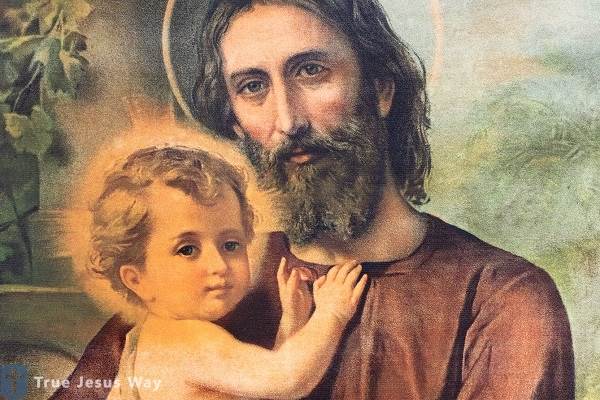
But God saw him.
Matthew 1:19 introduces Joseph with these words:
“Because Joseph her husband was a righteous man…”
This phrase is more than a character note. In Scripture, to be called “righteous” (dikaios in Greek) means to be aligned with God’s will—not just in external behavior, but in internal heart posture. Joseph was a man whose decisions were governed by justice, mercy, and obedience to God’s law. He wasn’t perfect, but he was faithful. And in God’s economy, that made him ready for something extraordinary.
At the moment we meet Joseph in the Gospels, he is facing what must have been the greatest heartbreak of his life. Mary, the woman he is betrothed to—bound to by legal and social contract—has returned from a visit to her cousin Elizabeth with news that she is pregnant. And Joseph knows that he is not the father.
Imagine the anguish. The shame. The confusion. Mary’s explanation—that the child is from the Holy Spirit—would have seemed beyond belief. Joseph was a righteous man, and the law gave him the right to expose Mary, even to have her punished. But Joseph’s righteousness was not rigid or vengeful. It was full of grace.
Matthew continues,
“…and yet did not want to expose her to public disgrace, he had in mind to divorce her quietly.”
“But after he had considered this, an angel of the Lord appeared to him in a dream and said, ‘Joseph son of David, do not be afraid to take Mary home as your wife, because what is conceived in her is from the Holy Spirit’” (Matthew 1:20).
God interrupted Joseph’s plans with a higher calling. The angel affirmed that Mary had not been unfaithful—she had been chosen. And now, Joseph was being chosen too: to receive the child, to name Him Jesus, to raise the Son of the Most High under his roof.
This was not a simple request. By taking Mary as his wife and accepting her child, Joseph was placing himself in the path of scandal, misunderstanding, and social rejection. The whispers would not stop. The eyes would not look away. The shame, though unjustified, would cling to him like dust. Yet Joseph did not hesitate.
Matthew 1:24 tells us:
“When Joseph woke up, he did what the angel of the Lord had commanded him and took Mary home as his wife.”
The Line of David: A Messianic Heritage
One of the most significant and overlooked aspects of Joseph’s identity is his royal lineage. Though he lived a humble life as a carpenter in a modest village, Joseph descended from one of the most revered families in Israel’s history—the house of David, the shepherd-king after God’s own heart. This connection is not simply a genealogical footnote; it is an important part of biblical prophecy and the divine plan for redemption through the Messiah.
The Gospel of Matthew opens with a genealogy (Matthew 1:1–17) that traces Jesus’ legal lineage through Joseph, directly back to David and ultimately to Abraham. This was no accidental inclusion. For Jewish readers of the first century, this was a declaration: Jesus is the promised Son of David. The Gospel of Luke also presents a genealogy (Luke 3:23–38), emphasizing that Jesus’ ancestry fulfills the messianic expectations rooted in centuries of prophecy.
Why was this lineage so important?
The Old Testament contains numerous prophecies that foretell a coming King from David’s line. In 2 Samuel 7:12–13, God makes a covenant with David, saying:
“When your days are fulfilled and you rest with your fathers, I will set up your seed after you… and I will establish the throne of his kingdom forever.”
This promise was partially fulfilled in Solomon but looked forward to a greater Son—a divine King whose reign would be eternal. Isaiah speaks of this in chapter 11:1:
“A shoot will come up from the stump of Jesse; from his roots a Branch will bear fruit.”
Jeremiah 23:5–6 echoes the same hope:
“The days are coming, declares the Lord, when I will raise up for David a righteous Branch, a King who will reign wisely…”
Faith and Obedience in the Face of Trial
Joseph’s faith did not flourish in comfort—it was forged in crisis. The moment that changed the course of his life began not with celebration, but with confusion, disappointment, and deep personal anguish. The woman he was pledged to marry—Mary—was found to be pregnant. And Joseph knew, without question, that he was not the father.
In Jewish custom, betrothal (or engagement) was a binding legal contract. To break it required a formal divorce. From the outside, Mary’s condition was a scandal. For Joseph, it was a heartbreak. His world was shattered by news that must have felt like betrayal. And yet, even in his pain, Joseph revealed the depth of his character. Matthew 1:19 tells us:
“Because Joseph her husband was a righteous man and did not want to expose her to public disgrace, he had in mind to divorce her quietly.”
This verse is key. Joseph was committed to righteousness—not only in law but in love. The law allowed him to bring public shame or even judgment upon Mary, yet Joseph chose mercy. He did not act out of anger or self-preservation. Even when everything seemed to point toward rejection, he leaned toward compassion.
But the story didn’t end there.
In the midst of his distress, God intervened. Matthew 1:20–21 recounts what happened next:
“But after he had considered this, an angel of the Lord appeared to him in a dream and said, ‘Joseph son of David, do not be afraid to take Mary home as your wife, because what is conceived in her is from the Holy Spirit. She will give birth to a son, and you are to give him the name Jesus, because He will save His people from their sins.’”
“When Joseph woke up, he did what the angel of the Lord had commanded him and took Mary home as his wife.”
No arguing. No delay. No demand for proof. Just trust and obedience.
This kind of faith is not passive. It’s not only a mental agreement with truth—it’s a surrender of control, a willingness to walk forward without seeing the whole path. Joseph likely knew that by taking Mary as his wife, he would bear public shame. People would assume the worst. His reputation, his standing in the community, even his livelihood could be at risk.
And yet, Joseph chose God’s voice over public opinion.
That is the essence of biblical faith: the willingness to obey God even when it costs, even when it doesn’t make sense, even when it leads into the unknown. Joseph did not know how the story would unfold. He had no guarantee of ease or recognition. But he had heard from God—and that was enough.
His obedience continued beyond this one decision. He would later take Mary and Jesus to Bethlehem to comply with a Roman census, where Jesus would be born in humble surroundings. He would again respond to God’s direction when warned in another dream to flee to Egypt to protect the Christ child from Herod’s wrath (Matthew 2:13–15). And once more, he would obediently return to Israel after Herod’s death (Matthew 2:19–23), settling his family in Nazareth.
At each turn, Joseph listened. He trusted. He obeyed. Not because the road was clear, but because his heart was surrendered.
Joseph’s faith was not theoretical—it was incarnational. It was lived out in choices, in actions, in quiet decisions that shaped eternity. He shows us that true righteousness is not rigid religiosity, but relational faithfulness—faith that walks with God even in the dark.
The Silent Guardian of the Holy Family
After Joseph accepted Mary and the unborn Christ with humble obedience, he stepped into one of the most sacred and daunting roles in all of Scripture: guardian of the Holy Family. Though the Bible provides few details of his life, what it does reveal paints a portrait of a man deeply attuned to the voice of God and unwavering in his protective love.
The first great trial Joseph faced as the protector of his new family came when Caesar Augustus issued a decree that a census should be taken (Luke 2:1). Joseph, as a descendant of David, was required to travel to Bethlehem, the city of his ancestor. He did not go alone—he brought with him a very pregnant Mary.
This journey was no small feat. It was roughly 90 miles from Nazareth to Bethlehem, over rugged terrain, with no modern transportation. And yet Joseph bore the weight of the journey, not only logistically, but emotionally. He had to make sure Mary was safe. He had to find shelter. He had to prepare for a birth under extremely difficult circumstances. And when they arrived in Bethlehem, there was no room in the inn. The best Joseph could find was a stable, a place where animals slept and fed.
It was there, in the most humble of surroundings, that the Savior of the world was born.
Joseph was there—not in the spotlight, not at center stage—but present, faithful, watchful. He likely held the newborn Jesus in his arms. He heard His first cries. He comforted Mary and shielded them both from danger and exposure. Though the angels appeared to shepherds, not to him, Joseph stood silently beside the miracle, fully surrendered to his God-given mission.
But the danger did not end with birth. Soon after, another divine message came: King Herod, furious that a child had been born who was called “King of the Jews,” planned to kill the infant. Once again, God spoke to Joseph through a dream:
“Get up,” the angel said, “take the child and his mother and flee to Egypt. Stay there until I tell you, for Herod is going to search for the child to kill Him” (Matthew 2:13).
Without hesitation, Joseph rose in the night and left for Egypt. He did not wait for daylight. He did not second-guess the message. With Mary and baby Jesus, he embarked on another dangerous journey—this time not for census, but for survival. In doing so, he fulfilled another ancient prophecy: “Out of Egypt I called My Son” (Hosea 11:1, echoed in Matthew 2:15).
Joseph remained in Egypt until another dream told him it was safe to return. Even then, upon learning that Herod’s son Archelaus reigned in Judea, Joseph was warned again and led his family to settle in the town of Nazareth. Quietly, obediently, he followed God’s direction step by step—protecting, providing, and praying.
Through each of these movements—Bethlehem, Egypt, Nazareth—Joseph never complains, never delays, never questions. His silence is not absence; it is strength. It is the kind of silent leadership that doesn’t seek credit, yet holds everything together.
This is what makes Joseph such a powerful figure in the Christian story: his greatness lies not in speech, but in presence. He does not prophesy like Isaiah, or preach like Peter, or write letters like Paul. But he lives the Gospel before the Gospel is even preached—by protecting Jesus, nurturing Mary, and trusting God above all else.
He is the model of the man who lives by faith—not in words, but in deeds. Not for recognition, but for love.
In an age where many seek influence and visibility, Joseph shows us the holiness of hidden faithfulness. His silence speaks. His quiet strength shapes eternity.

