Top 10 Most Influential Cultures in South America

Explore ten of South America’s most influential cultures, from Andean and Amazonian traditions to Brazilian, gaucho, and immigrant legacies.

South America is not culturally uniform. Its societies have been shaped by ancient Indigenous civilizations, hundreds of living Indigenous peoples, Iberian colonial rule, the forced migration of Africans through the Atlantic slave trade, and later migrations from Europe, Asia, and the Middle East. These histories produced distinctive languages, religious traditions, music, foodways, festivals, architecture, literature, and forms of community life.

Any ranking of the most influential cultures in South America is necessarily interpretive. Culture cannot be measured as simply as population, land area, or economic output. A community with relatively few members may exercise profound influence through language, sacred geography, music, environmental knowledge, political thought, or cultural memory.

The cultures in this list have therefore been selected according to several broad criteria: historical depth, geographic reach, influence on public life, contributions to arts and spiritual culture, continued transmission, and significance beyond their original communities. The numbering provides a readable sequence rather than a claim that one culture is inherently more valuable than another.

The term “culture” is also used broadly here. Some entries describe Indigenous cultural worlds, while others concern regional identities, colonial and postcolonial formations, African-diasporic traditions, or immigrant communities. Together, they reveal South America as a continent formed through continuity, conflict, adaptation, exchange, and creative renewal.

Overview of the Ten Cultures

Rank Cultural tradition Main areas of influence
1 Andean Quechua–Inca cultural world Peru, Bolivia, Ecuador, Colombia, Argentina, Chile
2 Portuguese-Brazilian culture Brazil and the wider Portuguese-speaking world
3 Spanish-Creole and Mestizo cultures Most Spanish-speaking South American countries
4 Afro-South American cultures Brazil, Colombia, Venezuela, Ecuador, Peru, Uruguay, Argentina
5 Amazonian Indigenous cultures Brazil, Peru, Colombia, Bolivia, Ecuador, Venezuela, Guyana, Suriname
6 Guaraní cultural world Paraguay, Brazil, Argentina, Bolivia
7 Mapuche culture Chile and Argentina
8 Gaucho culture of the Pampas Argentina, Uruguay, southern Brazil, neighboring regions
9 Italian-South American culture Argentina, Uruguay, Brazil and other urban centers
10 Japanese-Brazilian culture Brazil, especially São Paulo and Paraná

1. The Andean Quechua–Inca Cultural World

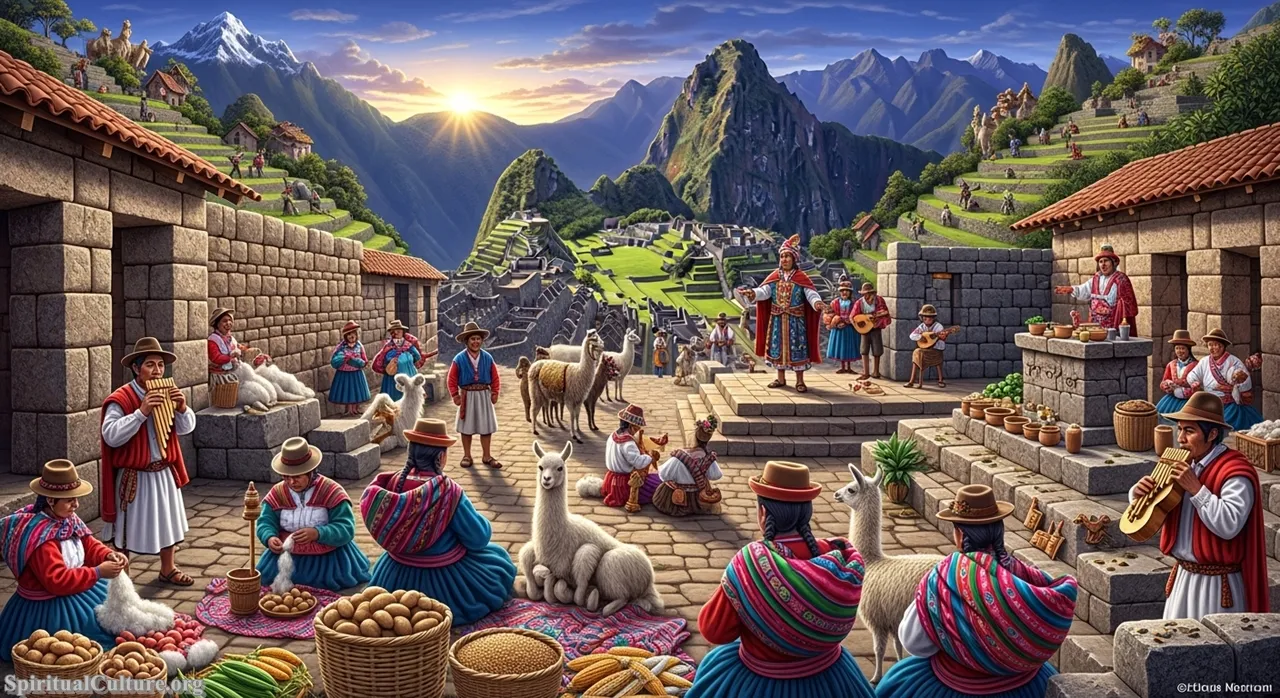
The Andean cultural world is one of the deepest and most geographically extensive cultural formations in South America. It includes many distinct communities rather than a single uniform people, but Quechua-speaking traditions and the historical legacy of the Inca state have been especially influential.

Top 10 Most Influential Cultures in South America

Long before the rise of the Inca Empire, the Andes supported major societies with sophisticated agriculture, architecture, textiles, ceremonial centers, trade routes, and political systems. The Inca incorporated and reorganized many earlier traditions, creating Tawantinsuyu, a large state extending through parts of present-day Peru, Bolivia, Ecuador, Colombia, Chile, and Argentina.

One of the clearest expressions of this interconnected world is the Qhapaq Ñan, the Andean road system. UNESCO describes it as a network of more than 30,000 kilometers, developed over centuries from both Inca and pre-Inca infrastructure. It connected settlements, agricultural areas, administrative centers, storage facilities, and places of worship across highly varied environments. Communities along surviving sections continue to maintain languages, ritual practices, technologies, and traditions associated with the network.

Language and identity

Quechua is not one completely uniform language but a family of related varieties. It remains present in Peru, Bolivia, Ecuador, Colombia, Argentina, and migrant communities elsewhere. Quechua words have also entered regional forms of Spanish and international vocabulary, particularly terms associated with Andean foods, plants, animals, and landscapes.

The survival of Quechua is culturally significant because language transmits more than names and grammatical structures. It carries oral narratives, songs, humor, agricultural knowledge, kinship concepts, and ways of understanding relationships among communities, ancestors, mountains, water, and land.

Spiritual culture and sacred landscapes

Many Andean traditions understand the landscape as socially and spiritually meaningful. Mountains may be regarded within particular communities as powerful beings or guardians, while Pachamama is honored in many regions as a maternal presence associated with earth, fertility, sustenance, and reciprocity. These are religious and cultural beliefs rather than scientific claims, and their form varies between communities.

Centuries of interaction with Catholicism produced complex local traditions. Christian saints, Marian devotions, parish festivals, Indigenous ritual calendars, agricultural observances, and older sacred geographies often coexist. This relationship should not be reduced to a simple mixture: some communities distinguish the traditions carefully, while others understand them as parts of a shared religious world.

Continuing influence

Andean textiles, ceramic traditions, music, dance, food, agricultural methods, and visual symbols have shaped national identities throughout the western part of South America. Potatoes, quinoa, maize, llamas, alpacas, terraced agriculture, woven garments, panpipes, quenas, and charangos have all become internationally recognizable signs of the region, although their histories and meanings are more diverse than tourist representations often suggest.

The Andean cultural world ranks first because it combines ancient civilizational depth with a powerful contemporary presence. It is not merely an archaeological legacy. It continues through families, farming communities, urban associations, musicians, artists, language activists, ritual specialists, and local guardians of sacred and historical places.

2. Portuguese-Brazilian Culture

Brazil occupies almost half of South America’s land area and has the continent’s largest population. Its scale alone gives Brazilian cultural production substantial regional and international reach. Yet Portuguese-Brazilian culture is not simply Portuguese culture transferred to the Americas. It developed through interactions among Indigenous peoples, Portuguese settlers, enslaved Africans, their descendants, and later immigrant communities.

Top 10 Most Influential Cultures in South America

Portuguese became Brazil’s dominant national language, making the country linguistically distinct from most of its neighbors. Catholic institutions, colonial administrative systems, architectural forms, festivals, literary traditions, and foods also carried Portuguese influences. Over time, however, these were transformed within Brazilian social and environmental settings.

UNESCO emphasizes that Brazil’s cultural diversity requires particular attention to the contributions and rights of Indigenous peoples and communities of African descent. The country’s culture cannot be accurately represented as exclusively European, even though Portuguese language and colonial institutions remain deeply influential.

Portuguese colonial rule established Catholicism as the dominant public religion. Churches, confraternities, feast days, processions, Marian devotions, pilgrimages, and celebrations of patron saints became central to urban and rural life.

Brazilian Catholicism nevertheless developed many regional forms. Public festivals may bring together church liturgy, neighborhood associations, music, food, dance, promises made to saints, and family traditions. Some practices preserve Portuguese models, while others show strong African or Indigenous influence.

Brazil is also home to Protestant, Spiritist, Afro-Brazilian, Indigenous, Jewish, Muslim, Buddhist, and other religious communities. These traditions form part of the wider Brazilian cultural landscape, although their histories and beliefs should not be treated as interchangeable.

Global influence

Brazilian music has been one of the country’s most successful cultural exports. Samba, bossa nova, choro, forró, sertanejo, tropicalismo, Brazilian popular music, funk carioca, and numerous regional genres have reached audiences beyond South America.

Brazilian literature, modernist art, architecture, television, cinema, football culture, Carnival traditions, and cuisine have also contributed to the country’s global visibility. Yet many famous Brazilian forms emerged through unequal histories in which African and Indigenous creators were sometimes excluded from recognition or commercial benefit.

Portuguese-Brazilian culture ranks highly because it combines demographic scale, linguistic unity, cultural diversity, and international reach. Its greatest influence comes not from cultural purity but from its capacity to reinterpret traditions and create new forms.

3. Spanish-Creole and Mestizo Cultures

Spanish is the dominant public language across most South American countries. Spanish colonial rule shaped government, education, law, religion, urban planning, literature, architecture, and social hierarchy from the sixteenth century onward. The result, however, was not a single Spanish-South American culture.

Top 10 Most Influential Cultures in South America

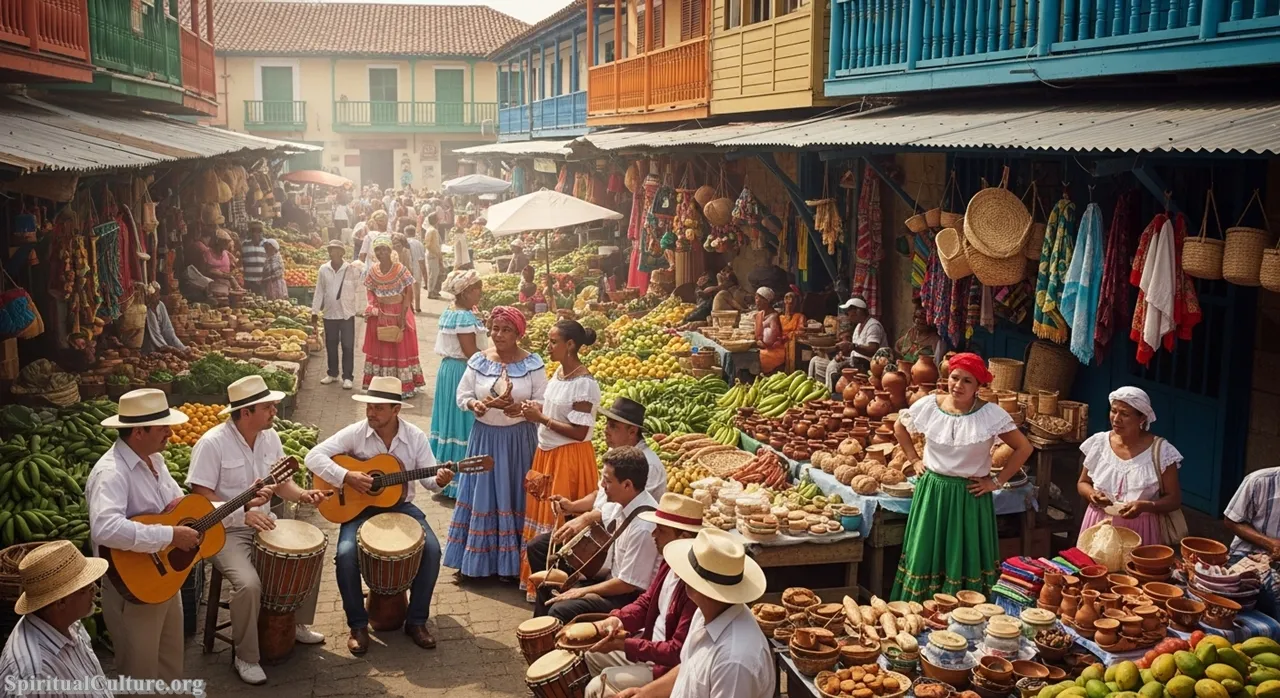
Each region developed differently. Colombia, Venezuela, Ecuador, Peru, Bolivia, Chile, Argentina, Paraguay, and Uruguay created distinct national and regional identities. Spanish colonial institutions encountered many Indigenous societies, African-diasporic communities, mixed populations, and later immigrant groups. Geography further encouraged cultural variation among coasts, highlands, forests, deserts, plains, and cities.

The terms criollo and mestizo have changed meaning over time and may be understood differently between countries. Historically, criollo often referred to people of European descent born in the Americas, while mestizo commonly described mixed Indigenous and European ancestry. Today, these terms may refer to broader cultural identities, but they can also carry colonial assumptions and should be used cautiously.

Catholic and civic traditions

Spanish colonial culture spread Catholic institutions throughout the continent. Cathedrals, monasteries, parish churches, confraternities, sacred art, religious education, pilgrimage routes, and feast days became prominent features of public life.

Local communities repeatedly transformed these institutions. Holy Week processions, celebrations of the Virgin Mary, patron-saint festivals, Christmas traditions, and commemorations of the dead developed distinctive regional music, clothing, foods, dances, and ceremonial roles.

After independence, Spanish-speaking republics created new civic cultures through national anthems, monuments, public schools, newspapers, museums, constitutions, and commemorative holidays. These traditions often adopted European models while also seeking symbols rooted in Indigenous history, independence movements, rural life, and local landscapes.

Literature and the arts

Spanish-speaking South America has produced influential poetry, novels, essays, theatre, visual art, film, and political thought. Writers and artists have addressed colonialism, race, Indigenous identity, dictatorship, migration, inequality, urbanization, memory, and the relationship between people and place.

The international category of Latin American literature often obscures important national differences, but Spanish-language publishing networks have enabled ideas and artistic movements to circulate widely across borders.

Spanish-Creole and Mestizo cultures appear in this list because they provide many of the shared institutions and languages through which South Americans communicate. Their influence is enormous, but they should not be treated as replacing the Indigenous and African cultures that helped create contemporary societies.

4. Afro-South American Cultures

Millions of Africans were forcibly transported to South America during the Atlantic slave trade. They came from different regions, nations, languages, and religious traditions. Under violent conditions, enslaved people and their descendants preserved knowledge, created communities, resisted oppression, and developed new cultural forms.

Top 10 Most Influential Cultures in South America

Afro-South American cultures are especially visible in Brazil, Colombia, Venezuela, Ecuador, Peru, and Uruguay, but they also have important histories in Argentina, Paraguay, Bolivia, Chile, Guyana, Suriname, and French Guiana.

Music, dance, and cultural memory

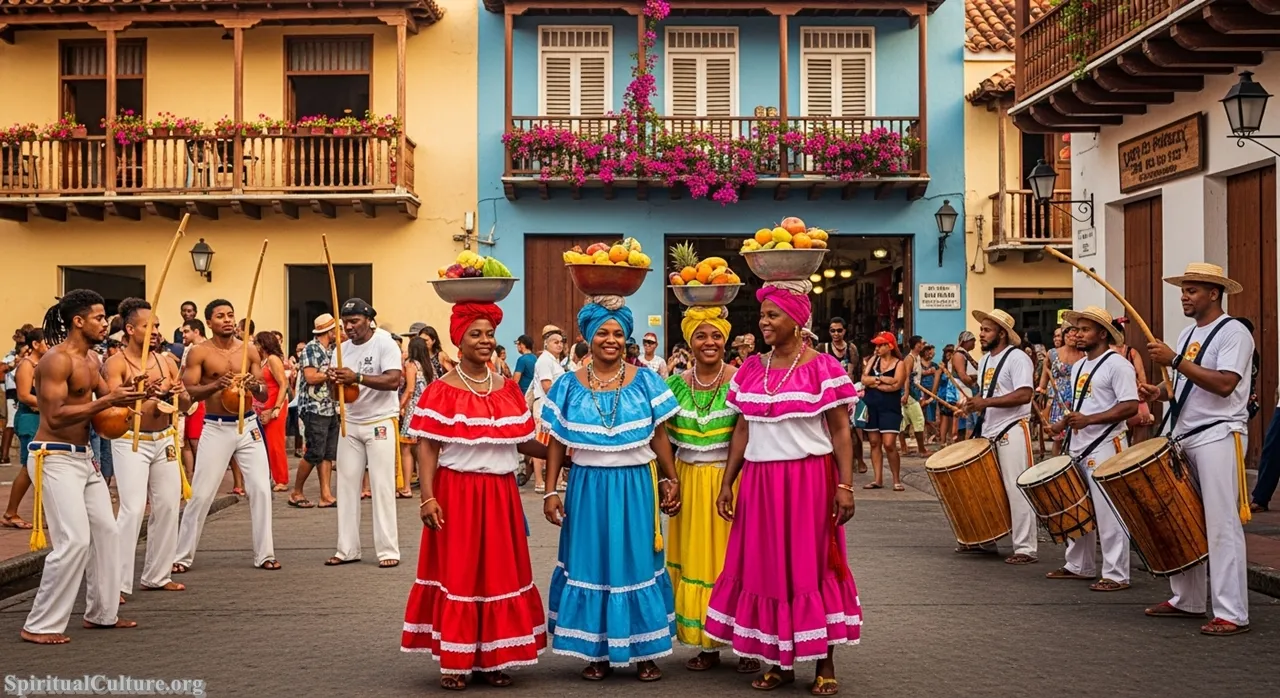
African-descended communities profoundly shaped the music and dance of the continent. Drumming traditions, call-and-response singing, polyrhythm, circular performance spaces, improvisation, procession, and embodied storytelling became important in many local genres.

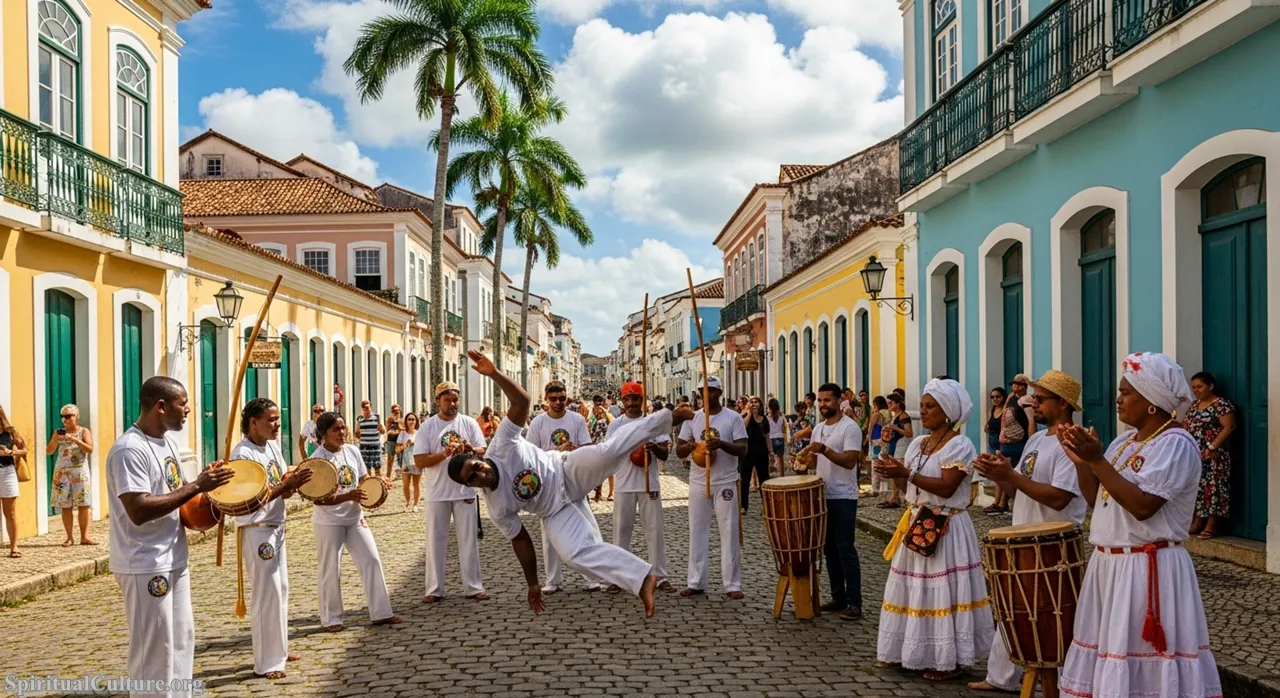
In Brazil, Samba de Roda developed in Bahia as a combination of music, poetry, dance, and communal participation. UNESCO notes that migrants carried this tradition to Rio de Janeiro, where it helped influence urban samba, later regarded as a major symbol of Brazilian national identity. Capoeira, another Afro-Brazilian practice, combines movement, music, play, martial skill, memory, and ritualized social interaction within the roda, or circle.

In Uruguay, candombe emerged from African-descended communities and became a central form of musical celebration, collective memory, and identity. UNESCO describes it as both an expression of resistance and a community social practice, while Uruguayan heritage institutions emphasize the role of African peoples with differing languages, dances, songs, and sacred or secular traditions in its development.

Sacred traditions

Afro-Brazilian religions such as Candomblé developed through the preservation and reorganization of West and Central African traditions in Brazilian conditions. Communities may honor divinities known as orixás, voduns, or inquices, depending on lineage and ritual nation. These traditions are not identical and should not be collapsed into one system.

Umbanda emerged in Brazil through interactions among African-derived traditions, Catholicism, Spiritism, Indigenous references, and other religious currents. Its beliefs and practices differ among temples and communities.

In other countries, African-descended religious memory may appear through Catholic confraternities, ancestor traditions, funerary practices, music, healing knowledge, festival organizations, and relationships with sacred places. Some elements survived publicly, while others were transmitted privately because of persecution.

Enduring significance

Afro-South American influence is sometimes celebrated in music and festivals while the histories of slavery, racism, land loss, and religious discrimination are minimized. Responsible cultural interpretation must recognize both creativity and injustice.

These cultures rank among the continent’s most influential because they transformed national identities, spiritual life, performance, language, cuisine, and popular culture. Many forms now marketed as nationally representative originated in Black communities whose contributions were not always acknowledged.

5. Amazonian Indigenous Cultures

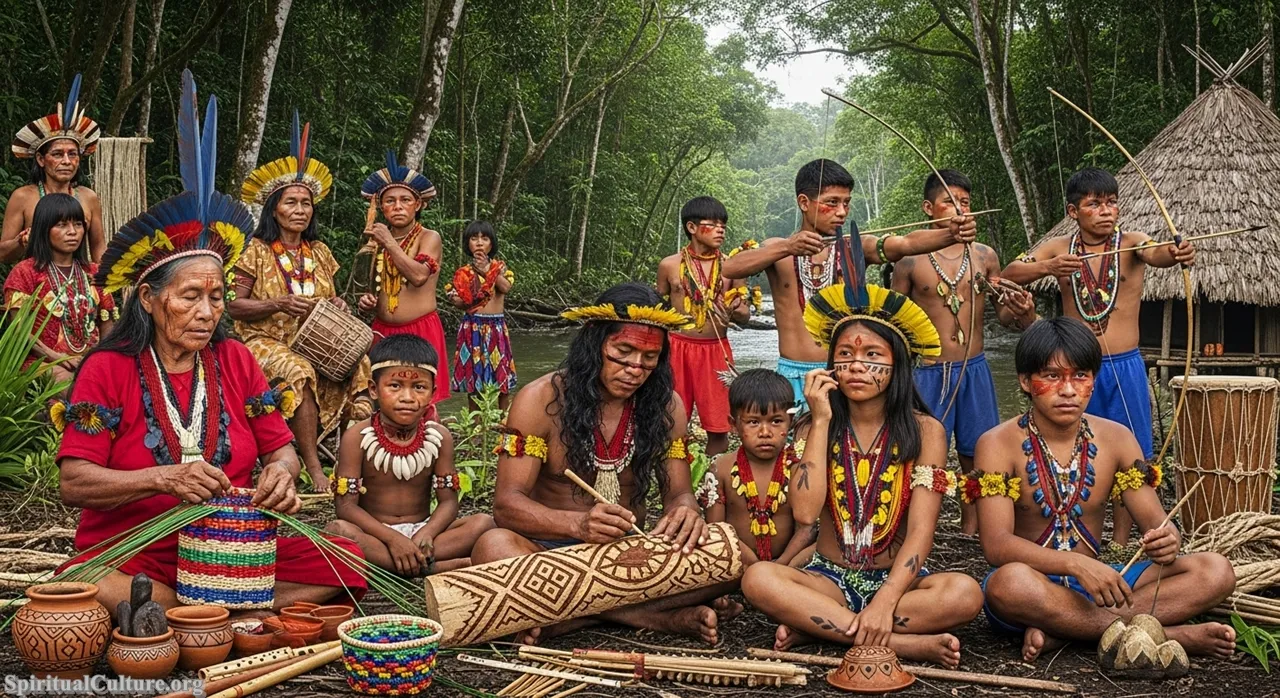
The Amazon is home to a vast range of Indigenous peoples rather than one “Amazonian culture.” Communities differ in language, social organization, material culture, subsistence, ritual life, historical experience, and relationships with rivers and forests.

Top 10 Most Influential Cultures in South America

The Amazon Basin crosses several national boundaries, including Brazil, Peru, Colombia, Bolivia, Ecuador, Venezuela, Guyana, Suriname, and French Guiana. Indigenous territories and cultural networks frequently predate these borders.

UNESCO-supported initiatives in the region address the safeguarding of Indigenous languages and cultural heritage, including communities living near borders and peoples with histories of recent contact or voluntary isolation. In Peru alone, official recognition includes dozens of Indigenous peoples, most of whom live in Amazonian regions.

Knowledge, territory, and spirituality

For many Amazonian communities, cultural knowledge is inseparable from territory. Rivers, animals, forests, gardens, ancestral places, and seasonal cycles may carry social and spiritual significance. Oral narratives can explain the origins of peoples, species, landscapes, moral obligations, ritual practices, and relationships among human and nonhuman beings.

Ritual specialists may serve as healers, singers, teachers, mediators, or guardians of knowledge. Their roles differ considerably between communities. It is therefore misleading to apply a single romanticized image of the “Amazonian shaman” to hundreds of distinct peoples.

Traditional plant knowledge has attracted worldwide attention, but it is often removed from its ethical, linguistic, and ceremonial contexts. Sacred or medicinal plants should not be portrayed as guaranteeing healing, revelation, or spiritual power. Their use may require specialized knowledge, and some substances carry serious health and legal risks.

Cultural creativity

Amazonian cultures have produced highly developed systems of body painting, featherwork, ceramics, basketry, weaving, woodwork, architecture, music, and oral literature. The Shipibo-Konibo of Peru, for example, are widely recognized for intricate visual designs applied to ceramics, textiles, and other surfaces. Such arts are living practices that continue to develop rather than relics frozen in the past.

Amazonian Indigenous knowledge has also become increasingly important in discussions of biodiversity and forest protection. This does not mean all Indigenous communities live identically or that they should be reduced to environmental symbols. Their political rights, cultural autonomy, education, health, economic needs, and authority over heritage remain equally important.

The Amazonian cultural world belongs in this list because of its linguistic diversity, ecological knowledge, spiritual traditions, artistic achievement, and importance to global discussions about the future of forests.

6. The Guaraní Cultural World

The Guaraní cultural world extends across Paraguay, Brazil, Argentina, and Bolivia. It encompasses several related peoples and communities, each with its own history and local identity.

Top 10 Most Influential Cultures in South America

Guaraní influence is most visible in Paraguay, where the language is official alongside Spanish and functions as a major symbol of national identity. Unlike many Indigenous languages in the Americas, Guaraní is widely spoken by people who do not necessarily identify as Indigenous.

UNESCO has described Guaraní as a distinctive seal of Paraguayan identity. Contemporary preservation efforts nevertheless face challenges, including reduced use among some younger speakers, social pressure favoring Spanish, and the need for stronger educational and written resources.

Language as cultural memory

Guaraní language carries songs, oral history, botanical knowledge, humor, kinship concepts, and spiritual ideas. Its continued use demonstrates that an Indigenous language can influence an entire nation rather than surviving only within isolated communities.

Paraguayan Spanish has also been shaped by long interaction with Guaraní. Many people move between the languages or use mixed forms in everyday conversation.

Foodways and living heritage

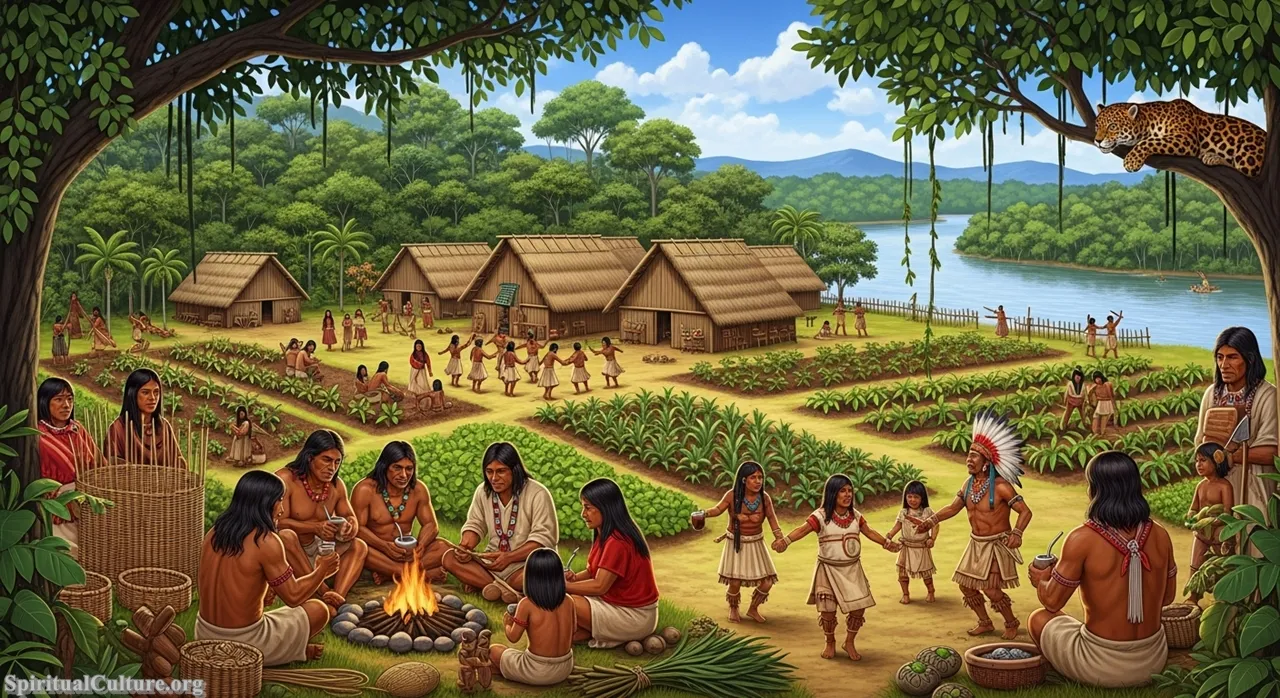
Tereré, a cold infusion commonly prepared with yerba mate, is one of the best-known Guaraní-influenced practices in Paraguay. The preparation and sharing of the drink involve utensils, social etiquette, plant knowledge, hospitality, and family transmission. UNESCO recognizes the practices and traditional knowledge associated with tereré and pohã ñana, the Guaraní tradition of adding herbs to the drink.

Yerba mate culture also connects Paraguay with Argentina, Uruguay, and southern Brazil, although preparation and social customs vary between regions.

Religious history

Guaraní communities encountered Jesuit and other Catholic missions during the colonial period. Mission history produced architecture, music, written records, Christian communities, and forms of cultural exchange, but it also involved colonial control, displacement, labor demands, and pressure on Indigenous traditions.

Contemporary Guaraní religious life may include Indigenous ceremonies, Catholicism, Protestant Christianity, or combinations understood differently by each community. Sacred relationships with land, ancestors, and the spoken word remain significant in many Guaraní worldviews.

Guaraní culture is influential because it crosses modern borders and has shaped the language, identity, food, music, and historical memory of the southern interior of the continent.

7. Mapuche Culture

The Mapuche are an Indigenous people whose ancestral territories lie mainly in south-central Chile and southwestern Argentina. The term includes several regional groups connected by related social traditions and the Mapudungun language.

Top 10 Most Influential Cultures in South America

Mapuche history is marked by determined resistance to outside rule. Mapuche communities opposed expansion by the Inca state, resisted Spanish conquest, negotiated treaties, maintained political autonomy for long periods, and later confronted military occupation and territorial loss by Chile and Argentina.

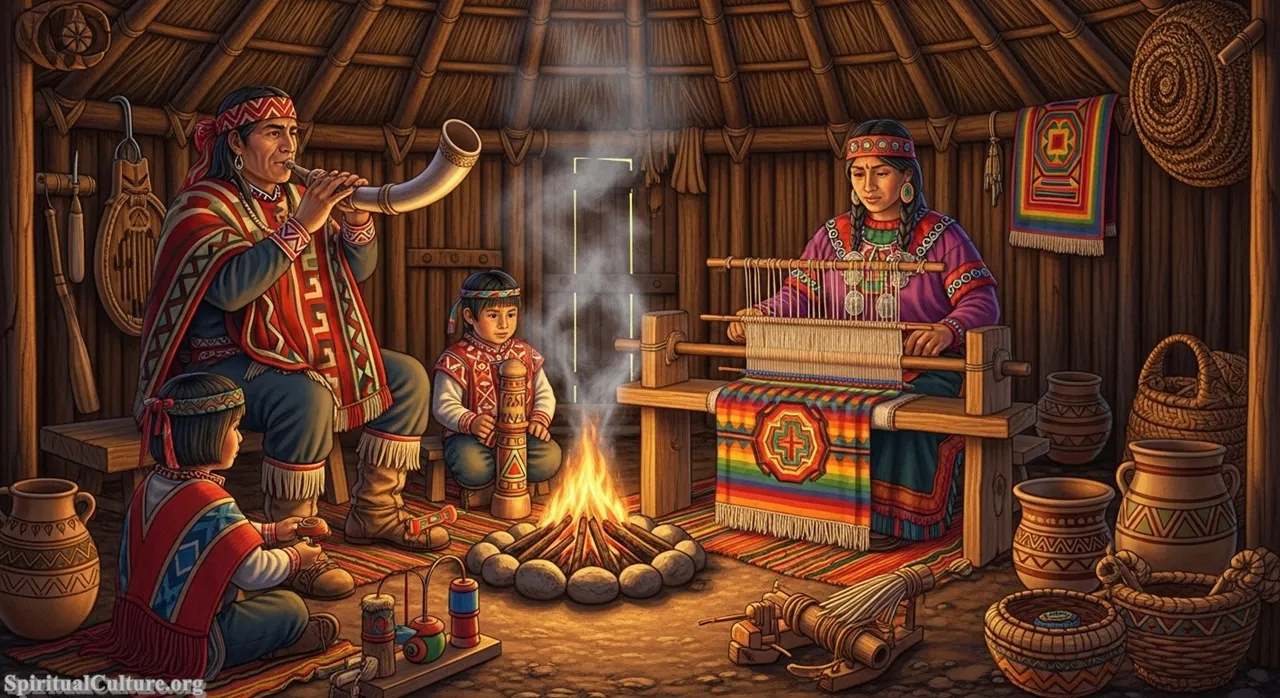
The Smithsonian’s National Museum of the American Indian describes admapu as a strong Mapuche way of life that helped guide responses to outside forces. Despite displacement and urban migration, Mapuche communities continue to maintain connections to ancestral territories, family histories, ceremonies, textiles, language, and community authority.

Spiritual culture

Mapuche spirituality is diverse, but relationships among land, community, ancestors, and the wider living world are often central. The machi, a respected ritual specialist, may perform healing, prayer, divination, song, and ceremonies intended within Mapuche belief to restore balance.

The rewe, a sacred ceremonial structure associated with the machi, symbolizes relationships between different dimensions of the Mapuche world. Such traditions should be understood within Mapuche religious contexts rather than treated as demonstrations of scientifically proven supernatural power.

Ceremonies such as the ngillatun bring communities together for prayer, gratitude, renewal, and collective responsibility. The details vary locally and may not be open to outsiders.

Contemporary influence

Mapuche culture has shaped Chilean and Argentine vocabulary, cuisine, place names, political debate, textile arts, poetry, music, and environmental movements. Mapuche writers and artists increasingly present their own histories, challenging older national narratives that portrayed Indigenous peoples only as figures of the past.

Language revitalization remains an important concern. Mapudungun has experienced reduced transmission because of historical exclusion, schooling policies, discrimination, and migration, but educators, families, scholars, and cultural organizations continue to create teaching resources and new spaces for use.

Mapuche culture belongs among South America’s most influential traditions because of its historical independence, strong territorial identity, spiritual heritage, and continuing role in debates about Indigenous rights and cultural survival.

8. Gaucho Culture of the Pampas

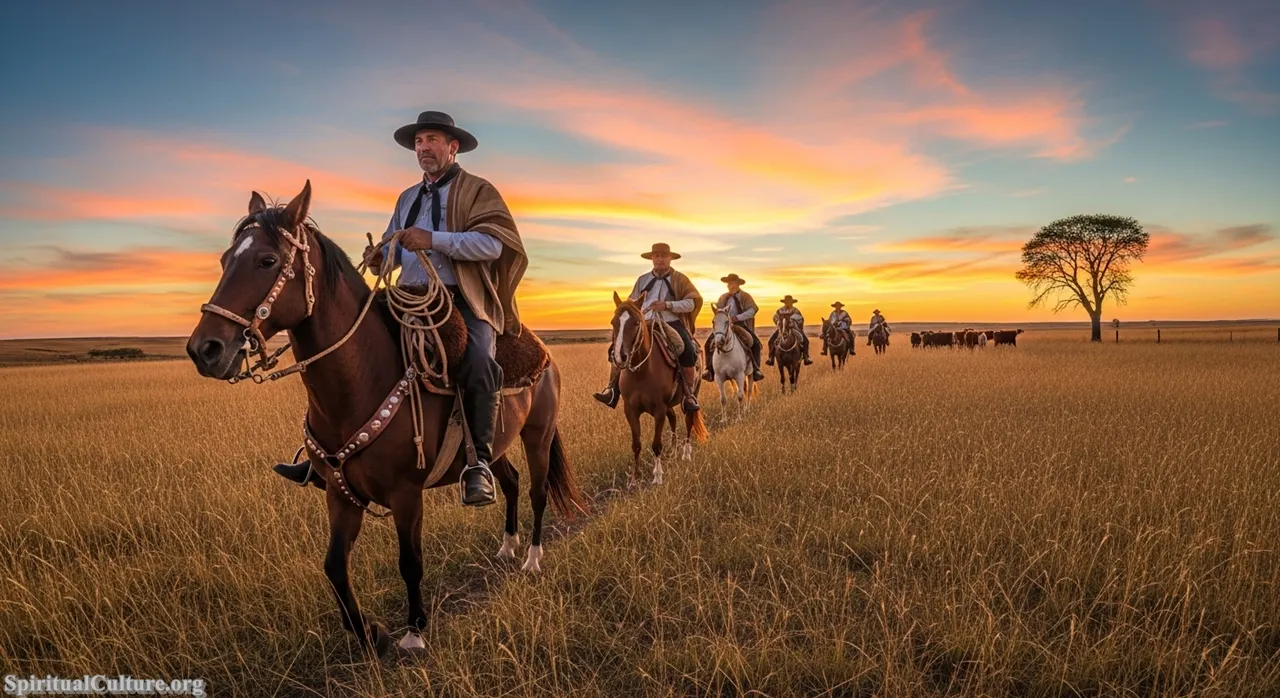
Gaucho culture developed across the grasslands of Argentina, Uruguay, southern Brazil, and neighboring areas. Historically, the gaucho was a highly mobile horseman associated with cattle work, frontier life, rural trade, military service, and the open landscapes of the Pampas.

Top 10 Most Influential Cultures in South America

The gaucho emerged from cultural interaction among Indigenous peoples, people of Spanish and Portuguese descent, mixed populations, Africans and Afro-descendants, and later rural workers. The tradition should therefore not be portrayed as exclusively European.

Skills and material culture

Horsemanship, cattle handling, leatherwork, silverwork, clothing, saddlery, knives, lasso techniques, guitar music, improvised poetry, fire-based cooking, and mate drinking became associated with gaucho life.

The payada, an improvised sung-poetry tradition commonly accompanied by guitar, is especially important. Payadores compose verses in dialogue, sometimes answering one another through poetic challenges. Cultural agencies in Argentina and Uruguay recognize the continuing importance of payada and other gaucho traditions as living heritage.

Myth and national identity

By the late nineteenth and early twentieth centuries, the historical gaucho was becoming a national symbol. Literature, paintings, festivals, schools, museums, and political speeches represented the gaucho as independent, courageous, hospitable, skilled, and closely connected to the land.

This idealized image sometimes concealed the poverty and marginalization of actual rural workers. It could also minimize Indigenous and African contributions or present frontier expansion as peaceful.

The cultural figure nevertheless became central to Argentine and Uruguayan identity and remains important in Rio Grande do Sul, where the Portuguese form gaúcho can describe both a regional cultural identity and a resident of the state.

Government cultural programs continue to support traditionalist centers, rural artists, craftspeople, music, clothing, equestrian skills, mate, asado, and other elements associated with gaucho heritage.

Gaucho culture ranks among the most influential because it links several countries through a shared rural heritage while continuing to shape literature, food, music, clothing, tourism, and national symbolism.

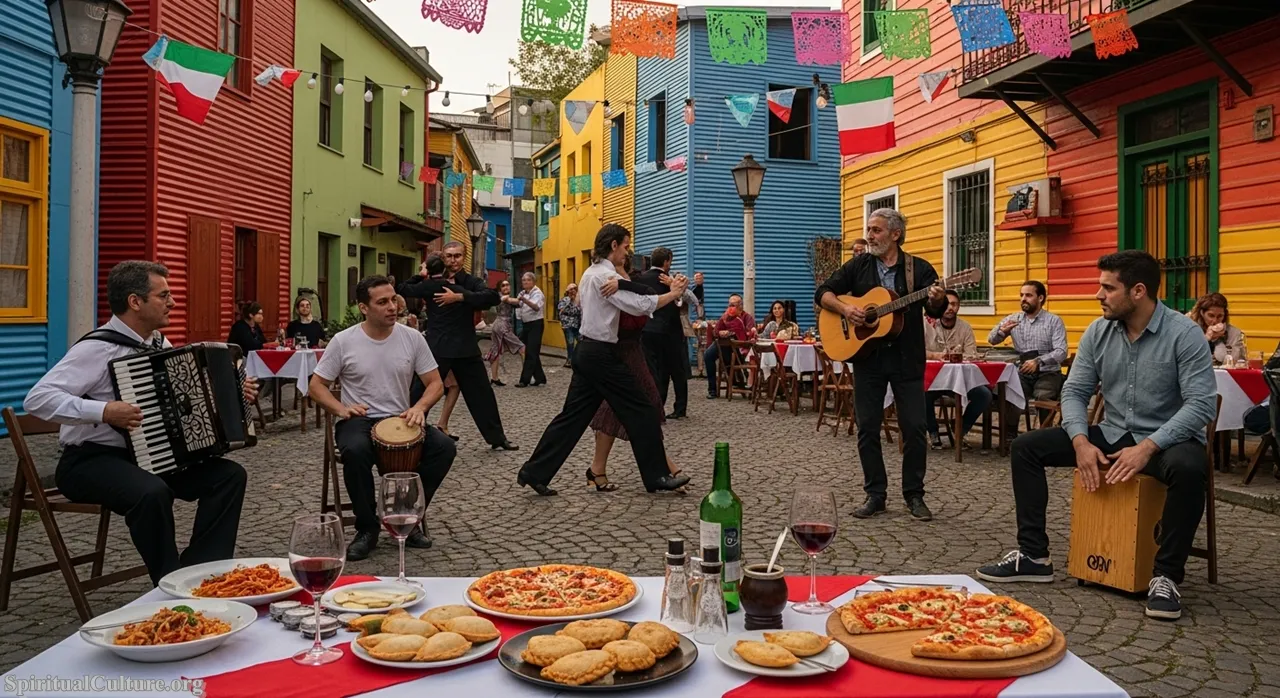
9. Italian-South American Culture

Large-scale Italian migration during the nineteenth and early twentieth centuries transformed several South American societies, particularly Argentina, Uruguay, and Brazil.

Top 10 Most Influential Cultures in South America

Italian migrants came from different regions and spoke different languages or dialects. They worked in agriculture, construction, manufacturing, trade, transport, education, publishing, and the arts. Their descendants became part of urban and national life while maintaining regional associations, religious festivals, foods, and family traditions.

Historical studies preserved by the Library of Congress document the major role of Italian migration in both Argentina and Brazil. Argentina’s Museum of Immigration also preserves records and public memory associated with the arrival of immigrants through Buenos Aires.

Language and everyday life

Italian speech patterns influenced the Spanish of the Río de la Plata, particularly in Buenos Aires and Montevideo. Gestures, intonation, vocabulary, humor, and forms of family address also reflect long interaction between Italian and Hispanic traditions.

In Brazil, Italian immigration was especially important in São Paulo and the southern states. Italian communities contributed to coffee production, industry, urban development, food culture, religious associations, newspapers, theatre, and labor movements.

Food and family culture

Pasta, pizza, polenta, risotto, bread, wine-making, cured meats, and regional Italian recipes became integrated into South American cuisine. These foods were adapted to local ingredients and social conditions, creating dishes that may differ considerably from their Italian counterparts.

The Sunday family meal became a powerful symbol in many Italian-descended communities. Catholic feast days, saints’ associations, village festivals, and mutual-aid societies also helped migrants maintain social bonds.

Music and the arts

Italian musicians, instrument makers, theatre companies, and composers participated in the development of urban culture. Italian influence became particularly visible in opera, popular theatre, orchestral music, and tango. Italy’s foreign ministry has highlighted the close relationship between Italian migration and the history of tango in Argentina.

Italian-South American culture ranks highly because migration reshaped language, cities, food, family life, politics, industry, music, and national identity. Its influence is particularly strong in the Southern Cone, where Italian heritage is now deeply integrated into everyday culture.

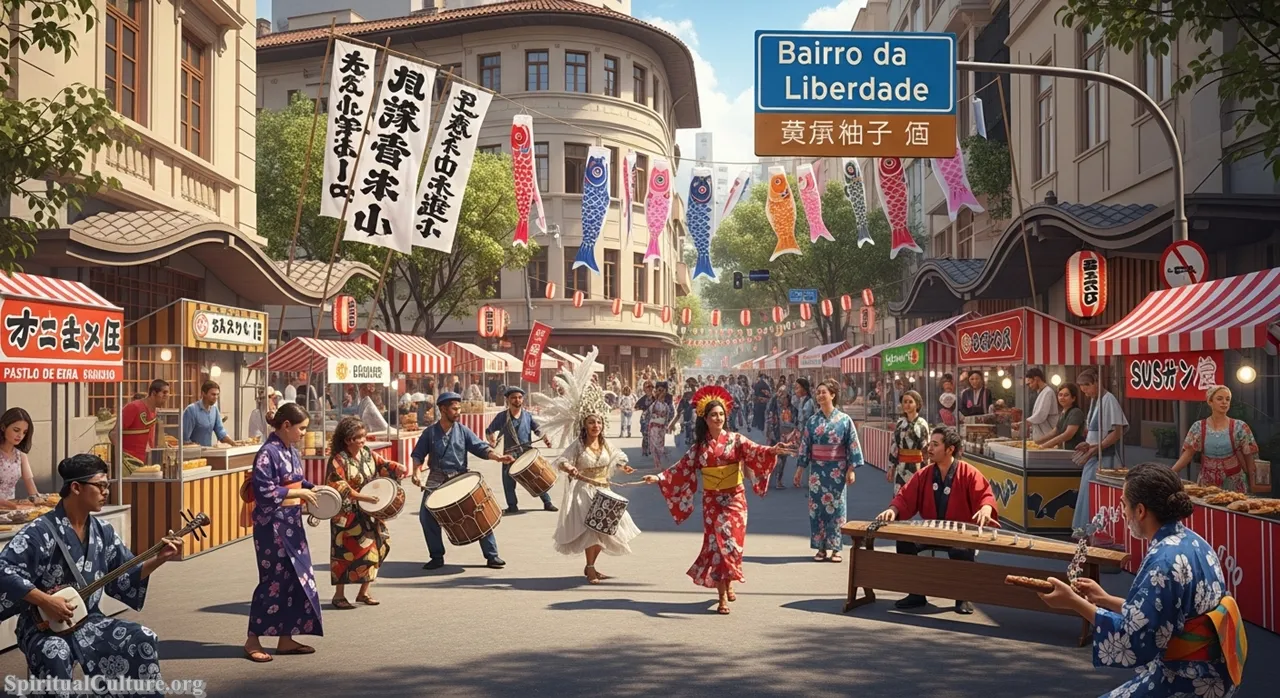
10. Japanese-Brazilian Culture

Japanese-Brazilian culture developed from migration beginning in the early twentieth century. The ship Kasato Maru arrived at the port of Santos in 1908 carrying the first major group of Japanese immigrants to Brazil.

Top 10 Most Influential Cultures in South America

Many early migrants worked in agriculture under difficult conditions. Communities later expanded into commerce, education, professional life, industry, politics, the arts, and science.

Brazil is now home to the largest community of Japanese descent outside Japan. Recent Japanese government estimates place the Nikkei population in Brazil in the millions, reflecting more than a century of migration, family formation, and cultural exchange.

Agriculture and food

Japanese immigrants contributed to Brazilian agriculture by introducing or expanding the cultivation of particular vegetables, fruits, tea, and other crops. Agricultural cooperatives and community organizations helped families share knowledge and enter regional markets. Japanese government sources note the role of Japanese migrants and their descendants in making a wider variety of produce available in Brazil.

Japanese food traditions also became part of Brazilian urban life. Sushi, sashimi, yakisoba, tempura, pastel-like adaptations, and Japanese-Brazilian fusion foods are now widely available, especially in large cities.

Religion and community institutions

Japanese migrants brought Buddhist traditions, Shinto-related customs, ancestor remembrance, new religious movements, and secular community practices. Some immigrants and descendants became Catholic or Protestant, while others maintained multiple family traditions without considering them contradictory.

Buddhist temples, cultural associations, language schools, sports clubs, agricultural cooperatives, festivals, and ancestor memorials helped communities transmit identity. Practices changed across generations as Portuguese became the primary language for many Japanese Brazilians.

A two-way cultural bridge

Neighborhoods such as Liberdade in São Paulo became famous for Japanese-Brazilian businesses and festivals, although their populations and cultural meanings have continued to change. Japanese popular culture—including manga, anime, martial arts, design, and cuisine—has also found a large Brazilian audience.

Migration later moved in both directions, with many Brazilians of Japanese descent settling temporarily or permanently in Japan. This created transnational families and new forms of Japanese-Brazilian identity.

Japanese-Brazilian culture completes this list because it demonstrates how a migrant community can preserve selected traditions, adapt to a new society, and influence agriculture, food, education, religion, business, and international relations.

What Makes South American Culture So Influential?

South America’s cultural influence does not come from any single civilization or nation. It comes from the interaction of many cultural worlds.

Indigenous traditions provided languages, foods, agricultural systems, sacred geographies, political ideas, environmental knowledge, music, and artistic forms. Iberian colonial societies introduced Spanish and Portuguese languages, Catholic institutions, European legal traditions, and new urban systems, often through conquest and forced assimilation.

African-descended communities transformed religion, music, dance, cuisine, language, labor organization, and public celebration despite the violence of slavery and continuing racism. Immigrants from Italy, Japan, Germany, the Levant, Eastern Europe, South Asia, Indonesia, China, and many other regions created further layers of cultural exchange.

The result is not a continent where cultures have merged into a single harmonious whole. Cultural interaction frequently occurred under unequal conditions. Conquest, enslavement, displacement, missionary pressure, discrimination, and state assimilation damaged many communities.

At the same time, cultural survival has never meant remaining unchanged. Communities have preserved heritage through adaptation, selective borrowing, reinvention, secrecy, public festivals, language activism, religious institutions, family memory, education, artistic expression, and political organization.

Challenges Facing South America’s Living Cultures

Language loss

Many Indigenous languages are endangered because children have fewer opportunities to learn or use them. School systems, migration, social stigma, media concentration, and economic pressure often favor Spanish or Portuguese.

Preservation requires more than dictionaries. Languages remain alive when families, schools, ceremonies, workplaces, publishers, broadcasters, and digital platforms support everyday use.

Loss of land and sacred places

For many Indigenous peoples, territory is fundamental to cultural transmission. Deforestation, mining, dams, commercial agriculture, urban development, and infrastructure projects may affect burial places, ceremonial landscapes, traditional foods, medicinal plants, and oral histories.

Conservation is strongest when communities participate directly in decisions and retain meaningful authority over their heritage.

Commercialization

Tourism and entertainment can bring income and visibility, but they can also simplify traditions. Sacred ceremonies may be turned into spectacles, clothing may be detached from community meaning, and cultural designs may be copied without permission.

Ethical cultural engagement requires respect for community rules, accurate attribution, and fair compensation.

Stereotyping

South American cultures are often reduced to a few symbols: the Inca, Carnival, tango, football, gauchos, shamans, rainforests, and colorful festivals. These images may have cultural value, but they become misleading when presented as complete descriptions.

Living communities include farmers, religious leaders, teachers, engineers, artists, activists, urban workers, migrants, and young people using contemporary technologies. Cultural continuity and modern life are not opposites.

Conclusion

The top ten most influential cultures in South America represent only part of the continent’s extraordinary diversity. The Andean, Portuguese-Brazilian, Spanish-Creole, Afro-South American, Amazonian, Guaraní, Mapuche, gaucho, Italian-South American, and Japanese-Brazilian cultural worlds have all shaped language, religion, art, food, politics, social memory, and everyday life.

Their influence should not be interpreted as a hierarchy of human worth. Some traditions became nationally or internationally visible because they were associated with powerful states, large populations, tourism, or commercial media. Others remain less widely known despite their profound importance to the communities that maintain them.

South America’s cultural history is marked by both suffering and creativity. Conquest, slavery, displacement, and discrimination cannot be separated from the emergence of many modern societies. Yet communities repeatedly protected knowledge, renewed traditions, and created new cultural forms under changing conditions.

The future of this heritage depends on more than monuments and festivals. It requires living languages, secure communities, protected sacred places, intergenerational teaching, responsible scholarship, and the right of people to explain and manage their own traditions. Preserving South America’s cultural diversity therefore means supporting the communities for whom this heritage remains part of daily life.

Chi Tran

About the Author

Chi Tran

Editorial contributor at Spiritual Culture

Chi Tran writes for Spiritual Culture, focusing on spiritual culture, sacred traditions, ritual life, folklore, symbols, festivals, sacred places, and living heritage around the world.

Editorial Note: Content is prepared with respect for spiritual diversity, cultural context, documented sources, oral tradition, and living community practice.

View all 2,383 articles by Chi Tran
Related Articles

Leave a Comment