Rather, the Buddha taught that the ultimate goal of spiritual practice is to attain enlightenment, a state of profound understanding and realization of the true nature of reality. This enlightenment is often referred to as “awakening” or “seeing things as they are.”
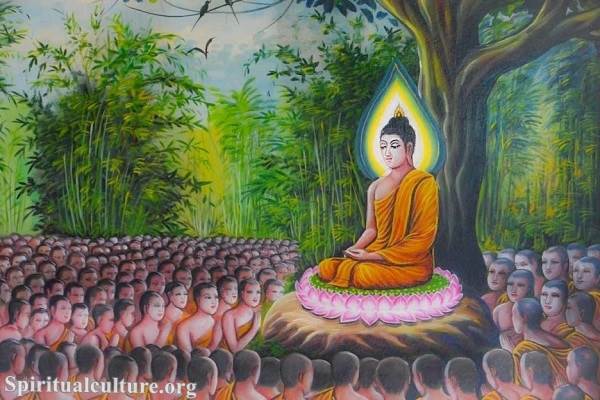
Buddhism does not posit the existence of a deity or deities who control or influence the world in the same way God is often understood in the Abrahamic religions (Judaism, Christianity, and Islam). Instead, the Buddha taught that all phenomena arise and pass away due to causes and conditions and that suffering arises from our attachment to and craving for these impermanent things. The Buddha’s teachings offer a path to overcome suffering and achieve lasting peace and happiness through cultivating wisdom, ethics, and meditation.
While some Buddhist traditions may use the term “Buddha” or “Dharma” to refer to the ultimate reality or the ultimate truth, these terms are not used as names for a personal deity in the same way God is often understood in other religions.