Pew Research Center’s latest comprehensive global religious study estimates that about 2.3 billion people were Christian in 2020. Christianity remained the world’s largest religious group, although Christians made up a smaller share of the global population than they had in 2010.
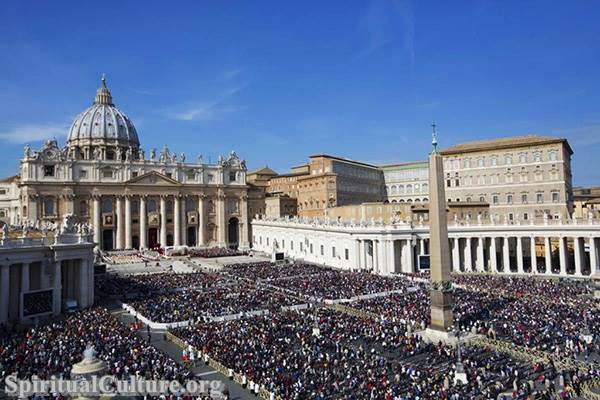
How many Christians are there?
Pew estimates that the Christian population grew by about 122 million from 2010 to 2020, reaching roughly 2.3 billion people.
Because the world’s non-Christian population grew faster, Christianity’s global share fell from about 31% to 28.8% over the same period.
Where Christians live
Christianity is geographically widespread. Sub-Saharan Africa has become especially important in the global distribution of Christians, while Europe’s Christian population declined significantly between 2010 and 2020.
Large Christian populations also live in the Americas and parts of Asia and the Pacific.
Christianity is internally diverse
The global Christian population includes Catholics, Orthodox Christians, Protestants, Anglicans, independent churches, and other Christian communities.
Membership can be measured through census identity, surveys, baptismal records, church rolls, or active participation, so denominational totals from different sources should not be combined carelessly.
Population is not the same as participation
A person may identify as Christian without attending church regularly, while church records can include baptized members with different levels of participation.
For this reason, global population estimates answer a demographic question rather than measuring personal devotion or weekly worship.
Why global totals are estimates
There is no single worldwide Christian membership register. Demographers combine national censuses, large surveys, church data, population estimates, and other sources. Countries also ask religious-identity questions in different ways, and some do not collect religious affiliation in a census at all.
That means a global figure such as 2.3 billion should be read as a demographic estimate with a reference year and methodology, not as an exact live counter. Numbers can change when population data, survey methods, or definitions are revised.
Growth is geographically uneven
Christian population change is strongly shaped by regional demographics. Sub-Saharan Africa has become increasingly important to the numerical center of global Christianity, while many European countries have seen lower affiliation and aging Christian populations. Latin America remains heavily Christian but has experienced substantial denominational change, and Asian Christian communities vary greatly by country.
Migration also moves Christian traditions across borders, creating new Catholic, Orthodox, Protestant, Pentecostal, and independent congregations far from their historical centers. Any ranking of Christian populations should therefore state the source year rather than presenting a number as permanently current.
Current benchmark
The best current global benchmark is about 2.3 billion Christians as of 2020 in Pew’s 2025 analysis, with strong regional shifts continuing beneath that total.