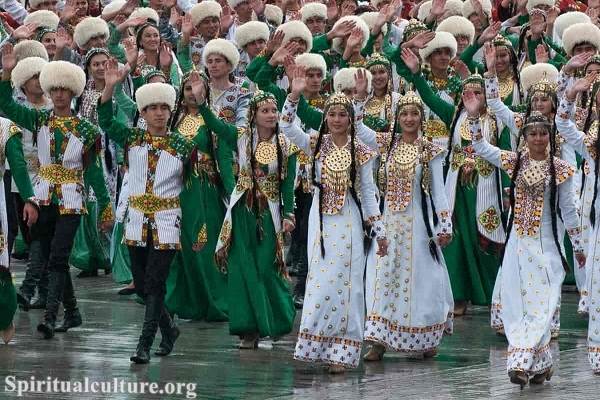
Emirati living heritage connects Islam, hospitality, desert and coastal knowledge, poetry, craft, performance, and family life. UNESCO now recognizes many of these practices as intangible heritage. Spiritual Culture presents ten traditions without ranking importance.
1. Majlis
The majlis is a social space for receiving guests, discussion, hospitality, mediation, and community relationships. UNESCO recognizes the practice across several Gulf societies.
2. Arabic coffee
Preparing and serving Arabic coffee follows etiquette that expresses generosity, respect, and hospitality. UNESCO recognizes Arabic coffee as intangible heritage shared by several Arab states.
3. Falconry
Falconry combines animal knowledge, training, desert experience, family transmission, and social identity. Its contemporary practice includes heritage events as well as hunting traditions.
4. Al Sadu weaving
Al Sadu is a Bedouin weaving tradition associated with wool, geometric design, tents, furnishings, and women’s knowledge. UNESCO has recognized safeguarding work in the UAE.
5. Al Ayyala
Al Ayyala is a collective performance involving poetry, drums, movement, and lines of performers and is practiced in the UAE and Oman.
6. Date-palm knowledge
Date cultivation includes agriculture, irrigation, food, craft uses, household knowledge, and symbolic associations with generosity and oasis life.
7. Arabic calligraphy
Calligraphy is both an artistic practice and a vehicle for Qur’anic, literary, architectural, and public expression.
8. Alheda’a camel calls
Camel-herding oral traditions include calls and vocal communication used by herders, reflecting knowledge of animals and desert life.
9. Pearling and maritime memory
Before oil, pearling connected coastal communities with trade, diving, boats, songs, labor, and family economies. It remains important in heritage memory.
10. Islamic observance in daily life
Prayer, Ramadan, Eid, charity, mosque life, and family customs shape the rhythm of Emirati society alongside modern urban life.
Differences across traditions
Emirati tradition should be described as living practice, not costume or spectacle. UNESCO recognition supports safeguarding but does not freeze a tradition in one historical form.