Brunei’s religious life is shaped especially by Sunni Islam and the national philosophy of Malay Islamic Monarchy, while Christian, Buddhist, Chinese traditional, and other communities are also present. Religious practice is closely connected with public institutions, family customs, mosques, festivals, education, and local forms of sacred heritage.
Brunei’s public identity is closely connected with Islam and the national concept of Malay Islamic Monarchy, while Buddhist, Christian, Chinese traditional, and other communities are also part of the country. Understanding Brunei through religion and sacred heritage gives a clearer picture than treating culture only as food, tourism, or national symbols.
Religious traditions and everyday practice
Sunni Islam of the Shafi‘i school has a central role in state and community life. Mosques, Qur’anic education, Friday prayer, Ramadan, and royal religious ceremonies are highly visible. Malay adat and Islamic practice often interact in family ceremonies and public tradition.
Sacred places and religious heritage
Prominent mosques such as Sultan Omar Ali Saifuddien Mosque and Jame’ Asr Hassanil Bolkiah Mosque are important symbols of Brunei’s sacred architecture. Chinese temples and Christian churches represent other long-standing strands of local religious life.
Festivals, rituals, and community life
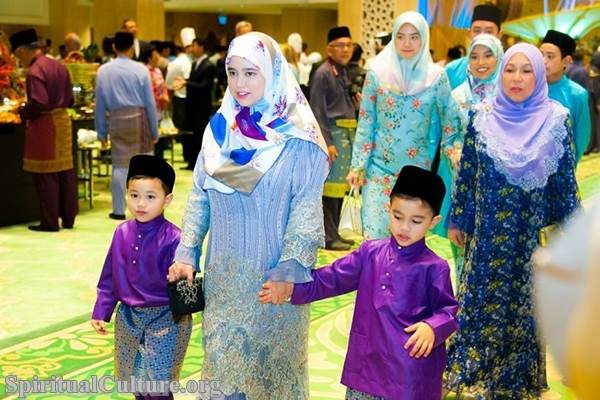
Ramadan and Hari Raya Aidilfitri are among the most important annual observances. Open-house visits, charitable giving, communal meals, and prayer link religious devotion with hospitality and kinship. Other communities maintain their own festival calendars within the country’s legal framework.
Living spiritual culture
Brunei’s spiritual culture is therefore more than royal imagery. It is a living combination of Islamic devotion, Malay custom, family life, sacred architecture, and minority religious traditions.
Religious diversity in context
Brunei’s national religious identity is closely tied to Sunni Islam and the state philosophy of Malay Islamic Monarchy. Mosque worship, Qur’anic education, Friday prayer, fasting, charity, and Islamic family observance are therefore prominent in public life. Chinese Buddhist, Daoist, Christian, and other communities reflect older patterns of migration and trade in Borneo.
Malay cultural custom and Islamic teaching often intersect, but they should not be treated as identical. Some practices express national or regional tradition rather than formal religious obligation, while minority communities maintain their own institutions within the country’s legal framework.
Festivals, pilgrimage, and sacred memory
Ramadan, Hari Raya Aidilfitri, Hari Raya Aidiladha, and other Islamic occasions structure the public calendar. Major mosques are important centers of worship and national symbolism, while churches and Chinese temples preserve the religious histories of minority communities.
Brunei’s spiritual culture is therefore best understood through the relationship between Islam, monarchy, Malay identity, family life, and the quieter presence of minority traditions rather than through a simple list of religious percentages.
Historical change and regional variation
Brunei’s public religious culture is closely tied to Sunni Islam, Malay custom, royal institutions, and the national ideology of Malay Islamic Monarchy. At the same time, Chinese, Christian, and other communities reflect older patterns of trade and migration across Borneo and the wider South China Sea.
Reading Brunei’s spiritual culture carefully
State symbolism and lived religion are related but not identical. Mosque worship, Qur’anic education, Ramadan, family adat, royal ceremony, and minority religious institutions each occupy different places in public and private life, so they should be described with attention to legal and social context.