Original sin is one of the most foundational — and often misunderstood — concepts in Christian theology. It touches every part of human life: our desires, relationships, struggles, and even how we view the world. But how exactly do Protestants understand this doctrine? What sets their perspective apart from other Christian traditions? And why does it matter for the spiritual seeker today?
As Spiritual Culture, we invite you into a deeper exploration of original sin through the lens of Protestant theology. This is more than just a theological concept; it is a profound window into the human soul and the story of redemption.
In this article, we’ll explore what original sin means to Protestants, how it developed historically, what the Bible says, and how this belief shapes the way millions of people view grace, salvation, and human nature.
What Is Original Sin?
The Meaning Behind the Term
Original sin refers to the idea that all human beings inherit a sinful condition and a tendency to sin from the first humans — Adam and Eve. The term doesn’t appear directly in the Bible, but the concept is rooted in several biblical passages.
Romans 5:12 – A Foundational Text
“Therefore, just as sin entered the world through one man, and death through sin, and in this way death came to all people, because all sinned.” (Romans 5:12, NIV)
Protestants believe that because of Adam’s disobedience in the Garden of Eden, all human beings are born into a state of spiritual corruption. This doesn’t just mean we do sinful things — it means we are, by nature, inclined toward sin.
Sin as Inherited Condition
The Protestant doctrine of original sin teaches that sin is not merely a personal wrongdoing but a condition of the human heart. It’s not just what we do — it’s who we are apart from God.
This has massive implications:
- We are not morally neutral at birth.
- We are not capable of perfect obedience on our own.
- We are in need of divine grace from the beginning.
A Historical Look: Protestant Reformers on Original Sin
Martin Luther and Total Depravity
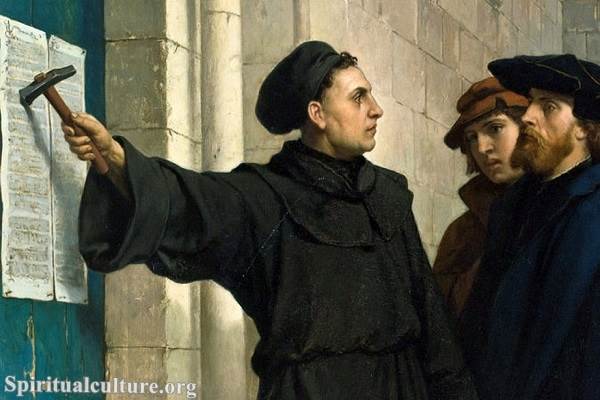
Martin Luther, the father of the Protestant Reformation, emphasized the complete inability of humans to save themselves. His doctrine of total depravity taught that the human will is bound — enslaved to sin — unless God intervenes.
“Man is by nature unable to want God to be God. Indeed, he himself wants to be God.”
— Martin Luther, The Bondage of the Will
Luther’s view was influenced by Augustine but took it further: humanity is not just damaged by sin — it is spiritually dead without God’s grace.
John Calvin and Inherited Corruption
John Calvin, another influential Protestant reformer, echoed similar ideas in his Institutes of the Christian Religion:
“All of us, who have descended from impure seed, are born infected with the contagion of sin.”
— John Calvin
Calvin taught that original sin includes two elements:
- Guilt inherited from Adam
- Corruption of human nature
This dual aspect means humans are both legally guilty before God and morally broken in themselves.
Key Protestant Beliefs About Original Sin
1. All Humans Are Born Sinful
Protestants believe that every person is born in sin — not just those who choose to do wrong later in life. This belief sets the stage for their understanding of salvation.
“Surely I was sinful at birth, sinful from the time my mother conceived me.” (Psalm 51:5, NIV)
This doesn’t mean babies are guilty of personal sins, but that they are born with a fallen nature in need of redemption.
2. Sin Affects the Whole Person
Original sin is not just a flaw in our behavior — it touches every part of our being:
- Mind (we think selfishly)
- Will (we choose wrongly)
- Emotions (we love disordered things)
- Body (we suffer decay and death)
This total impact is often described as total depravity, though not meaning we are as evil as possible — rather, that sin has affected every area of human life.
3. Salvation Is by Grace Alone
Because of original sin, Protestants believe that no one can earn salvation. We are spiritually dead and need to be made alive by God’s grace:
“For it is by grace you have been saved, through faith—and this is not from yourselves, it is the gift of God.” (Ephesians 2:8, NIV)
Without an understanding of original sin, the Protestant emphasis on grace alone (sola gratia) would lose its force.
Protestant Denominational Differences
While Protestants agree on the basics, different branches emphasize different aspects:
Reformed (Calvinist) Tradition
- Emphasizes total depravity
- Strong on predestination as God’s sovereign response to original sin
- Teaches irresistible grace — that God draws the elect to salvation powerfully and effectively
Lutheran Tradition
- Teaches that humans are in bondage to sin
- Stresses the means of grace (Word and Sacraments) as God’s way of breaking that bondage
- Holds a strong belief in infant baptism, partially as a response to original sin
Evangelical and Baptist Traditions
- Affirm the reality of original sin
- Often focus more on personal responsibility and conversion
- Usually do not baptize infants, arguing that individuals must first recognize their sin and respond in faith
What About Infants and Sin?
This question touches on both theology and emotion. Do Protestants believe babies are sinners?
The answer is nuanced.
- Yes, in the sense that all are born with a sinful nature.
- No, in the sense that infants are not personally responsible for moral decisions.
Some traditions (like Lutherans) practice infant baptism as a sign of God’s grace even for the youngest. Others (like Baptists) wait for a personal confession of faith.
The Role of Jesus in Addressing Original Sin
At the center of Protestant belief is this: Jesus is the answer to original sin.
“For as in Adam all die, so in Christ all will be made alive.” (1 Corinthians 15:22, NIV)
This verse draws a direct line between the problem (Adam) and the solution (Christ).
Jesus as the Second Adam
Protestants often refer to Jesus as the “Second Adam” — the one who undoes what the first Adam did.
- Adam brought death into the world
- Jesus brings life
- Adam’s disobedience spread sin
- Jesus’s obedience secures righteousness
This concept is crucial to Protestant theology of redemption.
Implications for Everyday Life
Believing in original sin is not just a doctrinal detail — it changes how Protestants understand everything:
1. Human Nature
- We are not “basically good with a few flaws” — we are spiritually broken and need healing.
2. Salvation
- We cannot save ourselves through effort, knowledge, or ritual. We need grace.
3. Parenting and Society
- Understanding original sin shapes how Protestants raise children: with grace and discipline, acknowledging the reality of sin.
- It also influences how they view justice, institutions, and human behavior — expecting both beauty and brokenness.
Sacred Texts and Reflections
Psalm 14:3
“All have turned away, all have become corrupt; there is no one who does good, not even one.”
Romans 3:23
“For all have sinned and fall short of the glory of God.”
John 3:6
“Flesh gives birth to flesh, but the Spirit gives birth to spirit.”
These verses are frequently cited in Protestant teaching to highlight the universal need for redemption.
What About Free Will?
This is one of the most debated topics in Protestant theology.
Calvinist View:
Free will is bound — we are spiritually dead until God regenerates us. We don’t choose God; God chooses us.
Arminian View (e.g., Methodists, some Evangelicals):
We are still affected by original sin, but God gives prevenient grace — a kind of divine aid that restores our ability to respond freely.
What This Means for You
Understanding original sin in the Protestant tradition is not about shame — it’s about truth and hope. It’s about facing the depth of our brokenness and seeing that God has met us there with love and rescue.
If you’ve ever:
- Felt like no matter how hard you try, you fall short
- Wondered why people hurt each other so easily
- Struggled with guilt, regret, or failure
- Longed for healing and restoration
…then the Protestant teaching on original sin speaks directly to your soul.
It tells the truth: You are broken. But it doesn’t stop there. It tells the greater truth: You are deeply loved, and God’s grace is stronger than your sin.
Reflect and Reimagine
Protestant belief in original sin is not about condemning the human race — it is about understanding why we need a Savior. It’s a mirror that reveals our need and a doorway that leads to grace.
In the Protestant worldview, original sin is the beginning of the story — not the end. The end is redemption, transformation, and eternal life through Jesus Christ.
May this understanding not weigh heavy on your heart but open your eyes to the radical depth of God’s mercy. And may it inspire you to seek truth, embrace grace, and walk humbly in the light of love.