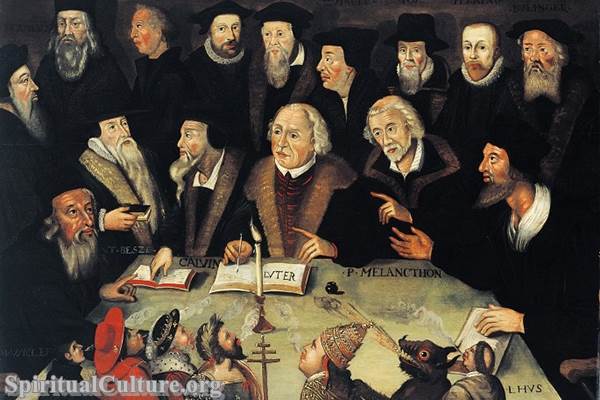
Yes, Protestants use the word saint, but different Protestant traditions mean different things by it. Many emphasize the New Testament use of “saints” for the whole community of believers, while Anglican and Lutheran traditions also commemorate specific apostles, martyrs, reformers, teachers, and other exemplary Christians. Spiritual Culture distinguishes commemoration from Catholic and Orthodox practices of canonization and invocation.
Saints in the New Testament
Several New Testament letters address ordinary Christians collectively as saints or holy ones. Many Protestants therefore stress that sainthood is rooted in belonging to Christ rather than a later canonization process.
No single Protestant position
Protestantism includes Anglican, Lutheran, Reformed, Baptist, Methodist, Pentecostal, Adventist, Anabaptist, and independent churches, so one universal rule about saints does not exist.
Anglican calendars
The Church of England’s official calendar commemorates apostles, early church teachers, medieval saints, Reformers, missionaries, and modern Christian witnesses.
All Saints’ Day
Many Protestant churches observe All Saints’ Day or All Saints’ Sunday, though the theological explanation may differ from Catholic practice.
Lutheran remembrance
Lutheran traditions can honor biblical saints and exemplary Christians while stressing salvation by grace and rejecting the idea that a saint replaces Christ as mediator.
Reformed and Baptist caution
Many Reformed, Baptist, evangelical, and free-church traditions avoid prayers addressed to saints and emphasize direct prayer to God through Christ.
Canonization
Most Protestant churches do not have a worldwide formal canonization system equivalent to the Roman Catholic process.
Intercession is the key dividing issue
A Protestant may admire Augustine, Francis of Assisi, or another historic Christian while rejecting prayer that asks that person for intercession.
Mary
Protestants honor Mary as the mother of Jesus and a biblical disciple, but Marian devotion ranges from strong liturgical commemoration in Anglicanism to very limited devotional use in other communities.
The word holy should not imply spiritual perfection
Calling someone a saint does not mean Christians believe that person lived without sin or historical limitation.
Sources and interpretation
The best answer is that Protestants do believe in saints, but not all use the category in the same way. Biblical “saints,” liturgical commemoration, canonization, and invocation should be treated as separate questions.