Malaysia’s spiritual culture reflects a multiethnic society in which Islam has a central constitutional and public role while Buddhist, Hindu, Christian, Chinese religious, Sikh, Indigenous, and other traditions also shape community life. Religious practice is closely connected with language, ethnicity, festivals, food, sacred places, family custom, and regional history, so “Malaysian religion” cannot be reduced to a single tradition.
Islam has a central public role in Malaysia, while Buddhist, Christian, Hindu, Chinese religious, and Indigenous traditions are also part of the country’s spiritual landscape. Understanding Malaysia through religion and sacred heritage gives a clearer picture than treating culture only as food, tourism, or national symbols.
Religious traditions and everyday practice
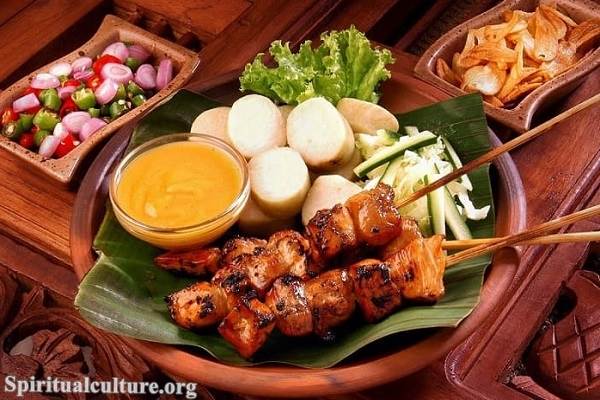
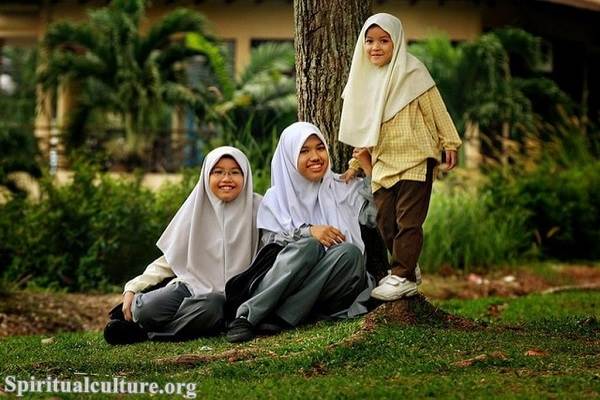
Malay Muslim life is shaped by mosques, Qur’anic learning, Ramadan, Eid celebrations, and local adat. Chinese Malaysian communities maintain Buddhist, Daoist, and popular-religion temples, while Tamil Hindu communities sustain temple worship and festivals such as Thaipusam. Christianity is significant in several regions, especially in parts of East Malaysia, where Indigenous communities also preserve ancestral customs.
Sacred places and religious heritage
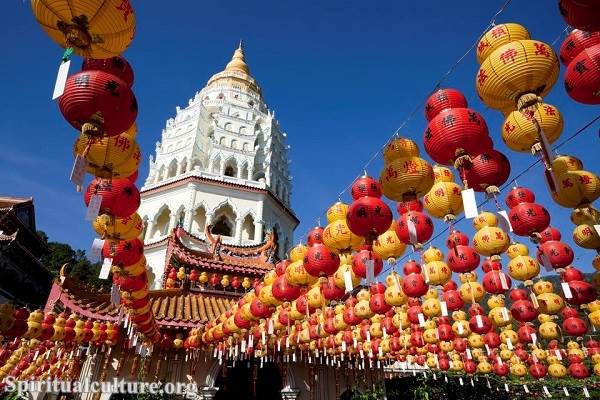
Well-known sacred places include the National Mosque in Kuala Lumpur, Batu Caves with its major Hindu temple complex, Kek Lok Si Temple in Penang, historic churches in Melaka, and many local mosques, Chinese temples, and village shrines. These places show how religious architecture is woven into urban and community life.
Festivals, rituals, and community life
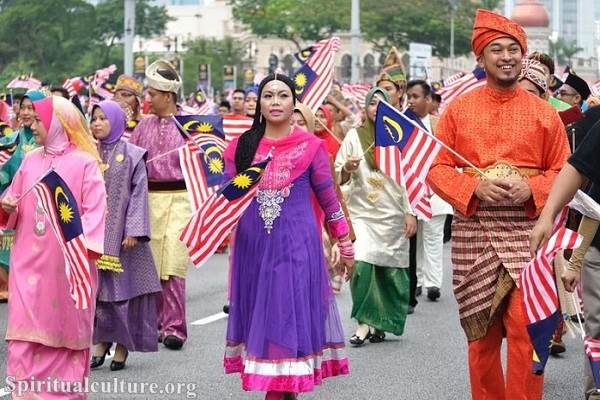
Ramadan and Hari Raya Aidilfitri shape the Muslim calendar, while Wesak, Deepavali, Christmas, and Chinese temple festivals are visible public traditions. Food sharing, visiting relatives, almsgiving, processions, and open-house hospitality often connect religion with family and neighborhood life.
Living spiritual culture
Malaysia’s spiritual culture is best understood as plural and regionally varied. Religious practice is shaped by ethnicity, language, migration, law, and local history, so no single tradition represents every Malaysian community.
Religious diversity in context
Malaysia’s religious landscape is closely connected with ethnicity, migration, regional history, and law. Islam is central to Malay public and family life, while Chinese communities include Buddhist, Daoist, Confucian, Christian, and popular-religious traditions. Hinduism is especially visible among Malaysian Indians, and Christianity has major communities in Sabah and Sarawak as well as in Peninsular Malaysia. Indigenous peoples in Borneo maintain additional traditions that may interact with Christianity or other religions.
This diversity means that a national description must distinguish Peninsular Malaysia from Sabah and Sarawak and must avoid treating ethnic identity as a complete description of personal belief or practice.
Festivals, pilgrimage, and sacred memory
Ramadan and Hari Raya Aidilfitri shape the Muslim year, while Wesak, Deepavali, Thaipusam, Christmas, Chinese temple festivals, and community-specific observances make Malaysia’s ritual calendar visibly plural. Batu Caves is especially associated with Thaipusam, while mosques, Chinese temples, Hindu temples, churches, and Indigenous sacred places create very different forms of sacred space.
Food offerings, pilgrimage, fasting, charity, family visiting, and public processions show how religion is expressed through both formal institutions and everyday cultural practice.
Historical change and regional variation
Malaysia’s religious landscape reflects Malay Muslim history, long-standing Chinese and Indian communities, colonial-era migration, and the distinct Indigenous societies of Sabah and Sarawak. Mosques, temples, churches, shrines, and household rites therefore belong to different historical layers that continue to shape public and family life.
Reading Malaysia’s spiritual culture carefully
Religion is closely connected with ethnicity and law, but lived practice is more varied than official categories suggest. Peninsular Malaysia, Sabah, and Sarawak have different religious balances, and local custom can shape how Islam, Buddhism, Hinduism, Christianity, and Indigenous traditions are practiced.