Islam shapes much of Qatar’s public religious culture, while the country’s large expatriate population also sustains Christian, Hindu, Buddhist, and other forms of worship. Understanding Qatar through religion and sacred heritage gives a clearer picture than treating culture only as food, tourism, or national symbols.
Religious traditions and everyday practice
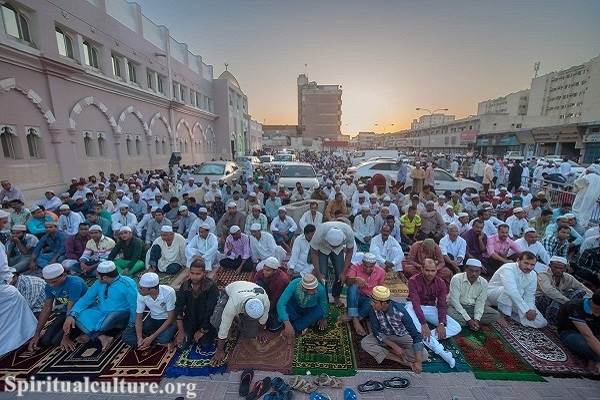
Qatari Muslim life is strongly connected with mosque worship, Qur’anic recitation, Ramadan, Eid, charity, and family gatherings. The country’s Islamic heritage is mainly Sunni, while migrant communities add considerable religious diversity to everyday life.
Sacred places and religious heritage
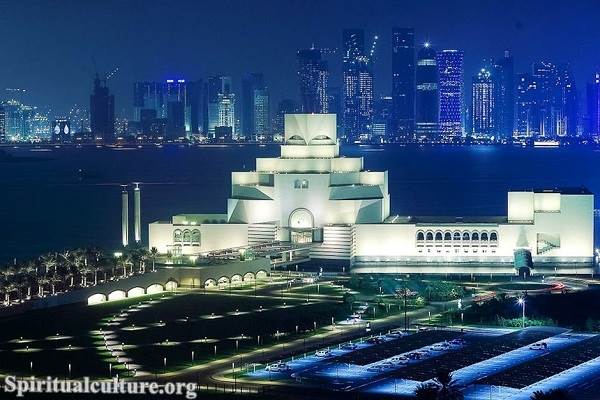
Doha’s mosques range from neighborhood prayer spaces to prominent institutions such as the Imam Muhammad ibn Abd al-Wahhab Mosque and the spiral minaret complex associated with the Sheikh Abdulla Bin Zaid Al Mahmoud Islamic Cultural Center. Older settlements and archaeological sites also preserve the memory of Gulf trade and community life.
Festivals, rituals, and community life
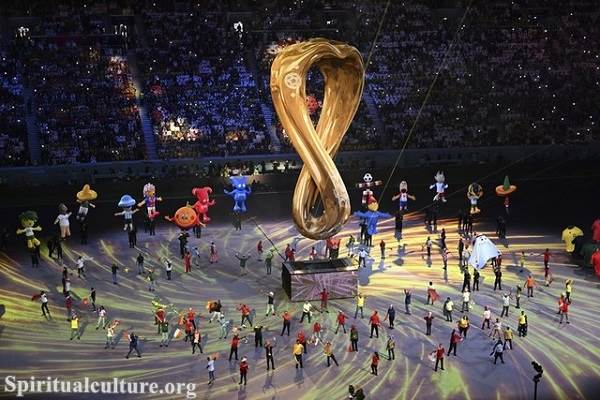
Ramadan changes the rhythm of daily life through fasting, evening prayer, charity, and shared meals. Eid al-Fitr and Eid al-Adha bring family visits and communal prayer. The majlis remains an important social institution where hospitality, conversation, and community relationships are sustained.
Living spiritual culture
Qatar’s spiritual culture should not be reduced to modern architecture or tourism. It is rooted in Islamic practice, Gulf hospitality, family memory, and the coexistence of citizen and migrant religious communities.
Religious diversity in context
Sunni Islam is central to Qatari national religious life, expressed through mosques, Friday prayer, Qur’anic education, Ramadan, charity, and family observance. Rapid population growth through migration has also created a much more religiously diverse resident population, including Muslims from many countries as well as Christian, Hindu, Buddhist, and other communities.
The distinction between citizens and expatriate communities matters when describing religious life. National Islamic institutions and Gulf customs are highly visible, while many migrant communities organize worship through designated institutions, private spaces, and community networks.
Festivals, pilgrimage, and sacred memory
Ramadan and the two Eids are major public religious seasons, and pilgrimage to Mecca connects Qatari Muslims with the wider Islamic world. Mosques range from neighborhood prayer spaces to prominent modern buildings, while expatriate Christian communities worship in church compounds and other communities maintain their own forms of religious gathering.
Qatar’s spiritual culture is therefore both locally rooted and globally connected. Migration has brought multiple languages, devotional styles, and religious calendars into a society whose public heritage remains strongly Islamic.
Historical change and regional variation
Qatar’s religious life is rooted in Gulf Sunni Islam, but rapid economic growth and large-scale migration have brought diverse Muslim communities as well as Christian, Hindu, Buddhist, and other expatriate traditions into the country. Modern urban development has therefore expanded the range of religious institutions alongside older mosque and family practices.
Reading Qatar’s spiritual culture carefully
Public religious life is shaped by law and national institutions, while private and expatriate practice is more diverse. A useful overview distinguishes Qatari Islamic heritage from the religious lives of migrant communities and from cultural customs that are social rather than specifically sacred.