As the cradle of Islamic civilization, the Middle East has played a pivotal role in shaping the religion’s development, dissemination, and influence across the globe. From its humble beginnings in the Arabian Peninsula to its significant impact on politics, culture, and society, Islam has woven itself into the very fabric of the region.
Sects within Islam
Sunni and Shia Islam
Sunni and Shia Islam are the two major sects within Islam, with Sunni Muslims comprising the vast majority of the global Muslim population. The division between Sunni and Shia Islam originated from a dispute over the rightful successor to Prophet Muhammad after his death.
Sunnis believe that the community should choose the leader (caliph) through a consensus process, and they recognize the first four caliphs as the rightful successors. Shias, on the other hand, believe that leadership should remain within the Prophet’s family, specifically passing to his cousin and son-in-law, Ali, and his descendants, known as the Imams.
This initial political disagreement gradually evolved into a theological and cultural divide, with Sunnis and Shias developing distinct religious practices, jurisprudence, and spiritual traditions. Shia Islam places a particular emphasis on the role of the Imams, who are regarded as divinely guided leaders with spiritual and temporal authority. The commemoration of the martyrdom of Imam Hussein, Ali’s son, at the Battle of Karbala in 680 CE is a central event in Shia religious practice, marked by the annual observance of Ashura.
Despite these differences, Sunnis and Shias share the core beliefs and practices of Islam, including the Five Pillars and the reverence for the Qur’an. However, the Sunni-Shia divide has been a source of tension and conflict in various parts of the Muslim world, particularly in regions like Iraq, Lebanon, and Yemen, where sectarian violence has erupted.
Other Islamic Sects and Movements
In addition to Sunni and Shia Islam, there are several other sects and movements within Islam, each with its own interpretations of Islamic teachings and practices.
- Ibadi Islam: Predominantly found in Oman, the Ibadi sect traces its origins to the early Islamic period and differs from both Sunni and Shia Islam in its theology and legal traditions. Ibadis emphasize piety, simplicity, and the importance of communal consensus in decision-making.
- Sufism: Sufism is often described as the mystical branch of Islam, focusing on the inward, spiritual aspects of the faith. Sufis seek to attain a closer relationship with God through practices such as dhikr (remembrance), meditation, and poetry. Sufism has produced some of the most renowned poets and thinkers in Islamic history, including Rumi and Al-Ghazali.
- Ahmadiyya: The Ahmadiyya movement was founded in the 19th century by Mirza Ghulam Ahmad in India. Ahmadis believe that their founder was the promised Messiah and Mahdi, a belief that has led to their persecution by other Muslim groups, who consider them heretical. Despite this, the Ahmadiyya community has spread globally and is known for its emphasis on education, humanitarian work, and interfaith dialogue.
- Salafism: Salafism is a reformist movement that seeks to return to the practices of the “pious ancestors” (salaf), the early generations of Muslims. Salafis advocate for a strict interpretation of Islamic law and often reject practices that they consider innovations. Salafism has gained prominence in the modern era, particularly in regions like Saudi Arabia, where it has been associated with Wahhabism.
Islam and Politics
The Role of Islam in Middle Eastern Politics
Islam has been deeply intertwined with politics in the Middle East since its inception. The early Islamic state established by Prophet Muhammad in Medina served as a model for Islamic governance, where religious and political authority were unified. This model continued with the caliphates, where the caliph was both the spiritual and temporal leader of the Muslim community.
In the modern era, the role of Islam in politics has taken on new dimensions, particularly in the context of post-colonial state-building. Many Middle Eastern countries have grappled with the question of how to reconcile Islamic principles with the demands of modern governance. This has led to a range of political systems, from secular republics to Islamic theocracies.
Islamist movements, which seek to implement Islamic law and values in the political sphere, have played a significant role in shaping the political landscape of the Middle East. These movements have taken various forms, from political parties participating in electoral processes to militant groups engaging in armed struggle. The success and challenges of these movements have varied widely, reflecting the diverse political, social, and economic contexts of the region.
Islamic Governance Concepts
Islamic governance is based on the idea that political authority should be exercised in accordance with Islamic principles and values. This concept has been interpreted in different ways throughout Islamic history, leading to the development of various models of governance.
- Caliphate: The caliphate is the traditional model of Islamic governance, where the caliph is the political and religious leader of the Muslim community. The caliphate is based on the idea of a unified Ummah, governed by Sharia, with the caliph responsible for upholding justice and ensuring the welfare of the community.
- Wilayat al-Faqih: In Shia Islam, particularly in Iran, the concept of Wilayat al-Faqih (“Guardianship of the Jurist”) has been developed as a model of Islamic governance. Under this system, the highest-ranking religious scholar (faqih) holds ultimate authority, overseeing both the political and religious affairs of the state. This concept was institutionalized in Iran following the 1979 Islamic Revolution, with the establishment of the Islamic Republic.
- Islamic Democracy: Islamic democracy is an attempt to reconcile Islamic principles with democratic governance. Proponents argue that democracy is compatible with Islam, as it allows for the participation of the community in decision-making and the accountability of rulers. Islamic democracy has been adopted in various forms in countries such as Turkey, Tunisia, and Pakistan, where Islamist parties have participated in electoral politics.
Case Studies of Islamic States
Several Middle Eastern countries have adopted different models of Islamic governance, reflecting the diversity of political thought within the Muslim world.
- Saudi Arabia: Saudi Arabia is an example of an Islamic monarchy, where the king rules in accordance with Sharia. The country follows the Hanbali school of jurisprudence and has implemented strict interpretations of Islamic law, particularly in areas such as criminal justice and social conduct. The Saudi state is also closely associated with Wahhabism, a conservative form of Salafism that has shaped its religious and political institutions.
- Iran: Iran is a theocratic republic based on the concept of Wilayat al-Faqih. The Supreme Leader, a Shia cleric, holds the highest authority in the country, overseeing both political and religious affairs. Iran’s political system combines elements of theocracy and democracy, with elected institutions such as the president and parliament operating alongside religious bodies.
- Turkey: Turkey provides an example of a secular republic with a Muslim-majority population. The country was founded on secular principles by Mustafa Kemal Atatürk in the 1920s, with a clear separation between religion and state. However, in recent years, the role of Islam in Turkish politics has become more prominent, particularly with the rise of the Justice and Development Party (AKP), which advocates for a greater role for religion in public life.
Cultural Expressions of Islam
Islamic Art and Architecture
Islamic art and architecture are among the most visible and enduring expressions of the Islamic faith. Islamic art is characterized by its emphasis on geometric patterns, arabesques, and calligraphy, reflecting the Islamic prohibition against the depiction of living beings in religious contexts. These artistic elements are intended to evoke the transcendence and unity of God, creating a sense of spiritual reflection and contemplation.
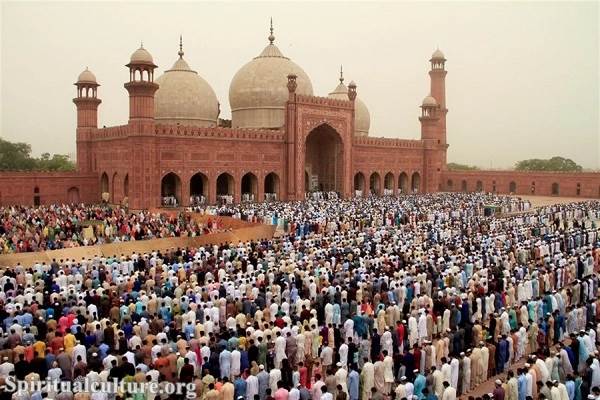
Islamic architecture is equally distinctive, with its use of domes, minarets, and courtyards. The mosque is the central architectural form in Islamic culture, serving as a place of worship, community gathering, and education. Some of the most iconic examples of Islamic architecture include the Great Mosque of Cordoba in Spain, the Alhambra in Granada, the Blue Mosque in Istanbul, and the Taj Mahal in India.
The development of Islamic art and architecture was heavily influenced by the cultural and artistic traditions of the regions where Islam spread. As a result, Islamic art is highly diverse, incorporating elements from Persian, Byzantine, Indian, and Central Asian cultures. This fusion of styles has given rise to a rich and varied artistic heritage that still inspires contemporary artists and architects.
Literature and Poetry in Islamic Culture
Islamic literature and poetry have played a central role in the cultural life of Muslim societies. The Qur’an itself is considered the highest form of Arabic literature, and its eloquence and linguistic beauty have inspired generations of poets and writers.
Classical Islamic literature encompasses a wide range of genres, including religious texts, philosophical treatises, historical chronicles, and epic poetry. One of the most celebrated poets in the Islamic world is Jalaluddin Rumi, a 13th-century Persian mystic whose works, such as the Masnavi, have been translated into numerous languages and continue to resonate with readers around the world. Another key figure is Al-Mutanabbi, an Arabic poet known for his eloquent and powerful verse that often reflected the political and social issues of his time. Islamic literature also includes works of fiction, such as The Thousand and One Nights, a collection of Middle Eastern folktales that has had a significant influence on world literature. These stories, with their rich narrative structure and imaginative themes, have captivated readers for centuries and continue to be adapted into various forms of media.Poetry, in particular, holds a special place in Islamic culture. Sufi poetry, in particular, is renowned for its exploration of the mystical relationship between the soul and God. Poets like Rumi, Hafez, and Ibn Arabi used their verse to express significant spiritual insights, often using metaphor and symbolism to convey the ineffable experience of divine love.
Festivals and Rituals in Muslim Communities
Islamic festivals and rituals are integral to the religious and cultural life of Muslim communities in the Middle East. These events provide opportunities for worship, reflection, and social bonding, reinforcing the shared values and beliefs of the Ummah.
- Eid al-Fitr: Celebrated at the end of Ramadan, Eid al-Fitr is a major festival that marks the conclusion of the month-long fast. It is a time of joyous celebration, where Muslims gather for communal prayers, share festive meals, and give charity (zakat al-fitr) to those in need. The holiday is characterized by acts of generosity, family gatherings, and the exchange of gifts.
- Eid al-Adha: Known as the “Festival of Sacrifice,” Eid al-Adha commemorates the willingness of Prophet Ibrahim (Abraham) to sacrifice his son Ismail (Ishmael) in obedience to God’s command. Muslims around the world participate in the ritual of animal sacrifice, distributing the meat to family, friends, and the poor. The festival coincides with the Hajj pilgrimage and is marked by prayers, feasting, and acts of charity.
- Ramadan: Ramadan is the ninth month of the Islamic lunar calendar and is observed as a time of fasting, prayer, and reflection. During this month, Muslims fast from dawn to sunset, refraining from food, drink, and other physical needs. The fast is broken each evening with a meal known as iftar, often shared with family and community members. Ramadan is also a time for increased devotion, with Muslims spending more time in prayer, reading the Qur’an, and engaging in acts of charity.
- Ashura: Ashura is a significant day in the Islamic calendar, particularly for Shia Muslims. It commemorates the martyrdom of Imam Hussein, the grandson of Prophet Muhammad, at the Battle of Karbala in 680 CE. The day is observed with mourning rituals, including processions, recitations of elegies, and reenactments of the battle. For Sunnis, Ashura is also observed as a day of fasting, commemorating the deliverance of the Israelites from Pharaoh.
Modern Challenges Facing Islam in the Middle East
Sectarian Violence
Sectarian violence has emerged as one of the most pressing challenges facing the Muslim world, particularly in the Middle East. The Sunni-Shia divide, which has its roots in the early history of Islam, has been exacerbated by political, social, and economic factors, leading to conflicts in countries such as Iraq, Syria, Yemen, and Lebanon.
The rise of sectarianism has been fueled by the actions of both state and non-state actors, who have exploited religious differences for political gain. Regional powers, such as Saudi Arabia and Iran, have also played a significant role in stoking sectarian tensions, often using proxy groups to further their strategic interests.
The consequences of sectarian violence have been devastating, resulting in the loss of countless lives, the displacement of millions, and the destruction of communities. Sectarian conflict has also undermined efforts to achieve political stability and social cohesion in the region, contributing to a cycle of violence and retribution.
Influence of Western Politics on Islam
The influence of Western politics on Islam has been a contentious issue in the Middle East, particularly in the context of colonialism, imperialism, and globalization. The legacy of Western colonialism, which saw the imposition of foreign rule and the redrawing of borders, has had a significant impact on the political and social landscape of the region.
In the post-colonial era, the Middle East has continued to be a focal point of global politics, with Western powers often playing a significant role in shaping the region’s affairs. The U.S. invasion of Iraq in 2003, for example, had far-reaching consequences for the region, including the destabilization of Iraq, the rise of sectarian violence, and the emergence of extremist groups like ISIS.
The perceived interference of Western powers in the internal affairs of Muslim-majority countries has fueled resentment and anti-Western sentiment, contributing to the rise of Islamist movements that seek to resist foreign influence and assert Islamic identity. This dynamic has also led to the radicalization of certain groups, who view violent jihad as a legitimate means of defending Islam against perceived threats.
The Rise of Extremist Movements
The rise of extremist movements, such as Al-Qaeda and ISIS, has posed significant challenges to the Muslim world, particularly in the Middle East. These groups have sought to establish Islamic states based on their own radical interpretations of Sharia, often resorting to violence and terrorism to achieve their goals.
Extremist movements have exploited political instability, social grievances, and sectarian tensions to gain support, often targeting vulnerable populations with their message of jihad and martyrdom. The appeal of these groups has been fueled by a sense of disenfranchisement and marginalization among certain segments of the Muslim population, particularly young people.
The impact of extremist movements has been catastrophic, leading to widespread violence, the displacement of millions, and the destruction of cultural heritage. These groups have also tarnished the image of Islam, leading to increased Islamophobia and discrimination against Muslims worldwide.