Protestantism is one of the major traditions within Christianity. It developed through a series of sixteenth-century reform movements that challenged aspects of the doctrine, authority, and institutional life of the Western Church. Although Martin Luther is often treated as the central figure in its beginnings, Protestantism did not arise from a single reformer, country, church, or theological system.
Over time, the Protestant tradition came to include Lutheran, Reformed, Presbyterian, Anglican, Anabaptist, Baptist, Methodist, evangelical, Pentecostal, and many independent churches. These communities share important Christian convictions, but they differ considerably in worship, biblical interpretation, sacraments, church government, ministry, ethics, and their relationship with historic Christian traditions.
For this reason, Protestantism should not be described as a single denomination. It is better understood as a broad and internally diverse family of Christian movements whose histories are connected, directly or indirectly, to the Reformation and its later developments.
What Is Protestantism?
Protestantism is a branch of Christianity that emerged from efforts to reform the Western Church during the sixteenth century. Early Protestant reformers questioned papal authority, criticized particular church practices, and argued that Christian teaching should be judged according to the witness of Scripture.
Most Protestant churches affirm the central doctrines historically shared by mainstream Christianity. These normally include belief in one God as Father, Son, and Holy Spirit; the divine and human identity of Jesus Christ; his crucifixion and resurrection; the work of the Holy Spirit; the church; forgiveness; resurrection; and eternal life.
Beyond these shared foundations, Protestant churches hold a wide range of theological positions. Some preserve liturgical worship, episcopal leadership, creeds, vestments, and a strong sacramental theology. Others emphasize informal worship, congregational independence, personal conversion, expository preaching, or charismatic experiences associated with the Holy Spirit.
The Protestant tradition is therefore united less by a single worldwide institution than by overlapping commitments to the Christian gospel, the authority of the Bible, the saving work of Jesus Christ, and the need for continuing reform in the life of the church.
Where Did the Name “Protestant” Come From?
The word “Protestant” is connected to events at the second Diet of Speyer in the Holy Roman Empire in 1529. Several princes and representatives of imperial cities formally objected to a decision restricting the spread of evangelical reforms. Their declaration became known as a protestatio, a formal protest or public testimony.
The original meaning was not simply that the participants complained against established authority. In its historical setting, the word also carried the sense of publicly witnessing to a conviction. The people associated with the protest gradually became known as Protestants.
At first, the name was applied mainly to supporters of the Lutheran Reformation in German territories. It was later extended to other Christian movements that separated from Roman jurisdiction or adopted Reformation teachings. These included Reformed churches influenced by Huldrych Zwingli and John Calvin, as well as several later traditions.
The term remains useful, but it has limitations. Some Anglicans, for example, understand their churches as both reformed and catholic rather than exclusively Protestant. Some independent Christians identify more readily as evangelical, Pentecostal, or simply Christian. The meaning of Protestantism therefore varies according to historical, theological, and regional context.
Christianity Before the Protestant Reformation
The Reformation did not begin in a historical vacuum. Medieval Christianity included rich traditions of theology, worship, monastic life, education, art, pastoral care, charity, pilgrimage, and devotion. It also experienced institutional abuses, political conflicts, disputes over authority, and recurring calls for spiritual renewal.
Long before Martin Luther, Christian thinkers and reformers had criticized corruption or called for greater attention to Scripture and apostolic life. Movements associated with figures such as John Wycliffe in England and Jan Hus in Bohemia raised questions about church authority, preaching, moral reform, and access to the Bible.
Religious renewal also took place within existing church institutions. Monastic reforms, lay devotional movements, Christian humanism, and renewed study of biblical languages helped create an atmosphere in which reform appeared both necessary and possible.
The development of printing was especially important. Movable-type printing enabled religious arguments, sermons, translations, pamphlets, and polemical writings to circulate more widely and rapidly than before. Printing did not cause the Reformation by itself, but it greatly increased the speed and reach of reforming ideas.
Martin Luther and the German Reformation
Martin Luther was an Augustinian friar, priest, biblical scholar, and professor at the University of Wittenberg. In 1517, he circulated his Ninety-Five Theses, which questioned the preaching and use of indulgences. These propositions were initially presented as matters for academic and theological debate.
The familiar story that Luther dramatically nailed the theses to the door of the Castle Church in Wittenberg has become a powerful symbol of the Reformation. Historians continue to discuss the precise circumstances of their publication, but October 31, 1517, remains the traditional date associated with the beginning of the Protestant Reformation.
Luther’s dispute soon expanded beyond indulgences. He challenged claims about papal authority, defended the primacy of Scripture, and argued that sinners are justified before God through faith because of Christ rather than through human merit.
In 1521, Luther appeared before the Diet of Worms, an imperial assembly presided over by Emperor Charles V. After refusing to withdraw writings that he believed were supported by Scripture and reason, he was declared an outlaw under the Edict of Worms.
Luther’s teachings nevertheless continued to spread. Political protection from sympathetic rulers, public dissatisfaction with church conditions, the work of fellow reformers, and the availability of printed texts all helped the movement survive.
One of Luther’s most influential achievements was his translation of the Bible into German. He was not the first person to translate Scripture into a European vernacular, but his translation had lasting religious, literary, and linguistic significance. It helped make biblical reading central to the devotional life of many German-speaking Christians.
The Augsburg Confession of 1530, largely written by Luther’s colleague Philipp Melanchthon, became a foundational statement of Lutheran belief. Its article on justification teaches that human beings cannot be justified before God through their own strength, merits, or works, but receive justification for Christ’s sake through faith.
The Reformation in Switzerland
The Swiss Reformation developed partly alongside and partly independently of Luther’s movement. Huldrych Zwingli led reforms in Zürich, where he promoted biblical preaching, criticized practices he considered unsupported by Scripture, and changed the city’s patterns of worship.
Zwingli and Luther agreed on several criticisms of the medieval church, but they disagreed strongly about the Lord’s Supper. Luther maintained that Christ was truly present in the sacrament in a distinctive sacramental manner. Zwingli placed greater emphasis on the meal as a memorial and public profession of faith.
Their failure to reach agreement at the Marburg Colloquy of 1529 demonstrated that the reform movement was already theologically diverse. Protestantism would never develop as one unified organization under one reformer.
John Calvin later became the most influential theologian of the Reformed tradition. Born in France, Calvin eventually worked in Geneva, where he participated in reshaping church discipline, worship, theological education, and civic religious life.
Calvin emphasized the sovereignty of God, the authority of Scripture, union with Christ, the work of the Holy Spirit, disciplined Christian living, and the church as a community ordered by the Word of God. His writings influenced churches in Switzerland, France, the Netherlands, Scotland, parts of Germany, Hungary, and eventually many other regions.
Reformed Christianity developed through numerous national and regional confessions rather than one universally binding document. Presbyterian, Congregational, and many United or Uniting churches have roots in this broad tradition. Contemporary Reformed bodies continue to acknowledge diversity among their historical confessions while identifying them as expressions of a shared heritage.
The Radical Reformation and Anabaptism
Not all reformers believed that the Lutheran or Reformed movements had gone far enough. Groups often placed under the broad heading of the Radical Reformation called for a more complete separation from inherited church structures.
The Anabaptists were among the most significant of these movements. The name, meaning “rebaptizers,” was originally used by opponents because Anabaptists baptized people who had already been baptized as infants. Anabaptists themselves generally believed that their baptism was the first valid baptism because it followed a conscious confession of faith.
Many Anabaptists emphasized discipleship, voluntary church membership, ethical obedience to Jesus, mutual aid, and a clear distinction between church and state. Some refused military service and oath-taking. Their positions varied, and the movement included both peaceful communities and a few highly controversial radical episodes.
Catholic and Protestant authorities often regarded Anabaptists as a threat to religious and political order. Many were imprisoned, expelled, or executed. Their persecution is an important reminder that early Protestant history included not only struggles for religious freedom but also efforts by Protestant governments to enforce religious conformity.
Mennonites, Amish, Hutterites, and related communities preserve aspects of the Anabaptist heritage. Mennonite World Conference describes contemporary Anabaptist identity through the centrality of Jesus Christ, community, reconciliation, service, peace, and discipleship shaped by the power of the Holy Spirit.
The English Reformation and Anglicanism
The English Reformation followed a different path from reforms in the German and Swiss territories. King Henry VIII’s break with papal authority was initially driven largely by dynastic and political conflict rather than by full acceptance of Lutheran or Reformed theology.
The Act of Supremacy in 1534 recognized the English monarch as supreme head of the Church of England. Under Henry, many traditional doctrines and practices remained. More extensive Protestant reforms followed during the reign of Edward VI.
England returned temporarily to Roman Catholic obedience under Mary I. Under Elizabeth I, a religious settlement established a reformed national church that retained bishops, a liturgical calendar, historic creeds, and a revised form of traditional worship.
The Book of Common Prayer, the Thirty-Nine Articles of Religion, and the episcopal structure became central features of Anglican identity. The Church of England continues to recognize the Thirty-Nine Articles and the Book of Common Prayer among its historic formularies.
Anglicanism contains considerable internal diversity. Evangelical Anglicans emphasize the Reformation heritage, biblical preaching, and personal conversion. Anglo-Catholic Anglicans emphasize continuity with the ancient and medieval church, sacramental life, and catholic order. Other Anglicans combine elements of these traditions.
Because of this history, some Anglicans readily accept the Protestant label, while others prefer to describe Anglicanism as a reformed catholic tradition.
Major Protestant Beliefs
There is no single statement of faith accepted by all Protestants. Nevertheless, several convictions have had wide influence across Protestant traditions.
The Authority of Scripture
Most Protestant churches regard the Bible as the supreme written authority for Christian faith and practice. This principle is commonly expressed by the Latin phrase sola Scriptura, meaning “Scripture alone.”
The phrase does not necessarily mean that Protestants reject all creeds, traditions, scholarship, councils, or church teaching. Historic Lutheran, Reformed, Anglican, and Methodist churches have produced confessions, catechisms, liturgies, and theological traditions.
Rather, sola Scriptura generally means that all church teachings are subject to the final authority of Scripture. Protestants disagree, however, about how Scripture should be interpreted, how tradition should guide interpretation, and whether the Bible is the only authority or the uniquely supreme authority.
Some churches emphasize the role of historic creeds and communal interpretation. Others stress the ability and responsibility of each believer to read Scripture. Evangelical statements commonly describe the Bible as the supreme authority in matters of belief and conduct.
Salvation by Grace Through Faith
A central concern of the Reformation was the doctrine of justification: how sinful human beings are placed in a right relationship with God.
Lutheran and many other Protestant traditions teach that justification is God’s gracious gift, received through faith because of the saving work of Jesus Christ. Human beings cannot earn salvation through moral achievement, religious performance, or personal merit.
This principle is often summarized through the phrases sola gratia, “grace alone,” and sola fide, “faith alone.” Protestant theologians generally do not mean that good works are unimportant. Rather, good works are understood as the fruit of grace and living faith, not the cause by which a person forces God to grant salvation.
Different traditions explain the relationship among justification, sanctification, free will, predestination, perseverance, and Christian obedience in different ways. Lutheran, Reformed, Wesleyan, Baptist, Anglican, and Pentecostal churches do not all use identical theological frameworks.
Methodist theology, for example, places particular emphasis on sanctifying grace, growth in holiness, and the transformation of Christian character. Methodist teaching also speaks of assurance as trust in a relationship grounded in God’s love rather than confidence in human achievement.
The Centrality of Jesus Christ
Protestant theology places Jesus Christ at the center of salvation, Scripture, preaching, worship, and Christian discipleship. The phrase solus Christus, “Christ alone,” expresses the conviction that reconciliation with God is made possible through Christ.
Most Protestants affirm the doctrines about Christ expressed in the historic ecumenical creeds: that Jesus is truly divine and truly human, that he was crucified, that he rose bodily from the dead, and that he will come again.
The meaning of Christ’s atoning death has been explained through several theological models. Some Protestants emphasize substitution, others victory over sin and death, participation in Christ, moral transformation, covenant, reconciliation, or a combination of these themes.
The Priesthood of All Believers
The “priesthood of all believers” teaches that all Christians have direct access to God through Christ and share in the church’s calling to worship, prayer, witness, and service.
This teaching does not mean that all Protestant churches reject ordained ministry. Most maintain recognized roles for pastors, ministers, elders, bishops, teachers, or deacons. The meaning and authority of these ministries vary widely.
The doctrine challenges the idea that a special spiritual class alone possesses access to God. It has encouraged lay Bible reading, congregational participation, vernacular worship, education, and the involvement of ordinary Christians in mission and service.
Christian Vocation
The Reformers broadened the idea of vocation. A calling from God was not limited to monks, nuns, priests, or members of religious orders. Family responsibilities, skilled work, public service, education, agriculture, commerce, and care for neighbors could also be understood as fields of Christian faithfulness.
This teaching contributed to a Protestant spirituality of ordinary life. At its best, it affirmed the religious dignity of daily work and service. At times, however, later interpretations connected vocation too closely with economic success or social status, ideas that should not be treated as universal Protestant doctrine.
Sacraments and Ordinances
Most Protestants recognize baptism and the Lord’s Supper as rites instituted by Jesus Christ. They differ over what these rites accomplish, how they should be administered, and whether they should be called sacraments or ordinances.
Lutherans, Anglicans, Methodists, and many Reformed Christians commonly use the word “sacrament.” Baptists and many evangelical churches often prefer “ordinance,” emphasizing obedience to Christ’s command.
Baptism
Lutherans, Reformed Christians, Anglicans, Methodists, and several other traditions normally baptize infants as well as adult converts. They understand infant baptism through concepts such as grace, covenant, incorporation into the church, and God’s promise.
Baptists, Mennonites, many Pentecostals, and other believers’ church traditions baptize those who personally confess faith. Immersion is common among these communities, although the precise method varies.
The disagreement is not only about the age of the person being baptized. It concerns the nature of the church, the relationship between faith and sacrament, the meaning of the biblical covenants, and the way divine grace is received.
The Lord’s Supper
Protestants also disagree about Christ’s presence in the Lord’s Supper. Lutherans affirm a real sacramental presence without accepting the Roman Catholic doctrine of transubstantiation. Reformed traditions often emphasize genuine spiritual communion with Christ through the Holy Spirit.
Other churches understand the meal primarily as a memorial of Christ’s death, an act of obedience, and a proclamation of the gospel. Many combine memorial, communal, spiritual, and eschatological meanings.
Frequency also varies. Some Protestant congregations celebrate Holy Communion every Sunday, while others observe it monthly, quarterly, or on special occasions.
Forms of Protestant Church Government
Protestant churches use several major systems of governance.
Episcopal Government
In an episcopal system, bishops exercise regional oversight. Anglican churches are the most prominent Protestant example, although some Lutheran and Methodist churches also maintain bishops.
The authority of bishops differs among these traditions. Some understand episcopacy as part of the historic order of the church, while others treat it mainly as a practical form of supervision.
Presbyterian Government
Presbyterian government is led through councils of ordained elders. Local sessions, regional presbyteries, and broader assemblies share responsibility for doctrine, discipline, and administration.
This structure is particularly associated with Reformed churches influenced by developments in Switzerland and Scotland.
Congregational Government
Congregational churches emphasize the responsibility and authority of the local congregation. Baptists, Congregationalists, and many independent churches use forms of congregational governance.
Local autonomy does not always mean isolation. Congregations may cooperate through conventions, associations, alliances, mission agencies, or councils while retaining significant control over their internal affairs.
Major Protestant Traditions
Lutheranism
Lutheranism developed from the German Reformation associated with Martin Luther and his colleagues. Its historic confessional writings include the Augsburg Confession, Luther’s catechisms, and other documents collected in the Book of Concord.
Lutheran theology emphasizes justification by grace through faith, the distinction between law and gospel, the proclamation of God’s Word, baptism, and Christ’s presence in the Lord’s Supper.
Lutheran churches range from highly liturgical bodies that preserve many elements of historic Western worship to evangelical congregations with simpler services.
Reformed and Presbyterian Christianity
The Reformed tradition developed through the work of Zwingli, Calvin, Heinrich Bullinger, and numerous regional reformers. It places strong emphasis on God’s sovereignty, covenant, disciplined Christian life, preaching, and the transformation of the community according to Scripture.
Presbyterianism is a major institutional form of the Reformed tradition. Other Reformed communities use Congregational, synodical, or united structures.
Reformed churches have produced many confessions, including the Scots Confession, Heidelberg Catechism, Belgic Confession, Westminster Standards, and later declarations formed in different historical contexts.
Anglicanism
Anglicanism developed from the English Reformation and later spread through migration, mission, empire, and the formation of autonomous regional churches.
It combines episcopal order and liturgical worship with Reformation teachings in a wide variety of forms. The worldwide Anglican Communion includes provinces with different cultural settings and theological emphases.
Anabaptist and Mennonite Traditions
Anabaptist churches emphasize voluntary discipleship, community, believers’ baptism, and the practical teachings of Jesus. Many have historically maintained strong commitments to peace, reconciliation, simplicity, mutual aid, and separation from coercive political power.
Contemporary Mennonite and related churches display considerable diversity. Some preserve distinct communal lifestyles, while others participate fully in urban, professional, and global society.
Baptist Churches
Baptist traditions generally emphasize believers’ baptism, the authority of Scripture, congregational life, freedom of conscience, religious liberty, and the responsibility of each local church.
Baptists do not have a single worldwide governing authority. Their theology ranges from Calvinist to Arminian, and their worship may be liturgical, revivalist, evangelical, or charismatic.
The Baptist World Alliance’s beliefs statement links Christian faith with religious liberty, justice, opposition to racism, and recognition of human equality in Christ.
Methodism and the Wesleyan Tradition
Methodism originated in the eighteenth-century evangelical revival associated with John Wesley, Charles Wesley, and their companions. It began as a renewal movement within the Church of England before developing into separate churches.
Methodism emphasizes God’s grace, personal and social holiness, disciplined prayer, Scripture, participation in the Lord’s Supper, small-group fellowship, hymn singing, care for the poor, and active service.
Wesleyan theology teaches that God’s grace works before, during, and after conversion, drawing people toward faith and enabling growth in holiness.
Evangelicalism
Evangelicalism is not one denomination. It is a transdenominational movement found within Anglican, Baptist, Lutheran, Reformed, Methodist, Pentecostal, independent, and other churches.
Evangelicals usually emphasize the authority of the Bible, the saving work of Christ, personal conversion, evangelism, discipleship, and active faith. Not all Protestants are evangelicals, and not all evangelicals hold the same political, social, or theological views.
The World Evangelical Alliance describes evangelical identity through belief in the Trinity, the authority of Scripture, salvation through Jesus Christ, and the unity of believers. Its contemporary network extends across numerous national and regional alliances, but its constituency should not be treated as a precise count of all Protestants.
Pentecostalism
Pentecostalism emerged prominently in the early twentieth century, although its advocates understand its spirituality as rooted in the New Testament and earlier Christian revival movements.
Pentecostals emphasize the present work of the Holy Spirit, spiritual gifts, prayer, healing ministry, evangelism, conversion, and empowered Christian witness. Speaking in tongues has an important place in many classical Pentecostal denominations, although beliefs about its role differ.
Pentecostal worship often includes spontaneous prayer, contemporary music, testimony, and expectations of divine activity. These practices should be described as religious beliefs and experiences rather than scientifically proven supernatural events.
Classical Pentecostal denominations generally affirm central Protestant and historic Christian teachings. The Pentecostal World Fellowship’s statement of faith affirms Jesus Christ, the unity of believers, and the practical application of Christian faith to spiritual and social life.
Protestant Worship and Spiritual Life
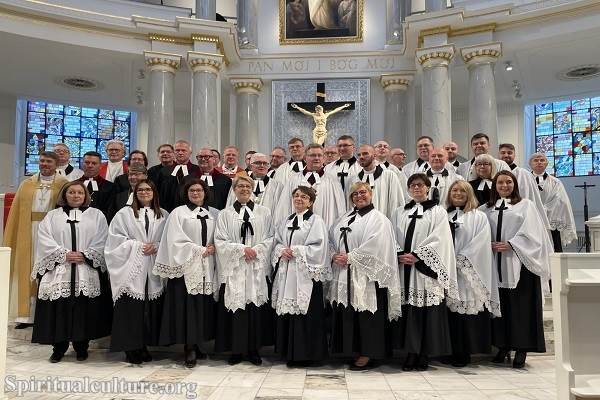
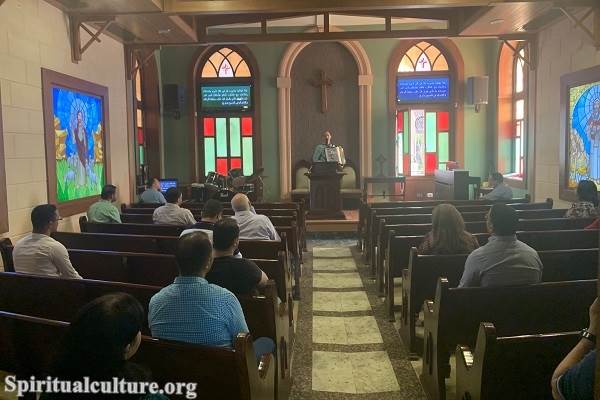
Protestant worship cannot be reduced to one style. A Lutheran cathedral, a rural Baptist chapel, an Anglican parish, a Mennonite meetinghouse, a Methodist congregation, and a Pentecostal church may look and sound very different.
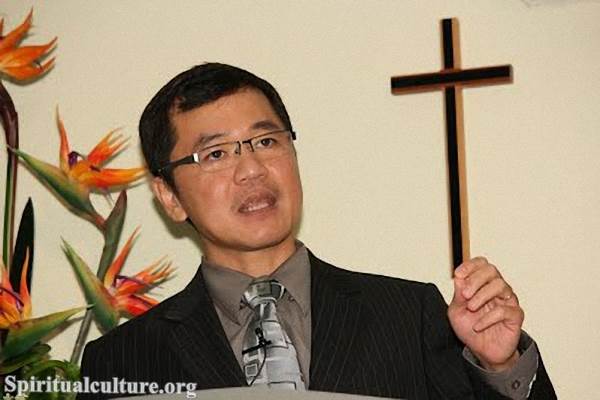
Many Protestant services include Scripture readings, congregational singing, prayer, a sermon, offerings, and baptism or the Lord’s Supper when scheduled. The sermon often has a prominent place because of the emphasis on teaching and proclaiming the biblical message.
Music has played a major role in Protestant spiritual culture. Lutheran chorales, Anglican choral music, Reformed psalm singing, Methodist hymns, African American spirituals, gospel music, revival songs, and contemporary worship have shaped communities far beyond their original settings.
Some traditions follow the Christian liturgical year closely, observing Advent, Christmas, Lent, Holy Week, Easter, Pentecost, and other occasions. Others avoid or minimize festivals that they believe lack sufficient biblical foundation.
Protestant prayer may be drawn from formal liturgical texts or expressed spontaneously. Spiritual disciplines may include daily Bible reading, family prayer, fasting, hymn singing, small groups, retreats, catechism, journaling, service, and participation in the Lord’s Supper.
The Bible, Education, and Literacy
The Reformation’s emphasis on Scripture encouraged the translation, printing, and study of the Bible in local languages. Reformers promoted education partly so that clergy could preach effectively and laypeople could learn Christian teaching.
Protestant churches established schools, colleges, seminaries, publishing houses, libraries, and Bible societies. Missionaries and local Christian scholars created grammars, dictionaries, and translated texts in many languages.
These efforts sometimes supported literacy and cultural preservation. In other contexts, mission education was entangled with colonial authority and the suppression of Indigenous languages, customs, or knowledge systems.
The cultural history of Protestant education must therefore be assessed carefully. It includes meaningful contributions to learning and social mobility, but also episodes of paternalism, forced assimilation, and unequal control over local communities.
Protestant Mission and Global Expansion
Protestant Christianity spread beyond Europe through migration, trade, revival movements, missionary societies, colonial networks, Bible translation, education, medical work, and the leadership of local converts.
European and North American missionaries were significant, but the global development of Protestantism cannot be explained by foreign missionaries alone. African, Asian, Pacific, Latin American, Caribbean, and Indigenous Christians interpreted, transmitted, and reshaped the faith within their own communities.
Local evangelists, teachers, translators, women’s networks, families, independent preachers, and new church movements often carried Christianity into places where foreign missionaries had limited access or influence.
Colonialism created both opportunities and serious moral contradictions. Some missionaries defended Indigenous peoples, opposed particular abuses, or documented local languages. Others cooperated with colonial systems, treated local cultures as inferior, or failed to challenge exploitation.
Modern Protestant communities increasingly recognize that mission history must be told through multiple perspectives. This includes the voices of colonized peoples, women, formerly enslaved communities, racial minorities, and Christians who formed independent churches outside foreign control.
Protestantism in Africa, Asia, and Latin America
Protestantism was once associated primarily with northern Europe and North America. It is now a global and culturally diverse tradition.
African Protestant churches include historic Anglican, Lutheran, Methodist, Presbyterian, Baptist, and Congregational bodies, as well as rapidly developing evangelical, Pentecostal, prophetic, and independent churches.
Asian Protestantism includes long-established communities in countries such as India, Indonesia, South Korea, the Philippines, China, and several Pacific nations. Churches often combine inherited denominational structures with local music, social concerns, community practices, and theological reflection.
Latin American Protestantism has expanded through historic immigrant churches, evangelical missions, Indigenous movements, Pentecostal revival, urban congregations, and independent ministries. Pentecostalism has been especially influential among working-class, migrant, and marginalized communities, although its membership extends across social classes.
Global Protestantism cannot be understood simply as a European religion exported unchanged. Communities throughout the Global South have developed their own leadership, worship, theology, institutions, mission networks, and public roles.
Pew Research Center’s widely cited 2010 classification estimated that broadly defined Protestants made up approximately 37 percent of the world’s Christians at that time. The figure is useful as a historical estimate, but it should not be treated as a current or universally accepted count because definitions of Protestant, evangelical, independent, and Pentecostal identity overlap.
Protestantism and Social Reform
Protestant Christians have participated in movements involving education, prison reform, abolition, labor rights, temperance, women’s organizing, civil rights, humanitarian service, democracy, and religious liberty.
Quakers, Methodists, Baptists, evangelicals, and other Protestants contributed to antislavery movements in Britain and North America. African American Protestant churches became vital institutions of communal survival, education, political organization, music, and civil rights activism.
Figures such as Martin Luther King Jr. and Desmond Tutu drew upon Protestant preaching, biblical interpretation, and church organization in struggles against racial injustice and apartheid.
However, Protestant history also includes support for slavery, segregation, colonial expansion, racial hierarchy, antisemitism, nationalism, and political violence. Churches sometimes divided over these issues or used biblical interpretations to defend oppressive systems.
It is therefore inaccurate to portray Protestantism as naturally progressive or naturally conservative. Protestant communities have supported opposing sides of major social conflicts. Their public actions have depended on theology, historical circumstances, political interests, cultural values, and the voices allowed to exercise authority.
Women in Protestant Churches
Women have always contributed to Protestant life as teachers, writers, hymn composers, missionaries, organizers, reformers, patrons, caregivers, and leaders of prayer and revival movements.
Some Protestant denominations ordain women as pastors, priests, bishops, elders, or deacons. Others reserve certain offices for men while encouraging women to serve in different forms of ministry.
These differences arise from contrasting interpretations of biblical texts, church tradition, the nature of ordained ministry, and the relationship between social context and Christian teaching.
The role of women cannot be understood only through formal ordination. In many communities, women sustained congregations, transmitted religious practices within families, founded charitable institutions, organized mission societies, and led churches informally when official recognition was unavailable.
Religious Freedom and Church–State Relations
Early Protestant reformers generally did not advocate religious freedom in the modern sense. Lutheran and Reformed territories often established official churches, and governments enforced religious conformity.
Catholics, Protestants, Anabaptists, Jews, and religious dissenters experienced persecution in different regions and periods. Protestant authorities sometimes punished those whose teachings they regarded as heretical.
Over time, experiences of persecution contributed to stronger arguments for liberty of conscience and the separation of religious faith from state coercion. Anabaptists, Baptists, Quakers, and other dissenting communities became especially important in the history of religious liberty.
Modern Protestant positions remain varied. Some churches support strict institutional separation between church and state. Others maintain established or historically privileged relationships with national governments while defending freedom for other communities.
Protestantism and Ecumenism
The divisions created or deepened during the Reformation were followed by centuries of controversy between Protestant, Catholic, and Orthodox Christians. Protestants also divided among themselves over doctrine, worship, sacraments, revival, politics, ethnicity, and church governance.
The modern ecumenical movement developed in the late nineteenth and early twentieth centuries as Christians sought greater cooperation across denominational boundaries. The World Council of Churches was formally established in Amsterdam in 1948 with 147 member churches.
The organization now includes many Orthodox, Anglican, Lutheran, Reformed, Methodist, Baptist, United, and Independent churches. It describes its purpose as calling churches toward visible unity and cooperation in witness, justice, and peace. The Roman Catholic Church is not a member, but it participates in several forms of ecumenical dialogue and collaboration.
Ecumenical dialogue has produced greater mutual understanding on subjects such as baptism, justification, ministry, Scripture, and the nature of the church. Important differences remain, particularly concerning papal authority, apostolic succession, ordination, the Eucharist, Marian teachings, and moral questions.
Common Misunderstandings About Protestantism
Protestantism Is Not One Church
There is no Protestant equivalent of the Roman papacy or one worldwide Protestant hierarchy. Protestantism contains thousands of denominations, networks, and independent churches.
The number of denominations is difficult to calculate because researchers use different definitions. Some counts treat national branches of the same communion as separate denominations, while others group them together.
Protestants Do Not All Worship Informally
Many Protestant churches use ancient creeds, formal liturgies, clerical vestments, organs, choirs, incense, processions, and weekly Communion. Informal worship is common in evangelical and Pentecostal settings, but it is not universal.
Protestants Do Not All Interpret the Bible in the Same Way
Commitment to biblical authority has not produced one Protestant interpretation. Churches disagree about baptism, Communion, predestination, spiritual gifts, church offices, sexuality, war, economics, creation, and the end times.
Protestantism Is Not Identical to Evangelicalism
Evangelicalism is a movement within the wider Protestant world. Many Protestants identify as evangelical, but others belong to mainline, liberal, liturgical, ecumenical, or culturally Protestant traditions.
Protestantism Is Not Identical to Pentecostalism
Pentecostalism is a major Protestant and evangelical stream with a particular emphasis on the Holy Spirit and spiritual gifts. Many Protestants are not Pentecostal, and some charismatic Christians belong to Catholic or Orthodox communities.
Protestants Do Not Reject All Christian Tradition
Most Protestants value at least some historic creeds, councils, theologians, hymns, and inherited forms of worship. Their main concern is generally that traditions should remain accountable to Scripture.
Protestantism in the Contemporary World
Contemporary Protestantism is marked by contrasting trends. Some historic churches in Europe and North America face declining membership, aging congregations, and reduced public influence. At the same time, immigrant congregations, evangelical networks, Pentecostal movements, and churches in parts of Africa, Asia, and Latin America continue to develop.
Migration is reshaping older Protestant centers. African, Asian, Caribbean, and Latin American congregations have become increasingly visible in European and North American cities. Mission now moves in many directions rather than only from Western countries to other regions.
Digital media has also changed Protestant life. Sermons, worship music, Bible study, theological education, prayer meetings, and religious debates circulate through livestreams, podcasts, social media, and mobile applications.
These technologies can expand access to religious resources and connect dispersed communities. They can also encourage misinformation, unaccountable leadership, personality-driven ministries, and oversimplified teaching.
Prosperity preaching is one controversial feature of some contemporary Protestant and Pentecostal settings. It may teach or imply that faith, donations, positive confession, or spiritual obedience will produce wealth, health, or guaranteed success.
Such claims do not represent all Protestantism and should not be presented as proven spiritual laws. Protestant leaders and institutions themselves debate and criticize teachings that exploit vulnerable people or reduce Christian faith to material reward.
Conclusion
Protestantism began through several interconnected movements of reform in sixteenth-century Europe, but it developed into a worldwide and culturally diverse Christian tradition. Its history includes Martin Luther and the German Reformation, Reformed Christianity in Switzerland, the English Reformation, Anabaptist communities, evangelical revivals, Methodist renewal, Baptist expansion, and the emergence of Pentecostal and independent churches.
Shared Protestant themes include the authority of Scripture, salvation by divine grace, the centrality of Jesus Christ, the participation of ordinary believers, and the conviction that the church must continually examine its teaching and life.
At the same time, Protestant churches differ profoundly in theology, sacraments, worship, ministry, organization, ethics, and cultural expression. Protestantism is therefore best understood not as a single institutional church but as a broad family of Christian communities shaped by common historical roots and continuing debate.
Its cultural legacy includes Bible translation, education, music, social reform, missionary activity, and the formation of distinctive communities around the world. That legacy also includes religious conflict, coercion, colonial entanglement, racial injustice, and internal division.
Understanding Protestantism requires attention to both dimensions. It is a living global tradition whose communities continue to interpret Scripture, preserve inherited practices, respond to social change, and reconsider what Christian reform, unity, witness, and discipleship mean in the modern world.