Vietnamese spiritual culture combines Buddhism, ancestor veneration, village and folk religion, Confucian and Daoist legacies, Christianity, and modern Vietnamese religious movements. Understanding Vietnam through religion and sacred heritage gives a clearer picture than treating culture only as food, tourism, or national symbols.
Religious traditions and everyday practice
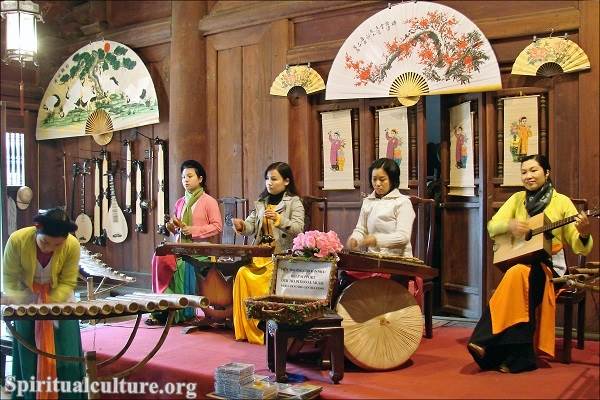
Mahayana Buddhism has shaped temples, funerals, festivals, and devotional life, while ancestor veneration remains important across many religious identities. Village tutelary spirits, Mother Goddess traditions, local heroes, and household altars connect family memory with sacred practice.
Sacred places and religious heritage
Catholicism has a major historical presence, and Protestant communities have grown in a number of regions. Cao Dai and Hoa Hao Buddhism emerged in southern Vietnam in the twentieth century and developed distinctive organizations, teachings, and ritual forms.
Festivals, rituals, and community life
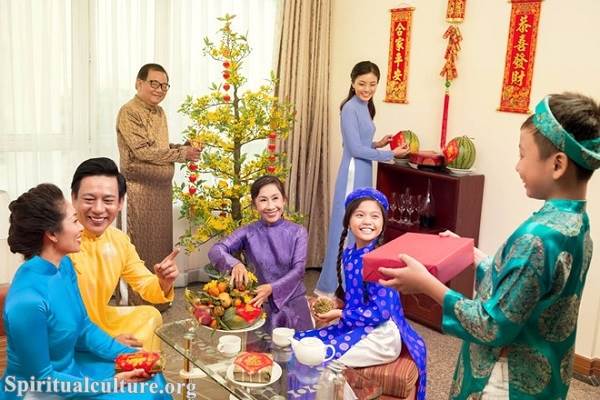
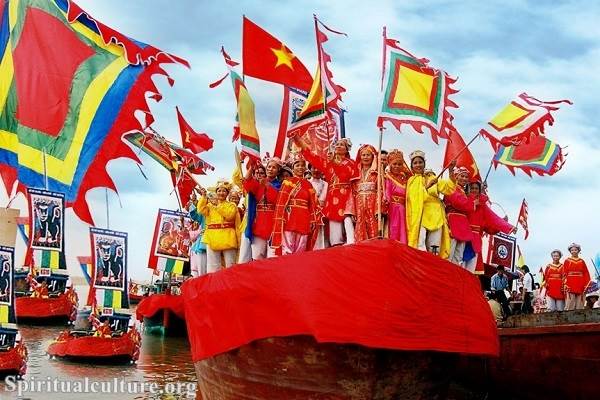
Tet is strongly connected with ancestors, household rites, temple visits, and family renewal. Vu Lan, Buddhist observances, Catholic feast days, pilgrimage festivals, and Mother Goddess ceremonies add to a dense ritual calendar.
Living spiritual culture
Vietnam’s spiritual culture is best understood through overlap rather than rigid categories. A family may visit a Buddhist pagoda, maintain an ancestor altar, honor local spirits, and participate in a formal religious community without treating those practices as contradictory.
Religious diversity in context
Vietnamese religious life is layered rather than divided into neat, exclusive systems. Mahayana Buddhist temples may serve devotional, memorial, and community functions, while ancestor altars remain important in homes across different religious identities. The Mother Goddess tradition, village tutelary cults, Daoist and Confucian legacies, and local hero veneration add further forms of sacred practice. Catholic communities have centuries of history in Vietnam, Protestant churches are significant in several regions, and Cao Dai and Hoa Hao developed distinctive Vietnamese religious institutions in the twentieth century.
Regional and ethnic diversity matters as well. Religious life in the Red River Delta, central Vietnam, the Mekong Delta, and the Central Highlands can differ substantially, and many minority peoples maintain traditions connected with ancestors, spirits, sacred landscapes, and community ritual.
Festivals, pilgrimage, and sacred memory
Tet brings together family reunion, ancestor remembrance, temple visits, household offerings, and hopes for renewal. Vu Lan has strong Buddhist associations with filial gratitude, while local temple and village festivals honor deities, heroes, and community protectors. Catholic pilgrimage centers and Marian devotion are also important parts of Vietnamese sacred geography. In southern Vietnam, Cao Dai and Hoa Hao communities add their own religious calendars and institutions.
These practices show why Vietnamese spiritual culture cannot be reduced to a single affiliation. Sacred memory often moves through family, village, region, and religious community at the same time.
Historical change and regional variation
Vietnamese religious life has been reshaped by dynastic state traditions, Buddhist institutions, Catholic and Protestant missions, twentieth-century religious movements, war, migration, and rapid urbanization. These layers did not replace one another neatly; they continue to overlap in temples, churches, household altars, village festivals, and diaspora communities.
Reading Vietnam’s spiritual culture carefully
Practice differs between regions, ethnic communities, generations, and families. Ancestor veneration may appear within Buddhist, Catholic, folk-religious, or largely non-institutional settings, so a single affiliation label rarely explains the full religious life of a Vietnamese household.