Palestinian spiritual culture is deeply connected with Islam and Christianity, family and village traditions, and sacred landscapes that are important to several world religions. Understanding Palestine through religion and sacred heritage gives a clearer picture than treating culture only as food, tourism, or national symbols.
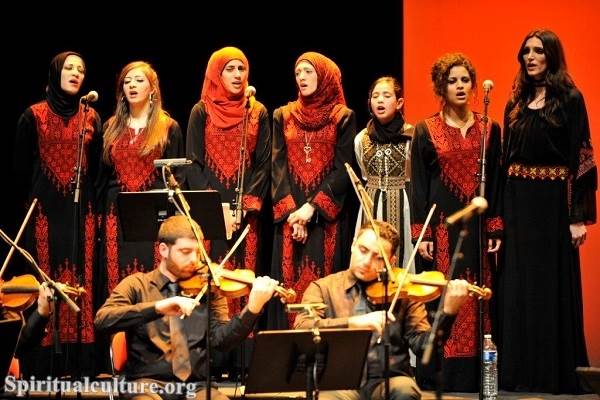
Religious traditions and everyday practice

Most Palestinians are Muslim, while Palestinian Christian communities have ancient roots in cities such as Bethlehem, Jerusalem, Ramallah, and surrounding towns. Muslim devotional life includes mosque worship, Ramadan, Eid, charity, Qur’anic learning, and pilgrimage traditions.
Sacred places and religious heritage
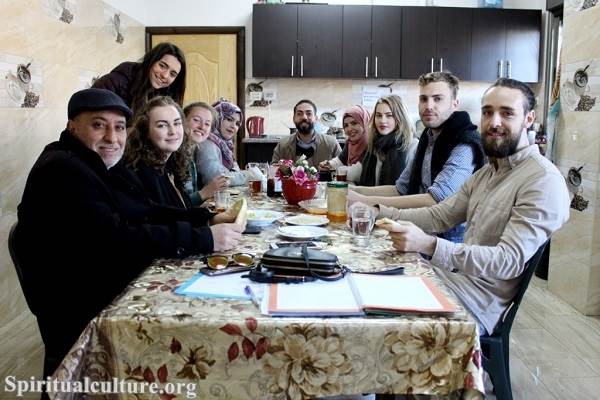
Jerusalem contains Al-Aqsa Mosque and the wider Haram al-Sharif/Temple Mount complex, one of the most sacred places in Islam and Judaism, as well as major Christian holy sites. Bethlehem’s Church of the Nativity and Hebron’s Ibrahimi Mosque/Tomb of the Patriarchs are also central to religious memory, though access and political conditions are contested.
Festivals, rituals, and community life
Ramadan evenings, Eid, Christian Christmas and Easter observances, pilgrimages, weddings, funerals, and local saint traditions connect religion with family and place. Olive harvest traditions and village memory can also carry spiritual meaning.
Living spiritual culture
Palestinian spiritual culture must be described with care because sacred places are entangled with conflict, sovereignty, and competing historical claims. A cultural account should distinguish religious significance from political endorsement.
Religious diversity in context
Palestinian religious life is shaped mainly by Muslim and Christian communities, with deep local traditions tied to towns, villages, holy places, family histories, and pilgrimage. Sunni Islam is the largest tradition among Palestinians, while Greek Orthodox, Latin Catholic, Armenian, Protestant, and other Christian communities preserve some of the world’s oldest continuous Christian connections with the land. Samaritan tradition also survives in the wider Palestinian-Israeli landscape.
Religion is inseparable from displacement, mobility restrictions, diaspora, and contested sacred geography. The same city or shrine may carry different meanings for Muslims, Christians, Jews, and other communities, so description requires careful attention to whose tradition is being represented.
Festivals, pilgrimage, and sacred memory
Ramadan, Eid, Friday prayer, Christmas, Easter, saints’ feasts, and local pilgrimage traditions shape community calendars. Bethlehem and Jerusalem are internationally famous, but village churches, mosques, cemeteries, olive groves, family shrines, and remembered places can be equally important to local religious identity.
For diaspora communities, festivals and sacred places may also function as forms of cultural memory, connecting religious practice with family histories and attachment to homeland.
Historical change and regional variation
Palestinian spiritual culture has developed within a land sacred to Judaism, Christianity, and Islam, while local Muslim and Christian communities have maintained family, village, pilgrimage, and festival traditions of their own. Displacement, occupation, migration, and diaspora have made religious places and rituals especially important carriers of memory and belonging.
Reading Palestinian spiritual culture carefully
Sacred geography is shared but not interpreted identically. Muslim, Christian, Jewish, and Samaritan traditions attach different histories and practices to the land, and Palestinian religious life also varies by locality, denomination, family, and diaspora experience.